
Incorporated Village
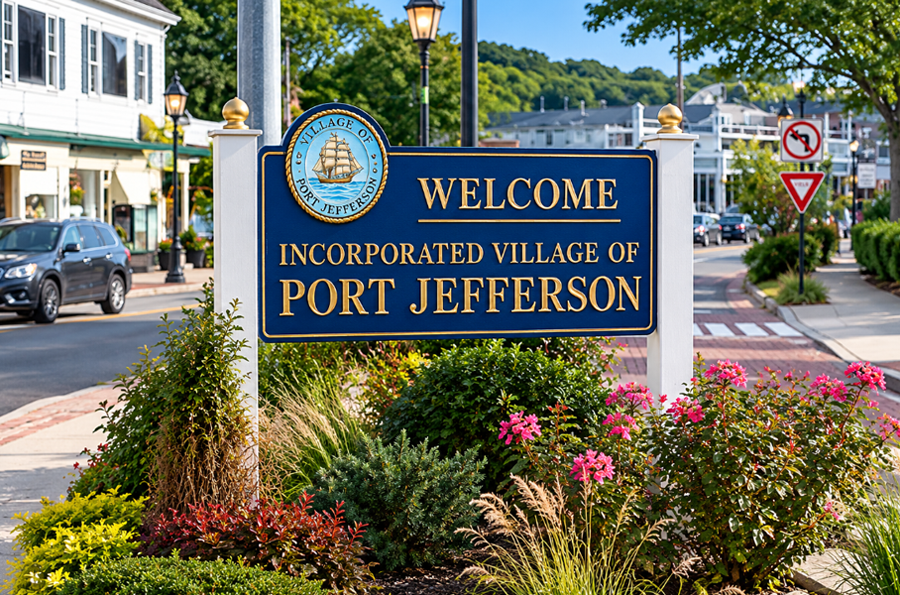
Long Island has 96 incorporated villages spread across Nassau County and Suffolk County, creating a distinctive layer of local government that exists alongside the island’s towns, cities, hamlets, and other communities. Nassau County contains 64 incorporated villages, while Suffolk County has 32.
An incorporated village is more than the name of a neighborhood or community. Under New York State law, a village is a municipal corporation with its own local government. Most villages have an elected mayor and board of trustees and may exercise authority over matters such as zoning, local laws, roads, public property, budgeting, building regulation, and municipal services. The particular services provided vary considerably from one village to another.
What Is an Incorporated Village?
New York State defines a village as a general-purpose municipal corporation voluntarily formed by residents of an area located within one or more towns. Incorporation creates an additional level of local government, allowing residents to exercise greater local control over certain municipal decisions and services.
One of the most important things to understand is that creating a village generally does not remove the territory from the surrounding town. A resident of an incorporated village is therefore usually both a resident of the village and a resident of the town in which the village is located. The village and town are separate municipal governments with different responsibilities, elected officials, budgets, and taxing authority.
For example, someone living in Kings Point lives in the Village of Kings Point, the Town of North Hempstead, Nassau County, and New York State. Each represents a different layer of government.
Villages, Hamlets and Census-Designated Places
The distinction between an incorporated village and a hamlet is particularly important on Long Island. A village is a legally organized municipality. A hamlet is an informal geographic community within a town and does not have a separate municipal government of its own.
Large communities do not automatically become villages simply because of their population. Levittown, for example, is one of Long Island’s best-known suburban communities but is not an incorporated village. Its local municipal government is primarily provided through the Town of Hempstead and other governmental and special districts.
A census-designated place, commonly abbreviated as CDP, is different again. CDPs are geographic areas identified for statistical purposes by the U.S. Census Bureau. A community can therefore be both a hamlet and a census-designated place without being an incorporated municipality. Communities such as Centereach, Holbrook, and Greenlawn are examples of places commonly identified as hamlets and CDPs rather than incorporated villages.
Why Does Long Island Have So Many Villages?
Village government became particularly important in New York during the growth of metropolitan and suburban areas in the late 19th and early 20th centuries. Communities could incorporate to establish an additional local government capable of addressing increasingly complex issues such as roads, development, policing, sanitation, zoning, and other municipal needs.
That pattern is especially visible in western Long Island. As Nassau County developed from rural communities and large estates into a densely populated suburb of New York City, numerous communities incorporated as villages. Today, Nassau County alone contains 64 incorporated villages within its three towns of Hempstead, North Hempstead, and Oyster Bay.
The result is a municipal map that can be surprisingly complicated. A relatively short drive through Nassau County can pass through several incorporated villages, unincorporated areas, and different special districts, each potentially responsible for different combinations of services.
64 Incorporated Villages in Nassau County
Nassau County has 64 incorporated villages, making village government a particularly prominent feature of local life. They range from substantial suburban municipalities such as Hempstead, Freeport, Valley Stream, Rockville Centre, and Garden City to much smaller residential communities along the North Shore and Great Neck Peninsula.
The county’s villages include Atlantic Beach, Baxter Estates, Bayville, Bellerose, Brookville, Cedarhurst, Centre Island, Cove Neck, East Hills, East Rockaway, East Williston, Farmingdale, Floral Park, Flower Hill, Freeport, Garden City, Great Neck, Great Neck Estates, Great Neck Plaza, Hempstead, Hewlett Bay Park, Hewlett Harbor, Hewlett Neck, Island Park, Kensington, Kings Point, Lake Success, Lattingtown, Laurel Hollow, Lawrence, Lynbrook, Malverne, Manorhaven, Massapequa Park, Matinecock, Mill Neck, Mineola, Munsey Park, Muttontown, New Hyde Park, North Hills, Old Brookville, Old Westbury, Oyster Bay Cove, Plandome, Plandome Heights, Plandome Manor, Port Washington North, Rockville Centre, Roslyn, Roslyn Estates, Roslyn Harbor, Russell Gardens, Saddle Rock, Sands Point, Sea Cliff, South Floral Park, Stewart Manor, Thomaston, Upper Brookville, Valley Stream, Westbury, Williston Park, and Woodsburgh.
32 Incorporated Villages in Suffolk County
Suffolk County has 32 incorporated villages. Although fewer than Nassau County, Suffolk’s villages include many of Long Island’s best-known downtown, waterfront, and resort communities and are distributed among most of the county’s ten towns.
Suffolk County’s incorporated villages are Amityville, Asharoken, Babylon, Belle Terre, Bellport, Brightwaters, Dering Harbor, East Hampton, Greenport, Head of the Harbor, Huntington Bay, Islandia, Lake Grove, Lindenhurst, Lloyd Harbor, Nissequogue, North Haven, Northport, Ocean Beach, Old Field, Patchogue, Poquott, Port Jefferson, Quogue, Sag Harbor, Sagaponack, Saltaire, Shoreham, Southampton, Village of the Branch, Westhampton Beach, and West Hampton Dunes.
What Does a Village Government Do?
The responsibilities of Long Island’s village governments are not identical. Depending on the municipality, a village may administer zoning and land-use regulations, issue building permits, maintain local roads and public property, operate a police department, provide sanitation or public works services, maintain parks, regulate parking, operate a village court, or provide other local services.
Village governments generally operate through an elected mayor and board of trustees. New York Village Law gives village boards broad authority over budgets, municipal property, local offices, appointments, and other village affairs. Some Long Island villages maintain substantial municipal operations, while very small villages may provide a narrower range of services and rely more heavily on their town, county, special districts, or outside contracts.
Villages Still Belong to Towns
A common source of confusion is the relationship between villages and towns. In most cases, incorporation does not create a separate territory outside the town. Instead, the village remains geographically within the town, and village residents continue to participate in town government and pay applicable town taxes while also electing village officials and paying taxes associated with village government.
This overlapping structure explains descriptions such as the Village of Roslyn Harbor in the Town of North Hempstead or the Village of Lake Grove in the Town of Brookhaven. In some cases, village boundaries can even cross town boundaries, demonstrating that village and town lines are separate municipal divisions rather than interchangeable geographic labels.
Can New Villages Still Be Created?
Yes. New York State law continues to provide a legal process for creating new incorporated villages, although incorporation requires considerably more than simply selecting a community name and establishing boundaries. Article 2 of New York’s Village Law governs the process, and changes adopted in 2023 created a state Village Incorporation Commission to receive and evaluate incorporation petitions.
Under current state requirements, a proposed village generally must contain at least 1,500 regular inhabitants, and the territory ordinarily cannot exceed five square miles unless it qualifies for one of the statutory boundary exceptions. The process begins with a formal petition supported by at least 20 percent of residents who are qualified to vote for town officers within the proposed territory. If the statutory requirements are satisfied, the process can ultimately lead to an election in which eligible residents decide whether the village should be created.
Can a Village Be Dissolved?
Village status is not necessarily permanent. New York law also provides mechanisms through which an incorporated village can dissolve and return its municipal responsibilities to the surrounding town or other local governments. Dissolution can involve significant questions about taxes, employees, property, debt, public services, contracts, and the future administration of local laws and districts.
Long Island has experienced this process. The former Village of Mastic Beach in Suffolk County, which incorporated in 2010, voted to dissolve several years later and returned to unincorporated status within the Town of Brookhaven. Its relatively brief existence illustrates that incorporation can be reconsidered when residents determine that maintaining a separate municipal government is no longer desirable.
Key Facts and Details
| Total Incorporated Villages on Long Island | 96 |
|---|---|
| Nassau County Villages | 64 |
| Suffolk County Villages | 32 |
| What Is a Village? | A general-purpose municipal corporation established under New York State law |
| Primary Governing Law | New York State Village Law |
| Typical Government | Mayor and board of trustees, with other elected or appointed village officials as provided by law or local provisions |
| Relationship to Towns | Village territory generally remains within a town, and village residents generally remain residents and taxpayers of that town |
| Village vs. Hamlet | A village is an incorporated municipality with its own government; a hamlet is an unincorporated community within a town |
| Village vs. CDP | A village is a municipality; a census-designated place is a geographic area defined primarily for statistical purposes |
| Potential Village Responsibilities | Zoning, building regulation, roads, public works, policing, sanitation, parks, parking, local laws, courts, and other municipal services, depending on the village |
| Current Minimum Population for New Village | 1,500 regular inhabitants under current New York State incorporation requirements |
| General Maximum Area for New Village | Five square miles, subject to statutory exceptions involving certain district or town boundaries |
| Initial Petition Requirement | Signatures from at least 20% of residents qualified to vote for town officers within the proposed village territory |
| State Incorporation Authority | New York State Village Incorporation Commission reviews petitions under Village Law Article 2 |
| Can Villages Dissolve? | Yes. New York State law provides procedures for village dissolution |
| Long Island Dissolution Example | Former Village of Mastic Beach in Suffolk County |
| Largest Concentration | Nassau County, with 64 incorporated villages |
| Why Villages Matter | They provide an additional level of local government and can give residents greater local control over land use, services, taxation, and community administration |
Long Island’s 96 incorporated villages help explain why local government on the island can appear unusually complex. From large suburban municipalities to tiny waterfront communities, each village represents a decision made at some point in its history to establish an additional layer of local government within the larger town structure. The result is a patchwork in which incorporated villages such as Kings Point, Roslyn, Lake Grove, Northport, and Port Jefferson coexist with large unincorporated communities and hamlets governed primarily through their respective towns. Understanding the difference between a village, town, hamlet, and census-designated place makes the geography and government of Long Island considerably easier to understand.
Are you ready for fall on Long Island? Check out these local seasonal guides:
🍎 Apple Picking | 🍂 Fall Festivals & Farm Activities | 👻 Haunted Houses | 🎃 Pumpkin Picking