
Amityville, New York
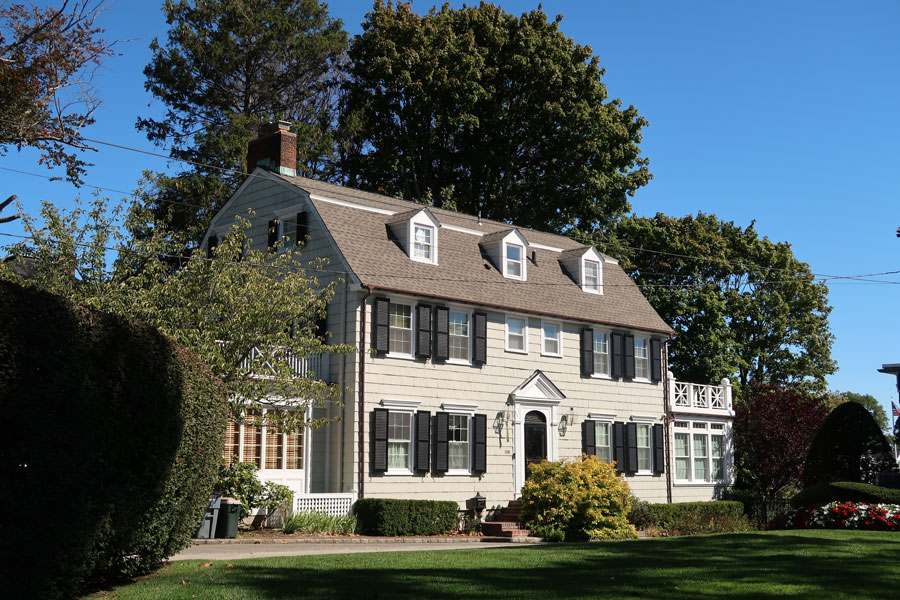
Amityville is an incorporated village in the Town of Babylon in Suffolk County, located along Long Island’s South Shore. First settled during the 17th century and incorporated in 1894, the village developed from an agricultural and maritime community into a railroad-connected summer destination and eventually an established suburb with a traditional downtown, waterfront neighborhoods, parks, schools, and direct Long Island Rail Road service.
Amityville is sometimes known as the “Friendly Bay Village,” an identity reflecting both its name and its longstanding relationship with the Great South Bay. Broadway serves as the principal north-south corridor through the village, while Merrick Road crosses the community from east to west. To the south, residential streets, canals, marinas, parks, and waterfront properties extend toward the bay, preserving a connection to the boating and fishing traditions that helped shape Amityville long before it became a suburban community.
Early Settlement and West Neck South
The area now occupied by Amityville was historically part of the Town of Huntington. Town records trace European settlement in the area to around 1658, when Huntington farmers began establishing themselves along the South Shore. The community was once commonly known as West Neck South, reflecting its location on one of the necks of land extending toward the bays along southern Long Island.
The southern portion of today’s village includes land historically identified as West Neck and Josiah’s Neck. Farming dominated much of the early landscape, while the surrounding creeks, wetlands, and bays supported fishing, shellfishing, boating, and the harvesting of salt hay. The Village of Amityville notes that salt hay was an important agricultural product used to feed livestock, illustrating the close relationship between early farming and the coastal environment.
For generations, the settlement remained relatively rural. Homes, farms, mills, and small businesses gradually appeared, but the extensive suburban development familiar today would not arrive until transportation improvements brought Amityville into much closer contact with the rest of Long Island and New York City.
How Amityville Got Its Name
The name Amityville was adopted in 1846. According to the Town of Babylon’s historical account, local residents were having difficulty agreeing on a name for the community when mill owner Samuel Ireland suggested “Amityville,” drawing inspiration from his boat named Amity. The word itself conveyed friendship or peaceful relations, and the name was accepted.
Ireland was part of a family closely associated with the village’s early commercial history. Ireland’s Mill operated near Ireland’s Pond on the north side of what is now Merrick Road, providing saw and grist mill services and later selling feed, grain, hay, and ice. Three generations of the family operated the business before mill operations ended during the early 20th century.
The Amityville name became increasingly established during the middle of the 19th century. A post office using the name was established in 1850, followed by the arrival of railroad service less than two decades later. By then, the former farming settlement was beginning a significant transformation.
The Railroad Transforms Amityville
The arrival of the South Side Railroad in 1867 was one of the most important developments in Amityville’s history. Rail service connected the community much more directly with Brooklyn and New York City, making it easier for residents to travel west while also bringing visitors, commerce, and new development to the South Shore.
The railroad helped Amityville evolve into an important local transportation center. During the early 20th century, electric trolley service added another layer to the network. The Cross-Island trolley operated between Huntington and Amityville from 1909 to 1919, reaching its southern terminus near the Amityville docks. Passengers could continue by ferry toward the barrier beaches. A separate electric trolley line began operating between Amityville and Babylon in 1910 and continued until 1920.
The growing popularity of automobiles eventually brought the trolley era to an end, but rail transportation remained an important part of village life. Today, the Amityville station on the Long Island Rail Road‘s Babylon Branch continues the transportation role that began with the South Side Railroad more than 150 years ago.
Amityville Becomes Part of the Town of Babylon
Amityville was still part of the Town of Huntington when the railroad arrived. During the 19th century, residents of communities on Huntington’s South Shore increasingly argued that the distance from Huntington’s governmental center made local administration inconvenient. The growing southern communities also had different transportation, commercial, and infrastructure concerns from those on the North Shore.
After years of debate, voters approved dividing the Town of Huntington in a January 1872 referendum. The New York State Legislature subsequently approved creation of the new Town of Babylon on March 13, 1872. Amityville became part of the new town, whose boundaries encompassed the developing South Shore communities of western Suffolk County.
From Farming Community to Summer Resort
Improved transportation helped transform Amityville into a popular summer destination during the late 19th and early 20th centuries. Visitors from New York City could reach the village by rail and enjoy the cooler breezes, beaches, boating, and waterfront recreation associated with the Great South Bay.
Hotels gradually replaced some of the farms and marine businesses that had occupied the waterfront. Among the best-known were the New Point Hotel, which opened in the 1890s, followed by establishments including the Hathaway Inn and Narraganset Inn during the early 20th century. The Village’s own historical account recalls summer visitors that included actors, artists, writers, businesspeople, and affluent New Yorkers.
Although the old resort hotels are gone, the geography that attracted those visitors remains an important part of Amityville. Waterfront homes, canals, docks, marinas, parks, and recreational boating continue to distinguish the southern portion of the village from inland communities elsewhere on Long Island.
Incorporation and the Growth of the Village
Amityville formally incorporated on March 3, 1894, becoming the second incorporated village in the Town of Babylon after Babylon Village. Incorporation established defined village boundaries and created a municipal government able to provide local services and address the needs of a community that had become increasingly residential and commercial.
The late 19th century was an active period of institution building. The Bank of Amityville was established in 1891, and the prominent Triangle Building was constructed in downtown Amityville in 1892. The village also developed schools, newspapers, medical institutions, businesses, churches, and civic organizations as its population increased.
Several medical facilities became particularly notable parts of Amityville’s history. The Long Island Home was established during the 1880s and later became associated with South Oaks Hospital, while Brunswick Home and Louden Hall were among other institutions established in the community during the late 19th century. Their presence made health care an unusually significant part of Amityville’s local development for a village of its size.
Historic Downtown and the Lauder Museum
Broadway developed as Amityville’s principal commercial corridor and remains the center of village activity. Historic buildings stand alongside restaurants, shops, professional offices, civic spaces, and newer development, providing a visible connection between the village’s 19th-century growth and its modern downtown.
One of the important institutions preserving that history is the Amityville Historical Society. Established in 1969, the organization opened the Lauder Museum in 1973 at 170 Broadway. The museum occupies a building constructed in 1909 for the Bank of Amityville and maintains collections, photographs, documents, artifacts, and other material related to Amityville and the surrounding South Shore.
The village and Town of Babylon have also installed historical markers documenting important local sites and events, including Ireland’s Mill, the South Side Railroad, the former trolley routes, early institutions, and other pieces of Amityville’s past.
An Early Aviation and Guided Missile Connection
Amityville also holds an unusual place in early aviation history. A historical marker at Richmond Avenue and Unqua Place commemorates a September 11, 1916 demonstration by inventor and aviator Lawrence B. Sperry. At the site, Sperry demonstrated his Aerial Torpedo to personnel from the United States Navy.
The Town of Babylon identifies the event as the first demonstration of a guided missile. The episode reflects a broader period when Long Island was becoming an important center for aviation experimentation, engineering, and aircraft development during the early decades of powered flight.
Schools and Community Development
Education in Amityville developed alongside the village itself. The Town of Babylon traces an early private school to approximately 1848 on Cedar Street. A two-story public school was built on Broadway in 1878, and the village opened its first high school during the 1890s as the population and demand for public education increased.
The Amityville Union Free School District eventually emerged from earlier Town of Huntington and Town of Babylon school districts. Today the district serves the Village of Amityville as well as part of neighboring North Amityville, continuing an educational history that predates the village’s incorporation.
Waterfront, Parks and Recreation
Amityville’s waterfront remains one of the village’s defining characteristics. The southern end of the community reaches the Great South Bay, while local creeks, canals, marinas, and residential waterways reinforce the connection between the village and the water. Boating and fishing remain familiar parts of local life even though Amityville’s economy is no longer centered on the maritime industries that supported earlier generations.
The village maintains numerous parks and public spaces. James A. Caples Memorial Park at the southern end of Bayview Avenue includes recreational facilities and a boat ramp, while the Amityville Beach Complex provides seasonal waterfront recreation and a fishing pier. Maxine Postal Memorial Park occupies another location on the Great South Bay.
Elsewhere in the village, residents can visit Avon Lake, the Delano Nature Trail, Peterkin Park, Edward W. Pearsall Park, Nautical Park, the Village Triangle and Gazebo, and the 9/11 Memorial Park along Broadway. Together, these spaces range from small neighborhood parks and quiet landscaped areas to waterfront recreation and community gathering places.
The Amityville Horror and Popular Culture
For people outside Long Island, the village name is often immediately associated with The Amityville Horror. The Ocean Avenue house connected with the story became internationally famous through books, films, documentaries, and decades of popular culture, giving the name Amityville a recognition far beyond the size of the village itself.
The house, however, is a private residence in an otherwise residential neighborhood and should be treated accordingly. Visitors should remain on public streets, respect the privacy of residents, and never enter private property. While the story is undeniably part of Amityville’s modern cultural identity, it represents only a small chapter in a village history extending back centuries before the events that made the Ocean Avenue address famous.
Transportation
Amityville remains well connected to the rest of Long Island. The Amityville station on the Long Island Rail Road‘s Babylon Branch provides commuter rail service west toward New York City and east through other South Shore communities.
Sunrise Highway (NY 27) crosses the northern portion of the village, while Route 110/Broadway provides an important north-south connection. Merrick Road/Montauk Highway (NY 27A) serves the older South Shore corridor through the village and connects Amityville with neighboring communities including Copiague to the east.
Downtown Revitalization
Amityville’s historic downtown is also undergoing a new period of investment. The village was selected to receive a $10 million New York State Downtown Revitalization Initiative award aimed at improving the Broadway corridor, strengthening connections with the Long Island Rail Road station, improving pedestrian access, and supporting continued business and residential activity downtown.
As of 2026, village revitalization work includes planning for improvements along Broadway and pedestrian connections between the train station and downtown. Projects have included or proposed traffic-calming measures, sidewalk and lighting improvements, storefront enhancements, public art, branding and wayfinding, and a better pedestrian connection from the LIRR station toward Broadway by way of John and Oak streets.
The effort reflects a continuing theme in Amityville’s history. Transportation helped transform the village during the 19th century, and modern planning is again using the relationship between the railroad, Broadway, local businesses, and residential neighborhoods to shape the village’s next stage of development.
Amityville Today
Amityville had 9,500 residents in the 2020 Census, almost unchanged from the 9,523 counted in 2010. That relative stability follows more than a century of growth. Historical population records compiled by the Town of Babylon show the village growing from 2,038 residents in 1900 to 5,058 in 1940 and more than 8,000 by 1960.
Today the village combines several distinct environments within a relatively compact community. Broadway remains the traditional commercial spine, neighborhoods of older and newer homes extend across the village, the railroad provides direct regional transportation, and the southern waterfront retains the canals, marinas, parks, and bay access that distinguish Amityville from inland suburbs.
Amityville, New York
Key Facts and Details
| Community | Amityville |
| Municipality Type | Incorporated village |
| Town | Town of Babylon |
| County | Suffolk County |
| Region | South Shore of Long Island |
| ZIP Code | 11701 |
| Early Name | West Neck South |
| Name Adopted | 1846 |
| Name Origin | Traditionally attributed to mill owner Samuel Ireland and his boat named Amity |
| Town of Babylon Established | 1872, when the southern portion of the Town of Huntington became the new Town of Babylon |
| Village Incorporated | March 3, 1894 |
| 2020 Census Population | 9,500 |
| 2010 Census Population | 9,523 |
| 2025 Population Estimate | 9,799 |
| Waterfront | Great South Bay and associated creeks, canals, marinas, and residential waterways |
| Historic Economy | Farming, salt hay, milling, fishing, boating, maritime trades, and summer tourism |
| Railroad Arrival | South Side Railroad, 1867 |
| Historic Trolley Service | Cross-Island trolley to Huntington and electric trolley service toward Babylon |
| Current Rail Service | Long Island Rail Road, Babylon Branch |
| Major Roads | Sunrise Highway (NY 27), Route 110/Broadway, and Merrick Road/Montauk Highway (NY 27A) |
| Historic Museum | Lauder Museum, home of the Amityville Historical Society |
| Historical Society | Amityville Historical Society, established in 1969 |
| Notable Historic Building | Triangle Building, constructed in 1892 |
| Notable Aviation History | 1916 demonstration of Lawrence B. Sperry’s Aerial Torpedo to U.S. Navy personnel |
| Public School District | Amityville Union Free School District |
| Selected Parks and Public Spaces | James A. Caples Memorial Park, Amityville Beach Complex, Avon Lake, Delano Nature Trail, Peterkin Park, Nautical Park, Village Triangle, and Maxine Postal Memorial Park |
| Downtown | Centered primarily along Broadway |
| Downtown Revitalization | Recipient of a $10 million New York State Downtown Revitalization Initiative award |
| Pop-Culture Association | The Amityville Horror |
| Known For | Historic South Shore village, waterfront neighborhoods, boating, downtown Broadway, railroad access, and its internationally recognized name |
Amityville’s history extends far beyond the pop-culture story that made its name famous around the world. From a 17th-century farming and maritime settlement known as West Neck South to the arrival of the railroad, the rise of waterfront hotels, incorporation in 1894, and the development of a mature South Shore village, Amityville has repeatedly adapted while retaining strong connections to its past. Today, its historic downtown, railroad, waterfront neighborhoods, parks, marinas, local institutions, and ongoing revitalization efforts give the village an identity that is both distinctly local and unusually recognizable, making Amityville an important part of the larger history and character of Long Island.
Are you ready for fall on Long Island? Check out these local seasonal guides:
🍎 Apple Picking | 🍂 Fall Festivals & Farm Activities | 👻 Haunted Houses | 🎃 Pumpkin Picking