
Copiague, New York
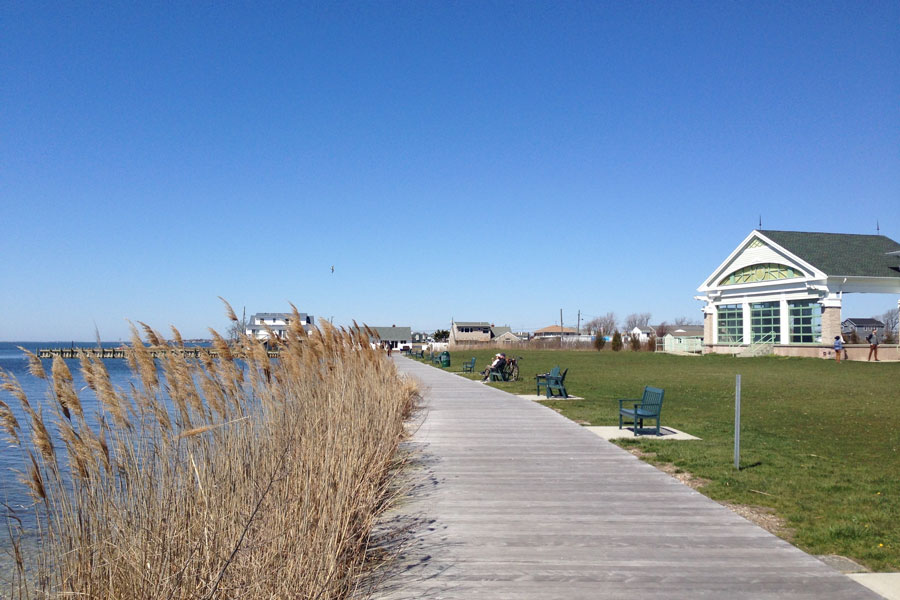
Copiague is a hamlet and census-designated place in the Town of Babylon in Suffolk County, on Long Island’s South Shore. Located between Amityville and Lindenhurst, the community extends from inland residential and commercial neighborhoods south to canals, marinas, waterfront neighborhoods, and the Great South Bay.
Copiague had 23,429 residents in the 2020 Census and covers approximately 3.09 square miles of land. Although primarily residential today, the hamlet has a surprisingly varied history that includes early South Shore settlement, a visit by President George Washington, the arrival of the railroad, an Italian-American neighborhood once known as Marconiville, and the unusual American Venice development built around canals near the bay. Modern Copiague combines that history with a culturally diverse population, convenient railroad access, neighborhood businesses, and one of the Town of Babylon’s largest waterfront parks.
History of Copiague
The Copiague name has deep roots in the area’s geography. According to the Town of Babylon, it is derived from a Native American term generally interpreted as “sheltered place” or “sheltered harbor.” Early Town of Huntington land records used several spellings, including Copiag, Copyag, and Copiague, in references to Copiague Neck, the peninsula of land where the American Venice neighborhood is located today.
As with many Long Island place-names derived from Native languages, exact spellings and meanings vary in historical records. Native languages were primarily recorded phonetically by European settlers, resulting in different interpretations over time. The eventual survival of Copiague as the community’s permanent name nevertheless preserves a connection with the area’s much earlier history.
The community itself went through several names before Copiague became established. Historical references include Powell’s, Great Neck, Huntington South, and East Amityville. The Long Island Rail Road selected Copiague as the name for a new depot in 1901, helping establish the name permanently for the growing community. The Copiague Post Office followed in 1903.
George Washington Visits Copiague
One of the more notable episodes in Copiague’s early history occurred on April 21, 1790, when President George Washington passed through the area during a tour of Long Island. At the time, the community was commonly known as Huntington South.
Washington stopped at the home of Zebulon Ketcham, a local resident who had served in the Suffolk County Militia during the Revolutionary War. Washington recorded the visit in his diary and described Ketcham’s home as “a very neat and decent one.” The house no longer survives, but a historical marker near Merrick Road and Deauville Boulevard commemorates the location associated with Washington’s visit.
The Railroad and the Copiague Name
The railroad became an important part of Copiague’s development during the 19th century. The South Side Railroad established its line through the area in 1867, providing a transportation corridor that would eventually become part of today’s Babylon Branch of the Long Island Rail Road. The LIRR assumed the line in the 1870s.
Copiague did not receive its first depot until 1901. The selection of Copiague as the station name proved significant because it helped settle the question of what the growing community itself would be called. Rail transportation subsequently became an important factor in residential growth, commuting, and the development of businesses around Great Neck Road and the station area.
More than a century later, the railroad remains one of Copiague’s defining transportation assets. The modern Copiague station provides service along the Babylon Branch toward western Long Island and Manhattan, as well as connections to destinations farther east.
Marconiville and Copiague’s Italian-American History
Copiague developed a significant Italian-American community during the early 20th century. In 1906, real estate developer Giovanni “John” Campagnoli began promoting property north of the railroad tracks as Marconiville. The neighborhood was named in honor of Guglielmo Marconi, the Italian inventor and pioneer of wireless communication, whom Campagnoli had known in Italy.
Marconi made documented visits to the Copiague neighborhood in 1917 and 1927. The Marconiville identity became strong enough that large concrete letters spelling the name were installed beside the railroad tracks, and residents attempted during the 1920s to have both the railroad station and post office renamed Marconiville. The effort was unsuccessful, and Copiague remained the official community name.
The Marconiville name eventually faded from everyday use, but the neighborhood represents an important chapter in Copiague’s immigration history. Italian-American families, businesses, churches, and community organizations became an important part of the hamlet’s development, later joined by residents from Latin America, the Caribbean, Eastern Europe, and other parts of the world.
American Venice
One of Copiague’s most distinctive neighborhoods is American Venice, a waterfront development created during the 1920s on Copiague Neck. Developers designed the community to evoke Venice, Italy, creating canals, waterfront lots, decorative bridges, and streets with names reflecting the Venetian theme.
Period accounts and postcards show gondolas traveling along the community’s Grand Canal, making American Venice one of the more unusual real estate developments created during Long Island’s early 20th-century building boom. The canals were not merely decorative. They also provided waterfront access for homes in a community closely connected to the Great South Bay.
The American Venice identity remains visible today in the neighborhood’s waterways, street layout, bridge architecture, and the Lion of Venice pillars marking its entrance. Several historic bridges damaged over time and by Superstorm Sandy were reconstructed while retaining elements of their original 1926 appearance, preserving part of the neighborhood’s distinctive character.
Postwar Growth and Suburban Development
Copiague changed rapidly after World War II as the larger suburban expansion of Long Island reached western Suffolk County. Former open land was developed with new streets and single-family homes, while stores, banks, restaurants, schools, and services expanded to accommodate a growing population.
One memorable part of the postwar landscape was Johnny’s All-Weather Drive-In, which opened along Sunrise Highway in 1957. The enormous 285-acre entertainment complex included a drive-in theater, indoor seating, a cafeteria, an amusement area, and a small train known as the Tally-Ho. The Town of Babylon commemorates the former attraction with a historical marker near the site.
The community’s school system grew along with the population. The Copiague school district traces its boundaries to the 19th century, when it was known as Town of Huntington School District No. 22. After the Town of Babylon separated from Huntington in 1872, it became Town of Babylon School District No. 5 before eventually adopting the Copiague Union Free School District name.
Great Neck Road Elementary School traces its history to a two-story wooden schoolhouse built in 1911, making it the oldest operating elementary school site in the Town of Babylon. Copiague Middle School opened in 1958, and the present Walter G. O’Connell Copiague High School opened in 1967.
Tanner Park and the Great South Bay
Tanner Park is Copiague’s signature public recreation area and one of the largest waterfront parks operated by the Town of Babylon. Located along the Great South Bay, the park combines bayfront scenery with active recreation and serves as an important gathering place for Copiague and the surrounding community.
The park includes a bay beach, marina, fishing piers, athletic fields, playgrounds, tennis and bocce courts, a spray park, bandshell, senior center, and other recreational facilities. Summer concerts and seasonal programs add to its role as a community destination. The waterfront also provides views across the bay and direct access to a landscape that has shaped South Shore life for generations.
Tanner Park was named around 1962 for Richard “Dick” Tanner, a longtime Copiague resident who was active in the fire department, school board, civic organizations, and Town of Babylon government. The park has continued to evolve, including the opening of a new poured-concrete skatepark in September 2026 to replace an earlier skate facility that had deteriorated from years of exposure to the waterfront environment.
Some Tanner Park facilities, including beach, spray park, marina, and boat-launching access, are subject to Town of Babylon residency requirements, permits, seasonal schedules, or other regulations. Visitors planning to use a specific facility should check current Town rules before making a special trip.
Waterfront Living and Recreation
Copiague’s relationship with the water extends well beyond Tanner Park. South of Montauk Highway, canals, creeks, marinas, and waterfront residential streets lead toward the Great South Bay. American Venice is the best-known canal neighborhood, but boating and marine activity are part of the broader character of southern Copiague.
Boating, fishing, kayaking, and other warm-weather activities are common throughout this portion of the hamlet. The Town of Babylon maintains seasonal boat slips at Tanner Park and South Great Neck Road, further reinforcing Copiague’s role as one of the town’s principal recreational boating communities.
Copiague also provides convenient access to other South Shore destinations. Jones Beach State Park, Robert Moses State Park, and Fire Island ferry terminals can be reached from surrounding communities, while neighboring Amityville and Lindenhurst provide additional downtown dining, shopping, and recreation.
Community and Local Life
Modern Copiague is a densely settled and culturally diverse residential community. Census data show that 23,429 people lived in the CDP in 2020, up slightly from 22,993 in 2010. Nearly half of residents age five and older speak a language other than English at home, reflecting the international character that has become an important part of the community.
That diversity can be seen along local commercial corridors in restaurants, bakeries, markets, shops, and service businesses serving residents from a wide range of backgrounds. Copiague is not organized around a major tourism district; its character is more closely tied to everyday neighborhood life, schools, local businesses, civic organizations, recreation, and the waterfront.
Housing ranges from established inland single-family neighborhoods to homes along canals and the bay, with apartments and multifamily housing in more developed sections. The combination of rail transportation, major roads, local services, and access to the Great South Bay gives Copiague characteristics of both a commuter suburb and a traditional South Shore waterfront community.
Transportation
The Copiague station on the Babylon Branch of the Long Island Rail Road provides service toward western Long Island and Manhattan, with connections available throughout the regional rail network. The station continues a transportation relationship that began when the South Side Railroad constructed its line through the area in 1867.
For drivers, Sunrise Highway provides the principal east-west highway through the northern portion of the community, while Montauk Highway follows the older South Shore corridor farther south. The Southern State Parkway is accessible a short distance to the north, providing additional connections across western and central Long Island.
Copiague, New York
Key Facts and Details
| Community | Copiague |
| Community Type | Hamlet and census-designated place |
| Town | Town of Babylon |
| County | Suffolk County |
| Region | South Shore of Long Island |
| 2020 Census Population | 23,429 |
| 2010 Census Population | 22,993 |
| Land Area | Approximately 3.09 square miles |
| Population Density | Approximately 7,577 residents per square mile in 2020 |
| Name Origin | Derived from a Native American term generally interpreted as “sheltered place” or “sheltered harbor“ |
| Earlier Community Names | Powell’s, Great Neck, Huntington South, and East Amityville |
| Presidential History | George Washington visited the area on April 21, 1790 |
| Railroad Arrival | South Side Railroad line established through the area in 1867 |
| Copiague Railroad Depot | First opened in 1901 |
| Post Office | Established in 1903 |
| Historic Neighborhood | Marconiville, established beginning in 1906 |
| Marconiville Namesake | Wireless communications pioneer Guglielmo Marconi |
| Marconi Visits | Documented visits in 1917 and 1927 |
| Historic Waterfront Development | American Venice, developed during the 1920s with canals and Venetian-inspired bridges |
| Major Park | Tanner Park |
| Waterfront | Great South Bay, canals, creeks, marinas, and residential waterways |
| Recreation | Boating, fishing, beach recreation, athletic fields, playgrounds, spray park, skateboarding, and seasonal events |
| School District | Copiague Union Free School District |
| High School | Walter G. O’Connell Copiague High School |
| Rail Transportation | Copiague LIRR station on the Babylon Branch |
| Major Roads | Sunrise Highway, Montauk Highway, and nearby Southern State Parkway |
| Neighboring Communities | Amityville to the west and Lindenhurst to the east |
| Community Character | Diverse, residential, commuter-oriented, and strongly connected to the Great South Bay waterfront |
Copiague combines several layers of South Shore history within a relatively compact community, from the old Copiague Neck name and George Washington’s 1790 visit to the railroad, Marconiville, the canals of American Venice, postwar suburban growth, and the continuing importance of the Great South Bay. Today, its established neighborhoods, diverse population, railroad access, local businesses, waterways, marinas, and Tanner Park give Copiague an identity that is distinctly its own while remaining closely connected to neighboring Amityville, Lindenhurst, and the broader Long Island community.
Are you ready for fall on Long Island? Check out these local seasonal guides:
🍎 Apple Picking | 🍂 Fall Festivals & Farm Activities | 👻 Haunted Houses | 🎃 Pumpkin Picking