
Long Island Voting & Party Enrollment Statistics
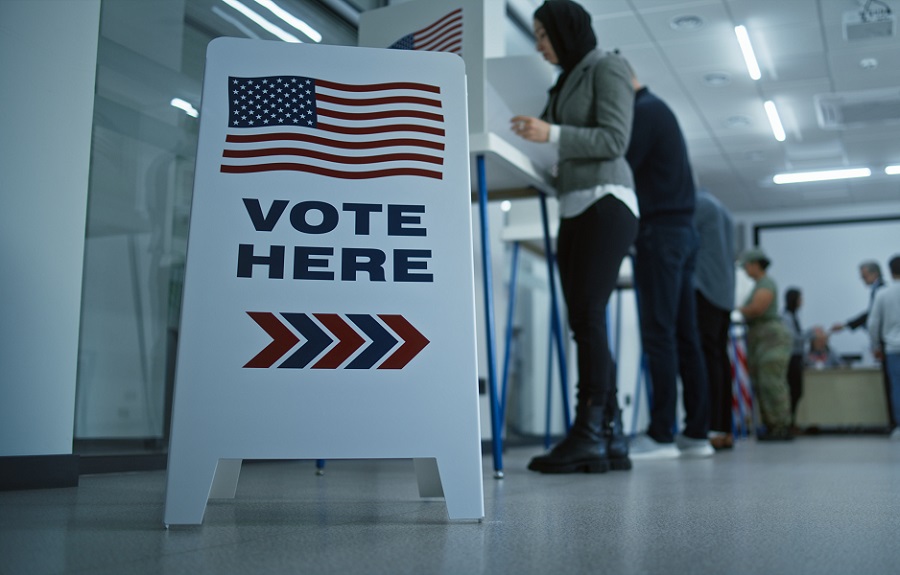
Long Island, as defined on this page, refers to Nassau County and Suffolk County. Together, the two counties had 2,201,514 total voter registrations in the New York State Board of Elections county enrollment report dated February 20, 2026.
Democratic enrollment was the largest individual party category at 772,783 registrations, followed by Republican enrollment at 680,142. Another 653,203 registrations were listed in the Board of Elections’ Blank category, meaning no political party is shown in that enrollment column. Smaller totals were reported for the Conservative Party, Working Families Party, and the Board of Elections’ separate Other category.
Party enrollment statistics describe voter-registration records at a particular point in time. They are not election results and should not be used by themselves to infer how registered voters will vote, whether they will participate in a particular election, or what the outcome of an election will be.
Latest county enrollment snapshot: February 20, 2026
Data reviewed: September 23, 2026
Official source: New York State Board of Elections – Enrollment by County
Key Facts & Details
| Item | Detail |
|---|---|
| Geographic Area | Nassau and Suffolk Counties |
| Enrollment Snapshot | February 20, 2026 |
| Total Registered Voters | 2,201,514 |
| Active Registrations | 2,080,417, about 94.5% |
| Inactive Registrations | 121,097, about 5.5% |
| Democratic Enrollment | 772,783, about 35.1% |
| Republican Enrollment | 680,142, about 30.9% |
| Blank / No Party Listed | 653,203, about 29.7% |
| Conservative Enrollment | 31,971, about 1.5% |
| Working Families Enrollment | 7,048, about 0.3% |
| Other Category | 56,367, about 2.6% |
| Share of All NYS Registrations | Nassau and Suffolk combined account for about 16.4% of New York State’s total voter registrations |
Percentages are calculated from the official Nassau and Suffolk total-registration counts and rounded to one decimal place. The Board of Elections reports Democratic, Republican, Conservative, Working Families, Other, and Blank as separate enrollment categories.
Party Enrollment by County
The February 20, 2026 enrollment report shows meaningful differences between Nassau and Suffolk. Nassau has a larger Democratic share, while Suffolk has a larger Republican share, Conservative share, and Blank share. Suffolk also has more total voter registrations than Nassau.
| Party / Category | Nassau County | Suffolk County | Long Island Total |
|---|---|---|---|
| Democratic | 401,733 37.6% | 371,050 32.7% | 772,783 35.1% |
| Republican | 323,924 30.3% | 356,218 31.4% | 680,142 30.9% |
| Blank / No Party Listed | 303,035 28.4% | 350,168 30.9% | 653,203 29.7% |
| Conservative | 10,296 1.0% | 21,675 1.9% | 31,971 1.5% |
| Working Families | 2,633 0.2% | 4,415 0.4% | 7,048 0.3% |
| Other | 26,687 2.5% | 29,680 2.6% | 56,367 2.6% |
| Total | 1,068,308 | 1,133,206 | 2,201,514 |
Democratic enrollment exceeded Republican enrollment by 77,809 registrations in Nassau County and by 14,832 registrations in Suffolk County. Across the two counties combined, the difference was 92,641 registrations. These differences describe enrollment only and do not represent a vote margin or election forecast.
Active & Inactive Registrations
The New York State Board of Elections report also separates voter-registration records by status. Of Long Island’s 2,201,514 total registrations, 2,080,417 were listed as active and 121,097 as inactive on February 20, 2026.
| Registration Status | Nassau County | Suffolk County | Long Island Total |
|---|---|---|---|
| Active | 1,002,784 93.9% | 1,077,633 95.1% | 2,080,417 94.5% |
| Inactive | 65,524 6.1% | 55,573 4.9% | 121,097 5.5% |
| Total | 1,068,308 | 1,133,206 | 2,201,514 |
Active and inactive are administrative registration-status categories used by election officials. A change in inactive registrations should not by itself be interpreted as evidence that voters have become less politically interested, changed parties, or stopped voting. Registration status can be affected by voter-file maintenance and changes in voter records.
Change From February 2025 to February 2026
Comparing the same February enrollment snapshot one year apart provides a consistent way to examine changes in the voter-registration file. Total Nassau-Suffolk registrations increased by 17,598 between February 20, 2025 and February 20, 2026, an increase of approximately 0.8%.
| Enrollment Measure | Feb. 20, 2025 | Feb. 20, 2026 | Change |
|---|---|---|---|
| Total Registrations | 2,183,916 | 2,201,514 | +17,598 (+0.8%) |
| Democratic | 776,397 | 772,783 | -3,614 (-0.5%) |
| Republican | 675,727 | 680,142 | +4,415 (+0.7%) |
| Blank / No Party Listed | 632,986 | 653,203 | +20,217 (+3.2%) |
| Conservative | 31,704 | 31,971 | +267 (+0.8%) |
| Working Families | 6,771 | 7,048 | +277 (+4.1%) |
| Other | 60,331 | 56,367 | -3,964 (-6.6%) |
| Active Registrations | 2,092,431 | 2,080,417 | -12,014 (-0.6%) |
| Inactive Registrations | 91,485 | 121,097 | +29,612 (+32.4%) |
The largest numerical change among the party-status columns was in the Blank category, which increased by 20,217 registrations. Republican, Conservative, and Working Families enrollment also increased, while Democratic enrollment and the Board of Elections’ Other category declined. These are changes in registration records, not measurements of changes in votes or voter preferences.
The increase in inactive registrations was also substantial, but inactive status is an administrative voter-record classification. The change should not be treated as a direct measure of turnout, partisan movement, or disengagement from elections.
Nassau, Suffolk & New York State
New York State had 13,408,058 total voter registrations in the February 20, 2026 enrollment report. Nassau and Suffolk together accounted for approximately 16.4% of that statewide total and approximately 16.6% of the state’s active registrations.
| Enrollment Category | Nassau Share | Suffolk Share | New York State Share |
|---|---|---|---|
| Democratic | 37.6% | 32.7% | 48.1% |
| Republican | 30.3% | 31.4% | 22.3% |
| Blank / No Party Listed | 28.4% | 30.9% | 25.4% |
| Conservative | 1.0% | 1.9% | 1.3% |
| Working Families | 0.2% | 0.4% | 0.5% |
| Other | 2.5% | 2.6% | 2.4% |
Statewide, the Board of Elections reported 6,445,605 Democratic registrations, 2,994,839 Republican registrations, 3,410,288 Blank registrations, 169,313 Conservative registrations, 63,467 Working Families registrations, and 324,546 registrations in the Other category.
Long Island’s enrollment distribution differs from the statewide distribution. The Democratic share is lower in both Nassau and Suffolk than statewide, while the Republican share is higher in both counties. The Blank share is also higher in Nassau and Suffolk than it is statewide.
What the Enrollment Categories Mean
The New York State Board of Elections county report uses six enrollment columns: Democratic, Republican, Conservative, Working Families, Other, and Blank. Keeping these categories separate provides a clearer picture than combining every voter outside the Democratic and Republican columns into a single group.
- Democratic: Voters whose registration records show Democratic Party enrollment.
- Republican: Voters whose registration records show Republican Party enrollment.
- Conservative: Voters enrolled in the Conservative Party.
- Working Families: Voters enrolled in the Working Families Party.
- Other: The separate OTH category reported by the New York State Board of Elections.
- Blank: Registration records for which no party enrollment is listed in the Board of Elections party column. This page refers to the category as “Blank / No Party Listed” for readability.
The Blank category should not be confused with the Board of Elections’ Other category, and neither should automatically be combined with voters enrolled in the Conservative or Working Families parties. The categories represent different entries in the official registration data.
Why Enrollment Data Has Limits
Voter enrollment is useful for describing the composition of the registered-voter file, but it does not measure actual turnout. A voter can remain registered without participating in a particular election, and voters enrolled in a political party do not necessarily vote for that party’s candidates in every general election.
Enrollment totals also do not account for the specific boundaries of congressional, State Senate, Assembly, town, city, village, or legislative districts. Countywide totals therefore should not be substituted for district-level enrollment when analyzing a particular race or jurisdiction.
Election results can differ substantially from registration patterns because the voters who participate in a particular election are only a subset of the registration file. Candidate choices, turnout, offices on the ballot, local issues, ballot access, and other election-specific factors can affect the final vote totals.
Methodology
- Primary source: New York State Board of Elections voter enrollment by county, party affiliation, and status.
- Current snapshot: February 20, 2026, which remained the newest county enrollment report listed by the state when this page was reviewed on September 23, 2026.
- Long Island definition: Nassau County plus Suffolk County. Brooklyn and Queens are not included in the Long Island totals used on this page.
- Combined totals: Long Island figures are calculated by adding the official Nassau and Suffolk counts.
- Enrollment shares: Percentages are calculated by dividing a party or status count by the corresponding total number of registrations and rounding to one decimal place.
- Year-over-year change: February 20, 2025 is compared with February 20, 2026 so the reports use the same annual point in the registration cycle.
- Active and inactive: Status classifications are reproduced from the Board of Elections report and are not interpreted as measures of voter turnout or political preference.
- Blank: The official Board of Elections report labels this column BLANK. “Blank / No Party Listed” is used on this page as a reader-friendly description of that official category.
- Election results: No election-result estimates or projections are calculated from enrollment data on this page.
Data Sources & Updates
Data reviewed: September 23, 2026.
Latest county enrollment snapshot: February 20, 2026.
The primary source for the figures on this page is the New York State Board of Elections Enrollment by County archive. The state publishes point-in-time voter-registration reports showing Democratic, Republican, Conservative, Working Families, Other, and Blank enrollment, together with active, inactive, and total registration status.
The February 20, 2026 county report lists Nassau County at 1,068,308 total registrations, including 1,002,784 active and 65,524 inactive. Suffolk County had 1,133,206 total registrations, including 1,077,633 active and 55,573 inactive. The statewide report lists 13,408,058 total registrations, of which 12,547,142 were active and 860,916 inactive.
For the year-over-year comparison, this page also uses the February 20, 2025 county enrollment report. Because registration files change continuously as voters register, move, update records, change enrollment, or have their registration status updated, the figures on this page should always be read as snapshots tied to the dates shown.
As of the latest official county snapshot, Long Island had more than 2.2 million total voter registrations spread across several party and registration categories. Democrats represented the largest individual party enrollment, Republicans represented the second-largest party enrollment, and nearly 30% of registrations were listed as Blank with no party shown. Those figures provide a factual description of the registered-voter file in Nassau and Suffolk Counties, while actual election participation and results must be measured separately.
Are you ready for fall on Long Island? Check out these local seasonal guides:
🍎 Apple Picking 🍓 Strawberry Picking 🎃 Pumpkin Picking 👻 Haunted Houses 🍂 Farm Festivals