
The Amityville Horror House in Amityville, Long Island
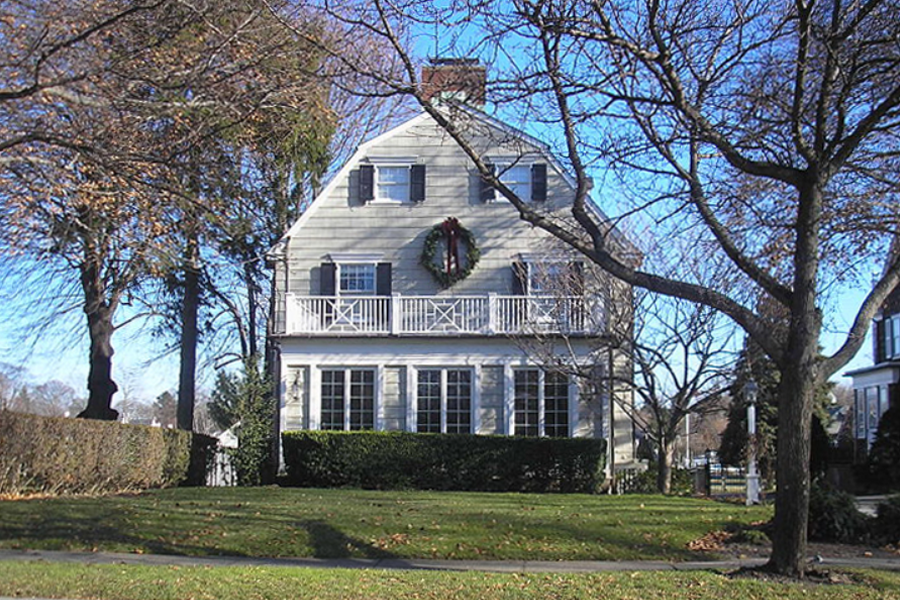
Set on a quiet residential stretch of Amityville, Long Island, the house long known as the Amityville Horror House is one of the most famous addresses in American horror lore. Its reputation comes from two separate chapters that are often blended together in popular culture: the 1974 DeFeo family murders and the later haunting claims made by George and Kathy Lutz after they moved into the home the following year.
Today, the property remains a private residence rather than a museum or formal attraction. For most visitors, its significance lies less in what can be seen on site and more in the way the house has shaped true-crime discussion, paranormal folklore, and decades of books, films, and documentaries.
History and location
The house stands on Ocean Avenue in Amityville, Suffolk County, and dates to the mid-1920s. Its Dutch Colonial-style design became widely recognizable through later media coverage, although some film adaptations used other houses for exterior shots. The property was originally known as 112 Ocean Avenue; later owners had the street number changed, commonly cited as 108 Ocean Avenue, in an effort to discourage trespassing, vandalism, and constant drive-by attention.
The 1974 DeFeo family murders
On November 13, 1974, Ronald DeFeo Jr. murdered six members of his family inside the home: his parents and four siblings. The crime shocked Long Island and quickly became one of the region’s most notorious true-crime cases. DeFeo was later convicted, but the motive and many of the details have remained the subject of continued public debate, reinterpretation, and retelling.
The Lutz family and the haunting claims
In December 1975, George and Kathy Lutz and Kathy’s three children moved into the house, fully aware of the murders and reportedly able to purchase the property at a reduced price. After 28 days, they left and later described a frightening series of experiences, including unsettling noises, cold spots, foul odors, disturbing dreams, and other phenomena they believed were supernatural.
Those claims, later popularized in Jay Anson’s 1977 book The Amityville Horror, helped turn the home into an international pop-culture landmark. Supporters have treated the Lutz account as evidence of a haunting, while skeptics have challenged parts of the story for decades. That mix of tragedy, storytelling, and controversy remains central to the house’s enduring mystique.
Investigations, media attention, and controversy
The Amityville story drew intense media coverage almost immediately, and over the years a wide range of paranormal investigators, journalists, attorneys, and filmmakers became associated with it. Ed and Lorraine Warren are among the best-known figures publicly linked to the case in later retellings, helping expand the house’s reputation within modern ghost-lore culture. At the same time, reporters, researchers, and skeptics have long disputed how much of the haunting narrative can be independently verified.
Because of that history, the house is best understood as both a real crime scene and a powerful piece of American folklore. Its legacy rests not only on what happened there, but also on how the story was retold through books, films, television specials, and ongoing public fascination.
Later ownership and exterior changes
Subsequent owners have generally sought privacy rather than publicity. Over time, the property’s appearance was altered, including changes to the famous quarter-round attic windows and the street address, partly to reduce unwanted attention. The home has remained a residence, and later owners have often pushed back against sensational claims or disruptive visitor behavior.
Visiting today
If you are curious about the Amityville Horror House, remember that this is a private home in an active neighborhood, not a ticketed attraction. There is no regular public tour, museum, or visitor facility at the property. Visitors should not enter the lot, approach the house, block driveways, stop traffic, or disturb neighbors. If you pass through the area, view it only from public spaces and follow all posted parking and traffic rules.
For a broader outing, pair the stop with time in Amityville itself, where the village’s waterfront setting, local streets, and South Shore character offer a more complete sense of place. Conditions, access, and neighborhood expectations can change, so check ahead before making a special trip.
Ocean Avenue in Amityville
Key Facts and Details
| Category | Details |
|---|---|
| Name | Amityville Horror House (informal name) |
| Location | Amityville, Suffolk County, Long Island, New York |
| Original Address | 112 Ocean Avenue |
| Later Address | Commonly cited as 108 Ocean Avenue following renumbering |
| Built | Mid-1920s |
| Architectural Style | Dutch Colonial-style residence |
| Known For | The 1974 DeFeo family murders and the later Amityville haunting claims |
| Historic Event | Six members of the DeFeo family were murdered inside the home on November 13, 1974 |
| Famous Residents | George and Kathy Lutz and Kathy’s three children, who lived in the house for 28 days in 1975 |
| Popularized By | The Amityville Horror by Jay Anson (1977) |
| Film and TV Legacy | Multiple movies, television productions, and documentaries were inspired by the story, though screen versions do not always use the real house exterior |
| Current Status | Private residence; not open to the public |
| Visitor Access | Viewable only from public roads and sidewalks; visitors should respect residents’ privacy |
| Significance | One of the most famous homes associated with true crime, paranormal folklore, and American popular culture |
Few Long Island locations occupy such a strange space between documented history and legend. The Amityville Horror House remains notable not because it functions as a conventional tourist site, but because it sits at the crossroads of true crime, paranormal belief, and popular entertainment. Whether you see it as a historical address, a cautionary tale, or a cultural icon, it remains one of the most talked-about homes in America.
Are you ready for fall on Long Island? Check out these local seasonal guides:
🍎 Apple Picking | 🍂 Fall Festivals & Farm Activities | 👻 Haunted Houses | 🎃 Pumpkin Picking