
Upper Brookville, New York
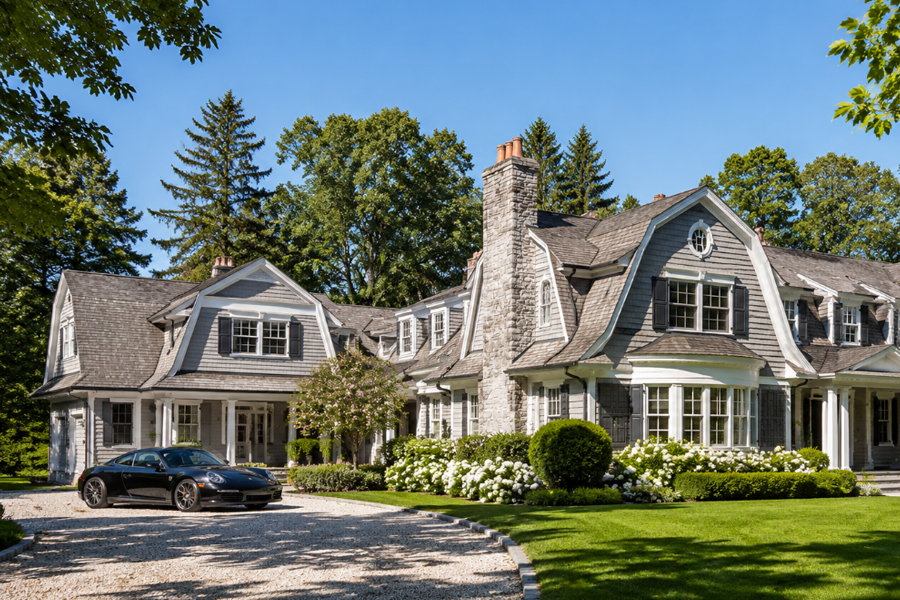
Upper Brookville is an incorporated village on Long Island’s North Shore in the Town of Oyster Bay, Nassau County, New York. Known for wooded roads, large residential properties, historic estates, and its connection to Long Island’s Gold Coast, the village retains a distinctly low-density character despite its location within suburban Nassau County.
Upper Brookville had 1,786 residents in the 2020 Census and covers approximately 4.3 square miles. It is located near Brookville, Old Brookville, Locust Valley, Oyster Bay, and Glen Head. The village has no traditional downtown, and much of its identity comes from residential landscapes, historic properties, winding roads, and open space.
History of Upper Brookville
The area that became Upper Brookville developed from the older Brookville and Wolver Hollow communities of northern Nassau County. For generations, the surrounding landscape consisted largely of farms, woodland, scattered homes, and rural roads connecting settlements throughout the Oyster Bay area.
The name Wolver Hollow was historically associated with the area around what is now Wolver Hollow Road. Brookville’s official history records that Dutch settlers established a church near Wheatley Road and Brookville Road in the 18th century and that springs and a brook in the vicinity helped give rise to the Wolver Hollow name.
During the late 19th and early 20th centuries, the rural North Shore attracted wealthy families from New York City who established large country properties throughout the region. Upper Brookville became part of the broader area now associated with Long Island’s Gold Coast, and large estates, landscaped grounds, horse properties, and country roads increasingly shaped the local landscape.
The Village of Upper Brookville was incorporated in 1932. According to the village’s master plan, the newly incorporated municipality originally covered about three square miles and had a population of 332 living in approximately 50 residences. One of the principal reasons for incorporation was to establish local zoning and exercise greater control over development and municipal affairs.
Gold Coast Heritage
Upper Brookville’s Gold Coast heritage remains evident in its large properties, historic homes, mature landscapes, and estate-oriented road network. Although some of the original estates were later subdivided or adapted to new uses, the village retained much of the low-density development pattern established during the estate era.
Preservation of that landscape became an important part of village planning. Upper Brookville’s historical records repeatedly emphasize open space, wooded roads, and a country atmosphere as defining characteristics of the community. In a significant 1980 zoning case, New York’s highest court upheld the village’s five-acre minimum-lot zoning and recognized preservation of open space as a legitimate planning objective.
Geography and Community Character
Upper Brookville occupies rolling terrain typical of the North Shore, with mature woodland, open lawns, winding local roads, and residential properties set well back from the street. The village remains overwhelmingly residential, with little commercial development inside its boundaries.
This development pattern gives Upper Brookville a semi-rural appearance that differs from more densely built parts of Nassau County. Large lots and substantial tree cover are common, while many homes are screened from public roads by landscaping, stone walls, gates, or long driveways.
Because there is no conventional downtown, residents generally rely on surrounding communities such as Locust Valley, Glen Head, Greenvale, Glen Cove, and Oyster Bay for shopping, dining, rail transportation, and everyday services.
Parks and Recreation
Upper Brookville itself is primarily residential, but its location places it near several major North Shore parks, gardens, and natural areas. Planting Fields Arboretum State Historic Park is one of the closest major public attractions, preserving the former Coe estate with gardens, greenhouses, historic buildings, and walking areas.
Additional outdoor opportunities are available throughout the surrounding North Shore, including preserves, parks, golf facilities, walking areas, and waterfront destinations near Oyster Bay, Glen Cove, and Long Island Sound. Public access, parking rules, and seasonal availability vary by location.
Education
Public school assignments in Upper Brookville vary by property because village boundaries do not correspond to a single school district. Residents may be served by different North Shore districts depending on the address, so specific school assignments should be confirmed directly with the applicable district.
The village is also close to a number of private schools and higher-education institutions in the surrounding Brookville, Greenvale, Glen Head, and Locust Valley areas.
Transportation
Upper Brookville is primarily automobile-oriented. Local roads connect the village with Brookville, Old Brookville, Locust Valley, Glen Head, and Oyster Bay. Wolver Hollow Road, Cedar Swamp Road, and nearby Northern Boulevard are among the important roads serving the broader area.
There is no Long Island Rail Road station within the village. Nearby stations in communities such as Locust Valley, Greenvale, Glen Head, and Oyster Bay provide access to the Oyster Bay Branch.
Upper Brookville Today
Upper Brookville remains a residential village whose modern character is closely tied to decisions made at the time of incorporation and during later planning efforts. Local zoning, large parcels, limited commercial development, and preservation of tree cover have allowed the community to retain much of the open, estate-oriented landscape that distinguished it during the early 20th century.
The village also continues to emphasize environmental preservation. In 2017, Upper Brookville became the first of Long Island’s 96 incorporated villages to receive New York State Clean Energy Community designation, according to the village government.
Upper Brookville, New York
Key Facts and Details
| Community | Upper Brookville, New York |
| Community Type | Incorporated village |
| Town | Town of Oyster Bay |
| County | Nassau County |
| Region | North Shore of Long Island |
| 2020 Population | 1,786 |
| Land Area | Approximately 4.3 square miles |
| Population Density | Approximately 415 residents per square mile based on 2020 Census figures |
| Incorporated | 1932 |
| Population at Incorporation | 332 residents |
| Residences at Incorporation | Approximately 50 |
| Historic Area Name | Wolver Hollow |
| Historic Development | Rural farmland and woodland followed by large country estates during the Gold Coast era |
| Land Use | Predominantly low-density residential |
| Village Hall | 24 Wolver Hollow Road, Glen Head, NY 11545 |
| Known For | Gold Coast heritage, large residential properties, wooded roads, open space, and estate landscapes |
| Major Local Roads | Wolver Hollow Road, Cedar Swamp Road, and nearby Northern Boulevard |
| Rail Service | No station within the village; nearby Long Island Rail Road stations serve the Oyster Bay Branch |
| Nearby Communities | Brookville, Old Brookville, Locust Valley, Glen Head, and Oyster Bay |
| Nearby Attraction | Planting Fields Arboretum State Historic Park |
| Community Character | Wooded, historic, low-density, and primarily residential |
Upper Brookville remains one of the North Shore villages where the landscape itself tells much of the community’s story. Its origins in rural farmland and woodland, transformation during the Gold Coast era, and incorporation in 1932 all helped shape a village built around large properties, open space, and limited commercial development. Today, Upper Brookville’s wooded roads and estate-oriented residential character continue to distinguish it from more densely developed portions of Nassau County, while nearby Locust Valley, Oyster Bay, and other North Shore communities provide the shopping, transportation, recreation, and cultural amenities found outside the village itself.
Are you ready for fall on Long Island? Check out these local seasonal guides:
🍎 Apple Picking | 🍂 Fall Festivals | 👻 Haunted Houses | 🦃 Thanksgiving Dinner & Activities