
Jamaica Bay
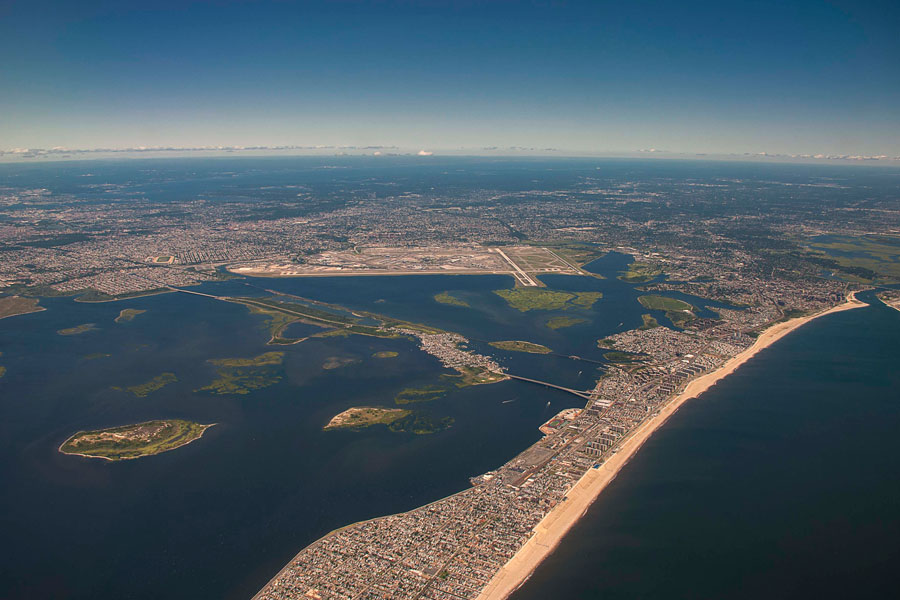
Jamaica Bay is a large tidal estuary located at the southwestern end of Long Island, where the boroughs of Brooklyn and Queens meet the Atlantic Ocean. Connected to New York Harbor through Rockaway Inlet, the bay is one of the largest urban estuaries in the United States and one of the Northeast’s most significant coastal ecosystems. Although surrounded by one of the world’s largest metropolitan areas, Jamaica Bay contains thousands of acres of open water, salt marshes, mudflats, creeks, and islands that support an extraordinary diversity of wildlife while providing countless recreational opportunities for residents and visitors.
For Long Island, Jamaica Bay represents far more than a scenic body of water. It serves as the island’s western maritime gateway, connecting the Atlantic Ocean with New York Harbor while separating the Rockaway Peninsula from Brooklyn and Queens. For centuries, the bay has influenced transportation, maritime commerce, aviation, fishing, conservation, military history, and coastal development, while continuing to support recreational activities such as boating, kayaking, and birdwatching. Today, Jamaica Bay remains one of the region’s most valuable environmental resources and an integral part of the New York metropolitan area.
Where Is Jamaica Bay?
Jamaica Bay occupies approximately 25 square miles along Long Island’s southwestern shoreline. It lies immediately east of the entrance to New York Harbor, south of Brooklyn and central Queens, and north of the Rockaway Peninsula. Through Rockaway Inlet, tidal waters flow freely between the bay and the Atlantic Ocean, making Jamaica Bay one of the most significant estuarine environments on Long Island, where fresh and salt water mix to support diverse coastal habitats. Together with the East River and New York Harbor, Jamaica Bay forms an important part of the island’s western coastal geography.
Although entirely within New York City, Jamaica Bay is geographically part of Long Island. Like the East River, New York Harbor, and the surrounding waterways, the bay helps define Long Island’s western boundary while connecting it to the greater New York metropolitan area.
A Landscape Shaped by Water
Unlike many bays that consist primarily of open water, Jamaica Bay is an intricate network of tidal channels, marsh islands, mudflats, coves, and creeks. Twice each day, ocean tides move millions of gallons of water through Rockaway Inlet, continually reshaping sediment and sustaining the bay’s wetlands.
These wetlands provide critical habitat for fish, shellfish, horseshoe crabs, terrapins, marine mammals, and hundreds of bird species. The marshes also serve an important role in improving water quality, reducing erosion, absorbing storm surge, and protecting nearby communities during coastal storms.
Wildlife and Bird Migration
Jamaica Bay is internationally recognized as one of the premier birdwatching locations in the northeastern United States. More than 325 species of birds have been recorded here, including osprey, snowy egrets, great blue herons, peregrine falcons, piping plovers, numerous species of ducks, geese, shorebirds, and migrating songbirds.
The bay serves as an essential stopover along the Atlantic Flyway, allowing migrating birds to rest and feed during their journeys between North and South America. Visitors interested in wildlife frequently combine trips to Jamaica Bay with other natural destinations featured in our guides to birdwatching on Long Island, seal watching, and whale watching.
Gateway National Recreation Area
Much of Jamaica Bay is protected within Gateway National Recreation Area, one of only a handful of National Park Service units located inside a major American city. The park preserves thousands of acres of wetlands, beaches, islands, and natural habitat while providing opportunities for hiking, photography, environmental education, boating, kayaking, and wildlife observation.
The Jamaica Bay Wildlife Refuge is one of the park’s best-known destinations, featuring freshwater ponds, walking trails, observation platforms, and educational exhibits that attract birdwatchers and photographers throughout the year.
Boating, Fishing, and Recreation
Protected waters, numerous tidal channels, and convenient access to the Atlantic Ocean have made Jamaica Bay a popular destination for recreational boating for generations. The bay contains numerous marinas, yacht clubs, public boat launches, and paddle launches that serve both New York City and Long Island residents. Its sheltered waters are also popular for kayaking and paddleboarding, while nearby channels provide easy access to New York Harbor and the open Atlantic. Visitors interested in exploring additional boating destinations throughout the region can also browse our guides to boating on Long Island, Long Island marinas, and kayaking on Long Island.
Fishing is equally popular throughout Jamaica Bay. Anglers target striped bass, bluefish, weakfish, blackfish, fluke, and other seasonal species from boats, docks, bridges, and shoreline access points. Those looking for additional fishing opportunities can explore our resources covering Long Island fishing, where to fish, and fishing charters.
The Rockaway Peninsula
The Rockaway Peninsula forms Jamaica Bay’s southern boundary, separating the estuary from the Atlantic Ocean. Its miles of sandy shoreline include destinations such as Rockaway Beach, while nearby communities connect the bay with New York City’s oceanfront neighborhoods. Similar barrier beaches extend eastward along Long Island’s South Shore, protecting numerous bays and inlets from direct Atlantic wave action.
Travelers exploring Long Island’s coastline often pair a visit to Jamaica Bay with nearby beaches or compare the area with other popular destinations featured in our guides to the best beaches on Long Island, beaches with boardwalks, beaches for fishing, and beaches with free parking.
John F. Kennedy International Airport
One of the most recognizable landmarks surrounding Jamaica Bay is John F. Kennedy International Airport, which occupies much of the bay’s northeastern shoreline in Queens. Aircraft arriving from around the world often provide passengers with dramatic aerial views of Jamaica Bay’s wetlands, marsh islands, the Rockaway Peninsula, the Atlantic Ocean, and the western edge of Long Island before landing. Because one of the nation’s busiest airports sits immediately adjacent to one of its most important urban estuaries, environmental stewardship has become an important part of balancing aviation operations with wildlife conservation and wetland restoration.
History of Jamaica Bay
For thousands of years, Indigenous peoples relied upon Jamaica Bay for fishing, shellfishing, transportation, and seasonal settlements. European colonists later used the bay for agriculture, maritime commerce, oyster harvesting, and fishing, helping shape the development of western Long Island.
During the late nineteenth and twentieth centuries, portions of the bay were dredged, filled, and developed to accommodate shipping, military installations, neighborhoods, and eventually airports. While these changes significantly altered the landscape, extensive restoration efforts over recent decades have focused on rebuilding marsh islands, improving water quality, restoring habitat, and preserving one of Long Island’s most valuable coastal ecosystems.
Jamaica Bay’s Importance to Long Island
Although often associated primarily with New York City, Jamaica Bay remains an essential part of Long Island’s geography. Together with the East River, New York Harbor, and the Atlantic Ocean, the bay helps define the island’s western shoreline while supporting transportation, recreation, tourism, fisheries, wildlife, and coastal resilience.
Its combination of natural beauty, ecological significance, recreational opportunities, and historical importance makes Jamaica Bay one of the most remarkable natural resources anywhere on Long Island.
Jamaica Bay at a Glance
| Key Facts & Details | Information |
|---|---|
| Location | Southwestern Long Island between Brooklyn, Queens, and the Rockaway Peninsula |
| Body of Water | Tidal estuary and coastal bay |
| Connected To | Atlantic Ocean through Rockaway Inlet and New York Harbor |
| Approximate Size | About 25 square miles |
| Protected Lands | Gateway National Recreation Area and Jamaica Bay Wildlife Refuge |
| Major Activities | Birdwatching, boating, fishing, kayaking, hiking, photography, and wildlife viewing |
| Nearby Landmark | John F. Kennedy International Airport |
| Ecological Significance | One of the largest urban estuaries and tidal wetland systems in the northeastern United States |
Jamaica Bay stands at the intersection of nature, history, and the New York metropolitan area. It is simultaneously a gateway to the Atlantic Ocean, a haven for wildlife, a destination for boating, kayaking, birdwatching, and outdoor recreation, and a defining feature of Long Island’s western shoreline. Whether viewed from the air, explored from its waterways, photographed across its marshes, or experienced while watching migrating birds, Jamaica Bay remains one of Long Island’s most extraordinary natural landscapes and an enduring reminder that remarkable ecosystems can thrive within the heart of New York City.
Are you ready for fall on Long Island? Check out these local seasonal guides:
🍎 Apple Picking 🍓 Strawberry Picking 🎃 Pumpkin Picking 👻 Haunted Houses 🍂 Farm Festivals