
Oyster Harvesting on Long Island
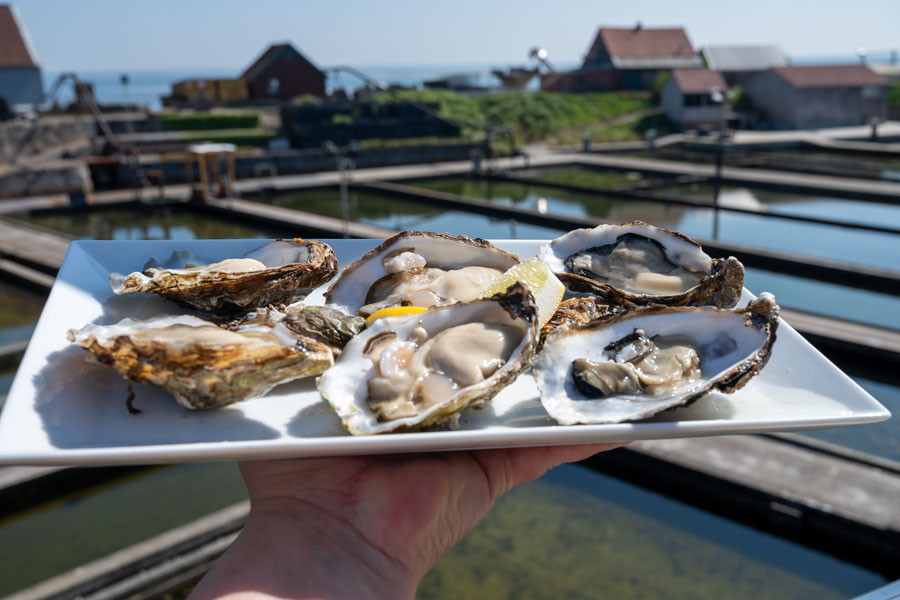
Oyster harvesting has been part of Long Island’s maritime economy for generations, and the industry remains active today. Wild oysters are harvested from approved shellfish grounds, while a growing number of aquaculture operations raise oysters on leased underwater lands and in floating or bottom-growing systems throughout the region.
Long Island’s sheltered bays and estuaries provide productive habitat for the Eastern oyster (Crassostrea virginica). Oyster harvesting and cultivation take place in waters ranging from the Great South Bay and Long Island Sound to the Peconic and Gardiners Bay system on the East End. Oyster Bay and the waters surrounding Long Island have also played important roles in the region’s shellfish industry.
Oyster Farming and Aquaculture on Long Island
Modern oyster production increasingly includes aquaculture, in which growers cultivate oysters rather than relying exclusively on naturally occurring oyster beds. Farmers typically begin with very small juvenile oysters known as seed and raise them in bags, cages or other permitted growing systems until they reach market size.
Suffolk County operates a Shellfish Aquaculture Lease Program covering portions of Peconic Bay and Gardiners Bay. The program provides commercial growers access to designated county-owned underwater lands for shellfish cultivation.
As of January 2026, Suffolk County reported 39 shellfish aquaculture leases covering approximately 781 acres in Peconic and Gardiners Bays. Oyster production from the county’s ten-acre lease sites increased from approximately 1.1 million oysters in 2023 to 2.7 million in 2024. Suffolk County estimated the 2024 dockside value at approximately $2 million and reported that these leases accounted for about 27% of cultured oysters produced statewide that year.
Oyster Farming in Great South Bay
Great South Bay also supports an active oyster aquaculture industry. Cornell’s Small Farms Program reported in 2026 that 23 aquaculture operations were operating in the shallow portions of the bay discussed in its profile of a local oyster farm.
Some Great South Bay growers raise oysters in floating cages, where the oysters can be regularly sorted and managed as they develop. Depending on growing conditions and farming practices, oysters may require roughly a year and a half or longer to reach marketable size.
The bay is particularly associated with the Blue Point oyster, a name with longstanding connections to Long Island’s oyster industry and seafood history.
Peconic Bay and Gardiners Bay Oyster Cultivation
The East End is another important center of Long Island oyster production. Suffolk County’s aquaculture program encompasses designated portions of Peconic Bay, Great Peconic Bay, Little Peconic Bay, Gardiners Bay and surrounding waters.
Shellfish cultivation in these waters has deep historical roots. Suffolk County records note that New York State legislation dating to 1884 allowed the county to issue grants of underwater land in Peconic and Gardiners Bays for oyster cultivation. The modern Suffolk County Shellfish Aquaculture Lease Program was established in 2009 after New York State transferred control of approximately 110,000 acres of underwater land to the county for purposes related to shellfish cultivation.
Not all of that underwater acreage is available for aquaculture. Cultivation is restricted to designated areas, and commercial operations require applicable leases, permits and regulatory approvals.
Wild Oyster Harvesting
Not every Long Island oyster comes from an oyster farm. Wild shellfish harvesting continues in waters that are legally open and sanitary enough for shellfish to be taken for consumption.
The New York State Department of Environmental Conservation classifies shellfish lands as certified or uncertified based on sanitary conditions. Because oysters and other bivalves filter large quantities of water as they feed, contaminants present in surrounding water can accumulate in shellfish and create a public-health risk.
For that reason, an area that physically contains oysters is not necessarily legal or safe for harvesting. Permanent, seasonal, temporary and emergency closures can affect Long Island shellfish grounds.
Recreational Oyster Harvesting
Recreational shellfishing is also permitted in parts of Long Island, subject to state and local regulations. New York State does not require a DEC recreational shellfish permit, but recreational harvesters are subject to harvest limits and may need permits issued by the town where they intend to collect shellfish.
Local regulations can differ considerably from one town to another. Rules may address residency, permits, minimum shell size, daily possession limits, harvesting methods, seasons and locations where shellfishing is permitted.
Anyone planning to harvest oysters should therefore check both local town regulations and current NYSDEC shellfish closures before entering the water. An area that was open previously can be temporarily closed because of water-quality conditions or other public-health concerns.
Commercial Oyster Harvesting
Commercial oyster harvesting is more heavily regulated. Commercial shellfish harvesters must hold the appropriate permits and comply with requirements governing harvest areas, tagging, recordkeeping, handling, cooling and delivery.
Temperature control is especially important during warmer months because of the risk associated with naturally occurring Vibrio bacteria. Under New York’s 2026 requirements, oysters harvested from specified Long Island harvest areas between May 1 and September 30 must be cooled immediately when harvesting begins and maintained under temperature control. Commercially harvested shellfish must also be delivered to an appropriately certified dealer in Nassau or Suffolk County on the day of harvest.
Why Oysters Matter to Long Island’s Bays
Oysters are valuable as both a seafood product and part of the marine environment. As filter feeders, oysters continuously move water across their gills while feeding on microscopic organisms and suspended particles. Oyster reefs and beds can also provide habitat used by other marine organisms.
These ecological characteristics have made oysters an important component of shellfish restoration efforts in addition to their role in commercial aquaculture. Around Long Island, oyster cultivation, shellfish restoration and water-quality initiatives increasingly overlap as communities work to support healthier coastal ecosystems.
Key Facts & Details
| Topic | Details |
|---|---|
| Primary Species | Eastern oyster (Crassostrea virginica) |
| Major Long Island Areas | Great South Bay, Peconic Bay, Gardiners Bay, Oyster Bay and portions of Long Island Sound and surrounding estuaries |
| Commercial Production | Includes both harvesting from approved shellfish grounds and oyster aquaculture |
| Suffolk County Aquaculture | Shellfish Aquaculture Lease Program |
| Peconic & Gardiners Bay Leases | 39 leases covering approximately 781 acres as of January 2026 |
| Reported Oyster Production | Approximately 2.7 million oysters landed from Suffolk County’s ten-acre lease sites in 2024 |
| Estimated 2024 Dockside Value | Approximately $2 million from the county’s ten-acre lease sites |
| Great South Bay Aquaculture | Cornell reported 23 oyster-growing operations in the portion of Great South Bay discussed in its 2026 farm profile |
| Recreational Harvesting | Permitted in qualifying open waters subject to state harvest limits and local town regulations |
| State Recreational Permit | NYSDEC does not require a recreational shellfish permit, although individual towns may require permits |
| Water Quality & Closures | NYSDEC Shellfish Closures and Certified Areas |
| Commercial Regulation | NYSDEC Shellfish Digger Permit & Vessel Endorsement |
Oyster harvesting on Long Island is not simply a remnant of the region’s maritime past. Commercial growers, wild harvesters and recreational shellfishers continue to work Long Island waters, while modern aquaculture has created new opportunities for locally raised oysters in Great South Bay, Peconic Bay and Gardiners Bay and other coastal areas. With millions of cultivated oysters now being produced through Suffolk County’s aquaculture leases alone, oysters remain an active part of Long Island’s working waterfront and marine environment.
Are you ready for fall on Long Island? Check out these local seasonal guides:
🍎 Apple Picking 🍓 Strawberry Picking 🎃 Pumpkin Picking 👻 Haunted Houses 🍂 Farm Festivals