
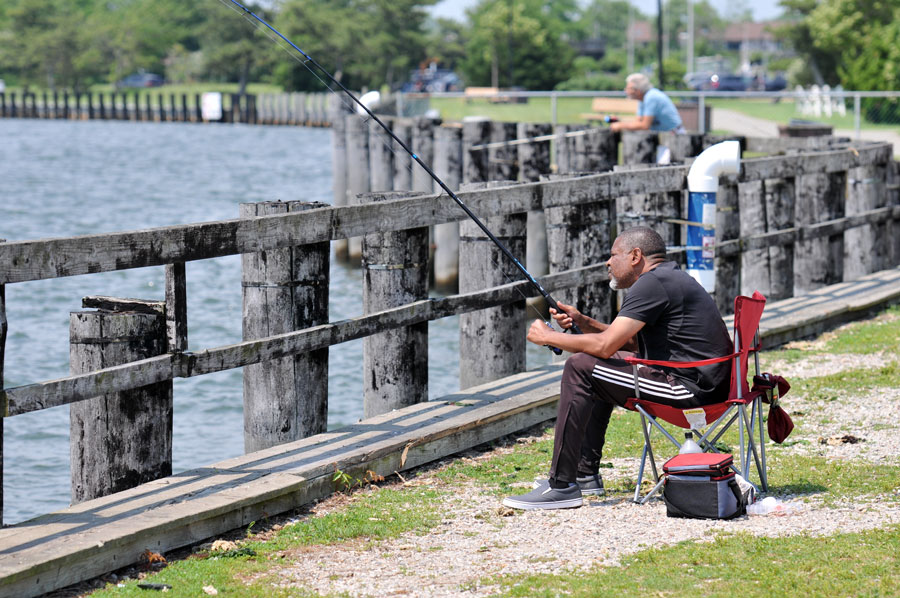
You can fish on Long Island from designated beaches and piers, aboard fishing boats, and at freshwater lakes, ponds, and streams. Starting points include Jones Beach State Park and Robert Moses State Park for shoreline fishing, Captree State Park for fishing-boat trips, and Belmont Lake State Park and Hempstead Lake State Park for freshwater outings.
The right destination depends on whether you want to fish from shore, join a boat trip, or explore inland waters. Our Long Island Fishing Guide provides a broader introduction to locations, species, and seasonal patterns across Nassau County and Suffolk County.
Where Can You Fish From the Shore?
Jones Beach State Park and Robert Moses State Park offer designated fishing access along the South Shore. Check the particular field, shoreline section, parking arrangements, and access hours before leaving. A park being open does not mean fishing is permitted from every beach, dock, or swimming area.
Fire Island National Seashore provides additional shoreline opportunities, but access and restrictions vary by location. Some destinations require a ferry connection, while others are reached through road-accessible areas at the island’s ends. Plan transportation, permitted fishing locations, and the return journey together.
Farther east, Montauk is associated with surfcasting and boat fishing. Along the North Shore, anglers can explore designated public access points facing Long Island Sound and its harbors. Shoreline ownership and local parking rules matter: a visible stretch of water is not necessarily a legal public fishing location.
Where Can You Take a Fishing-Boat Trip?
Captree State Park is a starting point for party-boat and charter fishing. A party boat generally sells individual places on a shared trip, while a private charter is booked for your group. Compare the target species, trip length, departure time, equipment provided, and cancellation arrangements before reserving.
Other places to research boat trips include Freeport and its Nautical Mile, Montauk Harbor, and waterfront communities such as Port Washington and Port Jefferson. Confirm the actual departure dock, since boats serving the same community may leave from different locations.
The Great South Bay, Long Island Sound, and Atlantic Ocean offer different fishing environments. A protected-bay outing and an offshore trip can involve very different conditions, equipment, and travel time. Ask the operator which type of trip you are booking.
Where Can You Go Freshwater Fishing?
Belmont Lake State Park, in North Babylon, is an option for freshwater fishing in western Suffolk County. Follow the lake’s special fishing regulations as well as park access rules; statewide seasons and limits do not necessarily apply unchanged to every waterbody.
In Nassau County, Hempstead Lake State Park offers fishing access at Hempstead Lake, McDonald Pond, and South Pond. Check the permitted shoreline areas and current park instructions before choosing where to set up.
Connetquot River State Park Preserve provides a more structured fly-fishing experience with separate arrangements for fishing access. Confirm the current reservation, permit, tackle, and session requirements directly with the preserve. Do not assume that ordinary park admission includes permission to fish anywhere along the river.
Do You Need a Fishing License or Registration?
Freshwater anglers age 16 and older generally need a New York State fishing license, although exemptions apply. Review the Department of Environmental Conservation’s freshwater license requirements for your circumstances. A fishing license does not replace a park admission charge, access permit, or reservation.
For saltwater fishing, anglers age 16 and older generally must enroll in New York’s Recreational Marine Fishing Registry. There are exemptions, including fishing aboard an appropriately licensed party or charter boat in the marine and coastal district. Confirm the applicable requirements with DEC and your operator rather than assuming all boat trips are covered.
Before keeping fish, check the current recreational saltwater fishing regulations or the freshwater rules for your destination. Seasons, minimum sizes, possession limits, and gear restrictions depend on the species and waterbody. Shellfishing is a separate activity with its own harvest rules, local permit requirements, and closure notices.
Key Facts & Details
| Fishing Experience | Places to Fish |
|---|---|
| Surf and Shoreline Fishing | Designated areas at Jones Beach State Park, Robert Moses State Park, and Fire Island National Seashore. |
| Party Boats and Charters | Captree State Park, Freeport’s Nautical Mile, and Montauk Harbor are departure hubs for fishing trips. |
| Bay and Sound Fishing | Great South Bay and Long Island Sound offer saltwater fishing from boats and designated shoreline access points. |
| Freshwater Fishing | Belmont Lake State Park and Hempstead Lake State Park provide lake and pond fishing opportunities. |
| Managed Fly Fishing | Connetquot River State Park Preserve offers permit-based fly fishing. |
| Fishing Guide | Our Long Island Fishing Guide covers fishing locations, common species, and seasonal patterns. |
Plan Around Access, Conditions, and Your Target Species
Choose a destination based on the fishing experience you want and the species you intend to target. Seasonal fish activity is not the same as a legal harvest season, and an accessible waterfront is not automatically open for fishing. Check with the managing park, municipality, or boat operator about the exact location and any additional access requirements.
Before leaving, review the weather and marine conditions, along with tides where relevant. Keep clear of designated swimming areas and boat traffic, respect private property and posted closures, and remove discarded fishing line, hooks, and other waste.
From designated surf-fishing areas and fishing-boat departures to freshwater parks and managed streams, Long Island offers several ways to plan an angling trip. Start with our Long Island Fishing Guide, choose a location suited to your experience and interests, and confirm access and current regulations before heading out.