
MASSAPEQUA, NY – One of the most haunting and closely followed criminal cases in modern Long Island history has reached its legal conclusion. Rex A. Heuermann, the Massapequa Park architect arrested in the Gilgo Beach homicide investigation, pleaded guilty on April 8, 2026, to murdering seven women and admitted in court that he killed an eighth.
On June 17, 2026, Suffolk County Court Judge Timothy P. Mazzei sentenced Heuermann to three consecutive life terms without the possibility of parole, followed by four consecutive terms of 25 years to life. Those additional terms total 100 years to life.
The sentence ended the criminal prosecution of Heuermann without the lengthy trial that had been scheduled to begin in September 2026. It also provided a public admission of responsibility for killings that began in 1993 and continued through 2010, a period spanning at least 17 years.
Heuermann was formally convicted of seven murders. His eighth admitted victim, Karen Vergata, was not the subject of a separate murder charge. Under the plea agreement, Heuermann admitted intentionally causing her death, and that killing was covered by his guilty pleas in the seven charged cases.
The outcome brings legal finality to the prosecution against Heuermann. It does not, however, establish that he was responsible for every death or set of human remains historically discussed as part of the wider Gilgo Beach investigation.
How the Gilgo Beach Investigation Began
The investigation that eventually led to Heuermann began with the disappearance of Shannan Gilbert, a 23-year-old woman from New Jersey who vanished from the gated Oak Beach community during the early morning hours of May 1, 2010.
Gilbert had been driven to Oak Beach to meet a client. During a lengthy 911 call, she told an emergency operator that someone was after her. She left the residence, sought help at neighboring homes and disappeared into the darkness before police arrived.
While searching for Gilbert on December 11, 2010, a Suffolk County police officer and a trained dog discovered human remains in thick vegetation on the north side of Ocean Parkway near Gilgo Beach. The remains were later identified as those of Melissa Barthelemy.
Within days, investigators discovered three more women nearby: Megan Waterman, Amber Lynn Costello and Maureen Brainard-Barnes. The four victims were found within a relatively short distance of one another and became widely known as the “Gilgo Four.”
All four had advertised escort or sex-work services, had arranged meetings using telephones or online advertisements and had disappeared between 2007 and 2010. Their remains had been bound or wrapped before being left near the parkway.
Additional Remains Found Along Ocean Parkway
The discovery of the Gilgo Four led police to expand the search east and west along Ocean Parkway. During March and April 2011, investigators found six additional sets of human remains in areas extending from Gilgo Beach toward the Nassau County line.
Some of those remains were eventually connected to victims whose partial remains had been found years earlier in other parts of Long Island. Jessica Taylor and Valerie Mack had both been found in Manorville before additional portions of their remains were recovered near Ocean Parkway. Karen Vergata’s remains were found on Fire Island in 1996 and near Tobay Beach in 2011.
Gilbert’s own remains were discovered in an Oak Beach marsh on December 13, 2011, approximately 19 months after she disappeared. Her official cause and manner of death were classified as undetermined. Suffolk County police did not connect her death to Heuermann, and he was never charged with or admitted responsibility for it. Gilbert’s family has long disputed the theory that her death was accidental.
Although Gilbert was not among Heuermann’s admitted victims, the search prompted by her disappearance led directly to the discovery of the Gilgo Four and the wider investigation. Her role in bringing the case to public attention remains inseparable from its history.
The Eight Women Heuermann Admitted Killing
The crimes admitted by Heuermann extended far beyond the four women discovered near Gilgo Beach in December 2010. His guilty plea and accompanying admission established his responsibility for eight killings committed across Long Island between November 1993 and September 2010.
Sandra Costilla: Costilla was 28 years old when Heuermann killed her in November 1993. During his plea, he admitted meeting Costilla, picking her up and strangling her. Her remains were left near Fish Cove Road in North Sea, within the Town of Southampton, where hunters discovered her on November 20, 1993. Costilla was the earliest known victim included in Heuermann’s admissions and left behind a young son.
Karen Vergata: Vergata was 34 when Heuermann killed her in April 1996. He admitted strangling and dismembering her before transporting her remains to different locations. Her legs were discovered at Blue Point Beach on Fire Island on April 20, 1996. Her skull was recovered near Tobay Beach during the expanded Ocean Parkway search in April 2011. She was known for years as “Fire Island Jane Doe” before genetic genealogy led to her identification in 2023. Vergata left behind two sons.
Valerie Mack: Mack was 24 when she was killed in 2000. Heuermann admitted strangling and dismembering her before leaving her remains in Manorville and near Gilgo Beach. Hunters discovered partial remains near Mill Road in Manorville on November 19, 2000. Her skull, hands and right foot were found near Ocean Parkway in April 2011. Previously identified only as “Jane Doe No. 6,” she was publicly identified as Valerie Mack through genetic genealogy in 2020. She was survived by her son and adoptive parents.
Jessica Taylor: Taylor was 20 when Heuermann killed her in July 2003. He admitted strangling and dismembering her before leaving her remains in Manorville and near Ocean Parkway. Partial remains were discovered near Halsey Manor Road on July 26, 2003. Additional remains were found east of Gilgo Beach on March 29, 2011. Taylor was survived by her mother and extended family.
Maureen Brainard-Barnes: Brainard-Barnes was a 25-year-old mother of two from Connecticut. Heuermann used a burner phone to arrange a meeting with her after seeing an online advertisement. He admitted picking her up on July 9, 2007, and strangling her. Her remains were secured with belts and left along Ocean Parkway, where they were discovered on December 13, 2010.
Melissa Barthelemy: Barthelemy was 24 when she disappeared in July 2009. Heuermann admitted using a burner phone to arrange a meeting, picking her up and strangling her. Her remains were bound with tape and burlap and left near Gilgo Beach, where they were discovered on December 11, 2010. After Barthelemy disappeared, a caller using her phone repeatedly contacted and tormented her teenage sister, an important part of the cellphone investigation that followed.
Megan Waterman: Waterman was 22 and the mother of a young daughter. Heuermann admitted arranging a meeting using a burner phone and picking her up from a Hauppauge hotel on June 6, 2010. He strangled her, bound her remains with tape and burlap and left them near Ocean Parkway. Waterman was discovered on December 13, 2010.
Amber Lynn Costello: Costello was 27 and lived in West Babylon. Heuermann admitted using a burner phone to arrange a meeting with her on September 2, 2010, after an encounter the previous night had been interrupted. He picked Costello up from her residence, strangled her and left her bound remains near Gilgo Beach. She was discovered on December 13, 2010.
Years Without an Arrest
Despite the national attention surrounding the discoveries, the investigation continued for more than a decade without an arrest. Detectives reviewed telephone records, interviewed witnesses, examined physical evidence and attempted to determine whether one person or multiple offenders were responsible for the remains found across Long Island.
The long delay generated criticism from victims’ relatives, advocates and members of the public. The investigation also unfolded during a period of turmoil within Suffolk County law enforcement. Former Suffolk County Police Chief James Burke, who led the department from 2012 through 2015, was later convicted in an unrelated federal civil-rights and obstruction case. Other law-enforcement officials criticized his department’s limited cooperation with federal authorities during portions of the Gilgo investigation.
The FBI formally joined the investigation in 2015, but a decisive breakthrough did not come until the evidence was revisited through a dedicated multiagency structure several years later.
The Gilgo Beach Homicide Task Force
In February 2022, Suffolk County District Attorney Raymond A. Tierney formed the Gilgo Beach Homicide Task Force. It brought together investigators from the Suffolk County District Attorney’s Office, Suffolk County Police Department, New York State Police, FBI and Suffolk County Sheriff’s Office.
The task force returned to witness statements and records accumulated during the earlier investigation. One of the most important clues involved a first-generation Chevrolet Avalanche associated with a man seen near Amber Costello’s home around the time she disappeared.
Investigators determined that Heuermann had owned a first-generation Chevrolet Avalanche at the time of Costello’s killing. He also matched the general description provided by a witness. By March 2022, the task force had identified him as a suspect and began examining his movements, communications, vehicles, financial records and electronic activity.
Burner Phones, Cell-Site Records and Digital Evidence
Investigators compared Heuermann’s personal cellphone activity with records from burner phones used to contact the women. Prosecutors said the burner phones repeatedly appeared in the same general areas as Heuermann, particularly near his Massapequa Park home and Manhattan office.
Cell-site information, travel patterns and financial records also placed Heuermann in areas where burner phones connected to the crimes were being used. The records helped investigators connect communications with the women before they disappeared and calls made from victims’ phones afterward.
Searches of Heuermann’s electronic devices and online accounts uncovered additional evidence. Prosecutors said he used aliases to communicate with sex workers, followed news about the Gilgo Beach investigation and searched for information concerning the victims and their relatives.
DNA From a Discarded Pizza Crust
Investigators also used DNA evidence recovered from hair found with the victims. In January 2023, surveillance officers observed Heuermann discard a pizza box outside his Manhattan office. The remaining pizza crust was collected and tested.
Prosecutors said DNA from the discarded crust was consistent with a male hair recovered from burlap used to wrap Megan Waterman’s remains. Additional hair evidence found with other victims was linked through forensic testing to Heuermann or members of his household.
Authorities consistently said Heuermann’s wife and children were away during relevant periods and were not accused of participating in the murders. The household hairs were treated as evidence connecting materials used in the crimes to Heuermann’s residence, not as evidence that his relatives were responsible.
The Massapequa Park Home and Planning Document
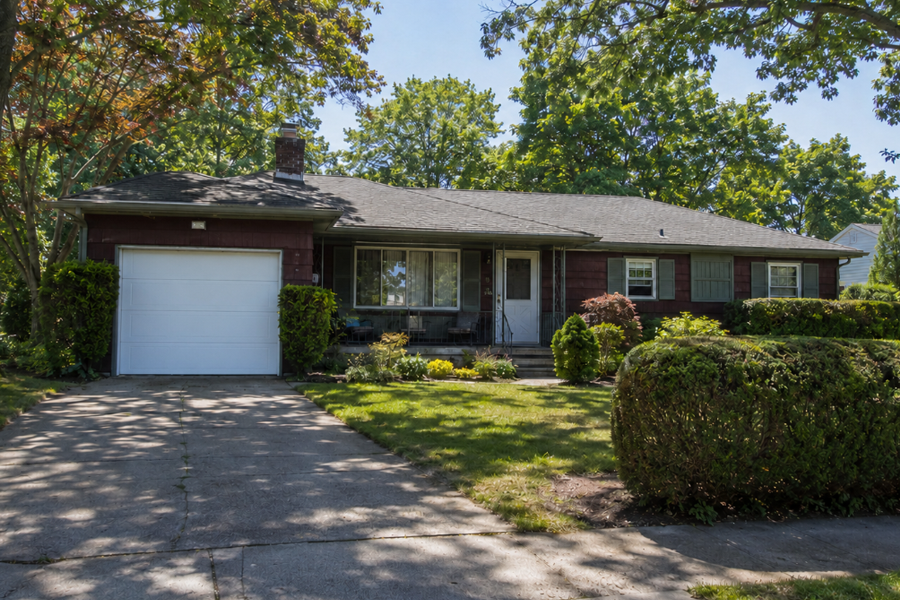
Heuermann’s longtime First Avenue home in Massapequa Park became a major evidence scene immediately after his arrest. Investigators spent nearly two weeks searching the property in July 2023 and returned with another search warrant in May 2024.
Authorities removed electronic devices, documents and other materials. Prosecutors said investigators found newspapers, magazines and other publications concerning the Gilgo Beach investigation and several of the individual victims in the house and Heuermann’s office.
Investigators also recovered a deleted Microsoft Word file from Heuermann’s laptop. Known as the “HK Planning Document,” it had been created in 2000 and modified during the following years. Prosecutors described it as a detailed blueprint addressing potential targets, supplies, methods, evidence removal, body preparation and disposal locations.
The document included references that prosecutors connected to the conditions in which Valerie Mack and Jessica Taylor were found. It also referred to Mill Road, near the Manorville location where Mack’s partial remains were discovered in 2000.
After Heuermann’s guilty plea, his former wife, Asa Ellerup, publicly said he had told her that seven of the killings occurred in a downstairs room while the family was away and that one occurred elsewhere. That account represents what Ellerup said Heuermann told her. Because the case ended with a plea instead of a trial, the assertion was not separately tested through trial testimony and cross-examination.
Arrest and Expanding Murder Charges
Heuermann was arrested in Manhattan on July 13, 2023. He was initially charged with murdering Melissa Barthelemy, Megan Waterman and Amber Lynn Costello and was identified as the leading suspect in the death of Maureen Brainard-Barnes.
A grand jury charged him with Brainard-Barnes’ murder in January 2024. Additional charges involving Jessica Taylor and Sandra Costilla followed in June 2024. In December 2024, prosecutors added the murder of Valerie Mack, bringing the number of charged victims to seven.
Heuermann initially pleaded not guilty and remained in custody while prosecutors assembled an extensive case involving physical evidence, DNA analysis, telephone records, witness accounts, electronic searches, financial transactions and the planning document recovered from his computer.
The April 2026 Guilty Plea
On April 8, 2026, Heuermann changed his pleas in Suffolk County Court in Riverhead. He pleaded guilty to three counts of first-degree murder and four counts of second-degree murder covering the seven charged victims.
During a detailed plea allocution, Heuermann admitted meeting the women, arranging encounters through burner phones, strangling each of them and transporting their remains to locations across Long Island. He also admitted dismembering Vergata, Mack and Taylor.
Heuermann then admitted killing Karen Vergata, whose death had not been included in the indictment. In exchange for that admission, Vergata’s killing was covered by the plea agreement, and prosecutors did not bring a separate eighth murder charge.
The agreement required Heuermann to accept three consecutive life sentences without parole and four additional consecutive sentences of 25 years to life. He also agreed to cooperate with the FBI’s Behavioral Analysis Unit, which studies violent offenders and patterns of criminal behavior.
Families Confront Heuermann at Sentencing
Relatives of the women addressed Heuermann during the June 17 sentencing hearing. They spoke about children growing up without their mothers, years spent waiting for identifications and arrests, and the lasting emotional harm caused by the killings.
Heuermann offered only a brief statement. He said there were no words he could offer and acknowledged responsibility for what had been described in the courtroom. When Judge Mazzei pressed him about whether he was sorry for the women he had killed, Heuermann answered that he was.
Mazzei rejected that limited expression of remorse and described Heuermann as a coward before imposing the agreed sentence. The judge ordered court officers to remove him after announcing three consecutive life-without-parole terms and four consecutive sentences of 25 years to life.
The sentence guarantees that Heuermann will remain imprisoned for the rest of his life. It also prevented the victims’ families from having to endure the months-long trial that prosecutors and defense attorneys had been preparing to begin in September.
What the Sentence Does and Does Not Resolve
The guilty pleas conclusively establish Heuermann’s criminal responsibility for seven murders and include his sworn admission to the killing of Karen Vergata. His prosecution and sentencing are over, subject only to the continuing obligations contained in the plea agreement.
The result should not be interpreted as a finding that Heuermann was responsible for every person whose remains were found along Ocean Parkway or every unresolved death once discussed in connection with the “Long Island Serial Killer” investigation.
Heuermann was not charged with Shannan Gilbert’s death. Other remains discovered during the expanded searches were also not included in his convictions or admissions. Those separate cases must be evaluated according to their own evidence rather than being automatically attributed to him.
The conclusion of Heuermann’s prosecution therefore solves the eight killings he admitted. It does not necessarily close every separate homicide investigation or civil claim arising from the wider history of the Gilgo Beach case.
A Case That Changed Long Island
The Gilgo Beach murders grew far beyond a regional crime story. The case received international attention and inspired books, films, documentaries, podcasts and years of television coverage. It became a defining story about unsolved crime on Long Island and about the ability of a killer to hide behind an apparently ordinary suburban life.
The case also prompted difficult questions about the treatment of missing people involved in sex work. Families and advocates argued that stigma influenced how urgently disappearances were investigated and how victims were portrayed after their deaths.
Gilgo Beach, Oak Beach and Ocean Parkway are normally associated with beaches, fishing, boating and summer travel. For more than 15 years, those communities were also linked to an unresolved investigation that transformed an isolated stretch of coastal roadway into one of the most recognizable crime scenes in the country.
The final court proceedings shifted attention back toward the eight women, their children, parents, siblings and extended families. Their relatives continued pressing for answers through years of uncertainty, investigative setbacks and public speculation.
Key Facts & Details
| Category | Details |
|---|---|
| Case Commonly Known As | Gilgo Beach murders or Gilgo Beach serial killings |
| Defendant | Rex A. Heuermann of Massapequa Park |
| Known Crime Period | November 1993 through September 2010 |
| Task Force Formed | February 2022 |
| Arrest Date | July 13, 2023 |
| Guilty Plea Date | April 8, 2026 |
| Sentencing Date | June 17, 2026 |
| Murder Convictions | Seven: three counts of first-degree murder and four counts of second-degree murder |
| Charged Victims | Melissa Barthelemy, Megan Waterman, Amber Lynn Costello, Maureen Brainard-Barnes, Jessica Taylor, Sandra Costilla and Valerie Mack |
| Additional Killing Admitted | Karen Vergata, who was not separately charged |
| Total Killings Admitted | Eight |
| Sentence | Three consecutive life sentences without parole, followed by four consecutive terms of 25 years to life |
| Legal Outcome | Heuermann will remain imprisoned for life without the possibility of parole |
The sentencing of Rex Heuermann closes the criminal case against the man who admitted killing eight women across Long Island over at least 17 years. The result followed renewed investigative work, cooperation among local, state and federal agencies, advances in forensic science and the persistence of families who refused to allow their loved ones to be forgotten. No guilty plea or prison sentence can restore the lives that were taken, but the final judgment provides a permanent legal reckoning and ends the possibility that Heuermann will ever return to the communities where he committed his crimes.
Are you ready for fall on Long Island? Check out these local seasonal guides:
🍎 Apple Picking 🍓 Strawberry Picking 🎃 Pumpkin Picking 👻 Haunted Houses 🍂 Farm Festivals