

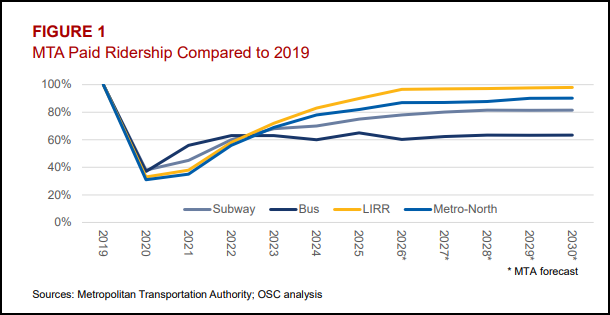
LONG ISLAND, NY – The Long Island Rail Road is projected to reach 97% of its 2019 ridership in 2026, leading the recovery among the Metropolitan Transportation Authority’s transit and commuter rail services, according to a new state comptroller report that also warns of growing future budget gaps.
The October financial outlook report, released by State Comptroller Thomas P. DiNapoli’s office on October 22, reviews the MTA’s July financial plan. That plan balances the authority’s $21.9 billion operating budget for 2026 but projects annual gaps increasing from $295 million in 2027 to $897 million in 2030.
For riders across Nassau and Suffolk, the findings place the railroad’s recovery alongside a broader financial challenge: returning passengers are helping the system, while expenses continue to put pressure on the agency that operates it.
LIRR Recovery Outpaces Other MTA Transit Services
The report puts LIRR ridership at 91.1 million in 2019, followed by 30.3 million in 2020, a decline of approximately 67%. By 2025, ridership had recovered to nearly 82 million, or about 90% of the 2019 level.
The 97% figure for 2026 is a financial-plan forecast, rather than a completed-year count. It also describes total railroad ridership, not the percentage of former commuters who have returned or the recovery at every station and branch.
| MTA service | Projected 2026 ridership as a share of 2019 | Remaining shortfall from 2019 |
|---|---|---|
| Long Island Rail Road | 97% | 3% |
| Metro-North Railroad | 87% | 13% |
| New York City subway | 78% | 22% |
| New York City Transit and MTA Bus paid ridership | 60% | 40% |
The comptroller’s report attributes part of the LIRR’s recovery to additional service to Grand Central Madison, which began in 2023. Even by 2030, however, the July plan forecasts 89.2 million LIRR rides, approximately 2% below 2019.
Annual MTA Budget Gaps Grow Through 2030
The budget gaps apply to the MTA as a whole, not to the LIRR alone. They also depend on which assumptions are used: the comptroller separately evaluated potential risks and additional resources that could change the authority’s forecast.
| Year | MTA July plan projected gap | Gap after comptroller adjustments |
|---|---|---|
| 2027 | $295 million | Potentially balanced with projected 2026 resources carried forward |
| 2028 | $507 million | $517 million |
| 2029 | $707 million | $669 million |
| 2030 | $897 million | $812 million |
The distinction matters for the near-term outlook. The comptroller found that additional resources could address the 2027 gap if carried forward from 2026, while substantial gaps would remain in later years. The figures do not, by themselves, establish a specific service reduction or additional fare increase.
Costs Rise Faster Than Revenue
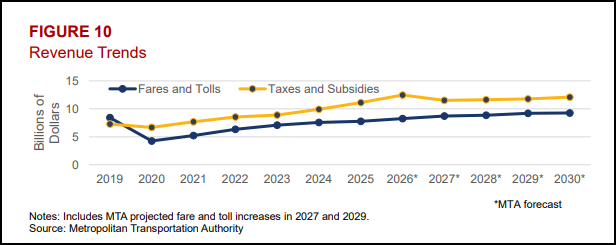
The comptroller’s October 22 announcement reports projected annual operating expense growth of 3.4% over the 2027–2030 plan period, compared with revenue growth of 2.1%. Health benefits, debt payments, energy and other costs are among the pressures identified.
The financial plan assumes fare and toll yields will increase by 4% in March 2027 and March 2029, subject to future MTA Board approval. These are revenue assumptions across the system, not a published schedule showing that every LIRR ticket would rise by exactly 4%.
The report also highlights a change in how the authority pays for operations. Fares and tolls covered more than half of operating expenses before the pandemic but only 34% in 2025, leaving the MTA more dependent on taxes and subsidies.
More Riders, but Lower Customer Satisfaction
The report’s survey results show that LIRR customer satisfaction fell from 81% in spring 2025 to 73% in spring 2026, a decline of 8 percentage points. The comptroller attributed most of that decline to changes in ticket policies combined with a fare increase.
Ridership and satisfaction measure different things: more trips can occur even when a smaller share of surveyed customers is satisfied. For the LIRR, the report documents both a comparatively strong recovery in use and continuing concerns about the passenger experience.
Key Facts & Details
| Measure | Details |
|---|---|
| Report release | October 22, 2026 |
| Issuing office | New York State Comptroller |
| Financial plan reviewed | MTA July plan, released July 29, 2026 |
| Primary Long Island service | Long Island Rail Road, serving Nassau and Suffolk and connecting with New York City |
| LIRR 2019 ridership | 91.1 million |
| LIRR 2025 ridership | Nearly 82 million, about 90% of 2019 |
| LIRR 2026 recovery forecast | 97% of 2019 ridership |
| LIRR 2030 ridership forecast | 89.2 million, approximately 98% of 2019 |
| 2026 operating budget | $21.9 billion, balanced in the MTA July plan |
| 2030 annual operating gap | $897 million in the MTA plan; $812 million after comptroller adjustments |
| LIRR customer satisfaction | 73% in spring 2026, compared with 81% in spring 2025 |
| Source report | Financial Outlook for the Metropolitan Transportation Authority, Report 14-2027 |
Methodology: Ridership history, forecasts, budget gaps and survey results come from the comptroller’s October 2026 report. Historical results are distinguished from financial-plan projections. Budget figures cover the entire MTA; they are not LIRR-only deficits. Percentage-point changes and shortfalls from the 2019 ridership baseline were calculated from the report’s published percentages.
The LIRR’s projected recovery brings its ridership close to the pre-pandemic benchmark, but that progress sits within an MTA budget facing persistent cost pressures. For Long Island riders, the coming financial decisions will turn on how effectively the authority converts returning passengers, public funding and savings into reliable service while addressing the gaps projected for later years.
Are you ready for fall on Long Island? Check out these local seasonal guides:
🍎 Apple Picking | 🍂 Fall Festivals & Farm Activities | 👻 Haunted Houses | 🎃 Pumpkin Picking