
Where can I whale watch?
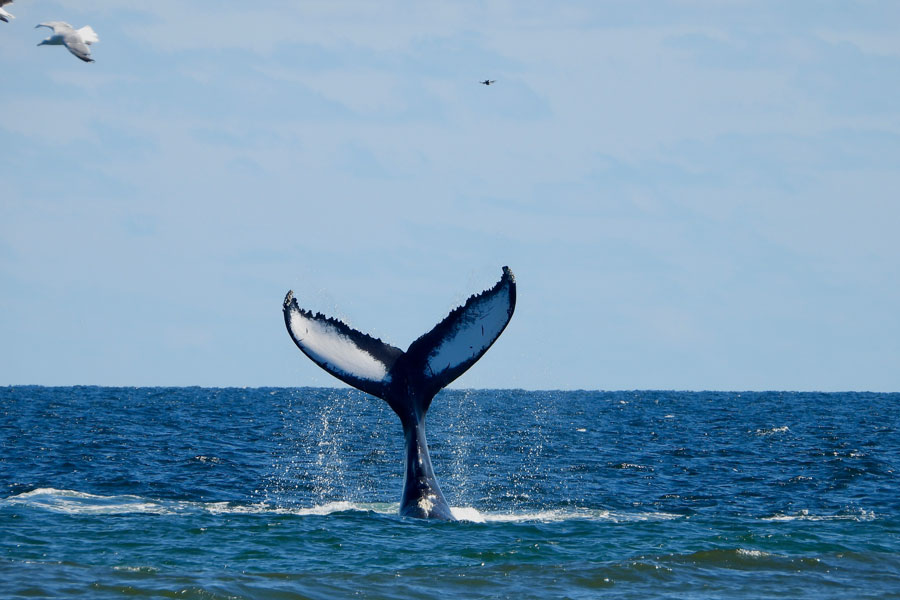
Long Island offers some of the most exciting whale-watching opportunities in the New York metropolitan region, with seasonal cruises traveling into the Atlantic Ocean in search of humpback whales, fin whales, minke whales, dolphins, sea turtles, and seabirds. Most excursions operate during the warmer months from ports on the South Shore and East End.
Montauk is Long Island’s best-known whale-watching destination because of its location near deep offshore waters and productive feeding areas. Seasonal trips may also leave from South Shore ports and marinas, including areas around Freeport and Captree State Park, depending on current operators and schedules.
In Short
The main whale-watching season on Long Island generally runs from late spring through fall, with many trips operating between June and October. Montauk is the leading departure area, while seasonal excursions may also be available from South Shore marinas. Humpback whales are the species visitors are most likely to recognize, although fin whales, minke whales, dolphins, sea turtles, seals, and numerous seabirds may also be encountered. Reservations are strongly recommended, and every trip remains dependent on weather, ocean conditions, wildlife activity, and operator schedules.
Where Can I Go Whale Watching on Long Island?
Montauk, at the eastern end of the South Fork, is generally considered Long Island’s premier whale-watching destination. Its position near Montauk Point, Block Island Sound, and the open Atlantic gives excursion boats access to productive offshore feeding grounds.
Trips departing from Montauk may travel several miles offshore while captains and naturalists search for signs of whale activity. These signs can include groups of feeding seabirds, schools of baitfish near the surface, whale blows rising above the horizon, or dolphins gathering in active feeding areas. The route changes from one trip to another because whales follow their prey rather than remaining in a fixed location.
The waters surrounding Montauk are also among Long Island’s most scenic. Passengers may see the shoreline near Montauk Point Lighthouse, commercial fishing vessels, offshore birds, and views extending toward Block Island and the open ocean. Trips may spend a substantial amount of time traveling before reaching an active feeding area, so the cruise itself is part of the experience.
Whale-watching excursions may also operate from South Shore communities and marinas. Freeport, with its waterfront businesses and Nautical Mile, provides access to the Atlantic through Jones Inlet. Boats departing from this area can search waters off western Long Island and the approaches to New York Harbor.
Captree State Park is one of Long Island’s most prominent charter-boat centers, with vessels operating from the boat basin near Fire Island Inlet. The available trips vary by season and operator, and many boats focus primarily on fishing. Visitors interested specifically in whale watching should verify that a dedicated whale or marine-wildlife cruise is being offered before traveling to the park.
Other departures may occasionally be offered from additional Long Island marinas. Because schedules and businesses change, passengers should confirm the exact marina, boarding time, parking instructions, trip duration, and cancellation policy directly with the operator.
When Is Whale-Watching Season on Long Island?
Long Island’s recreational whale-watching season generally extends from late spring through fall. Many public cruises begin during June or early summer and continue through September or October, when weather and offshore conditions permit.
June can bring increasing whale activity as ocean waters become more productive and schools of baitfish gather near the coast. July and August are popular because of warm weather, summer tourism, and frequent cruise schedules. September can also provide excellent viewing, with warm ocean temperatures and active feeding continuing into early fall.
Whales may be present in New York waters outside the public cruise season. Different species can occur throughout the year, and their distribution changes according to migration, water temperature, prey availability, and other ocean conditions. The practical season for visitors is determined as much by boat schedules and safe weather as by the presence of whales.
No particular month guarantees a sighting. Whales may be abundant close to shore one week and difficult to locate the next. Flexible travelers may benefit from reviewing recent trip reports and choosing a day with favorable marine conditions.
Why Are Whales Seen Off Long Island?
Long Island borders the New York Bight, a broad section of the Atlantic extending from the Long Island coastline toward New Jersey and the continental shelf. These waters provide habitat for fish, plankton, sea turtles, seabirds, whales, dolphins, and other marine life.
Whales are attracted by concentrations of prey. Humpback whales commonly feed on schooling fish, including Atlantic menhaden, which are widely known on Long Island as bunker. When bunker gather in large schools, whales may follow them into relatively shallow coastal waters.
Whale activity off New York has become considerably more visible in recent decades. Sightings are now reported from excursion boats, fishing vessels, aircraft, beaches, and waterfront communities. However, the number and location of whales can vary substantially from year to year because their movements are strongly influenced by food availability.
Although whales sometimes appear surprisingly close to beaches, the most dependable way to search for them is aboard a dedicated offshore excursion operated by a captain familiar with local waters and recent wildlife activity.
What Types of Whales Can You See?
Humpback whales are among the most frequently reported and easily recognized whales off Long Island. They are known for their long pectoral fins, visible tail flukes, surface feeding, breaching, and other energetic behavior. Individual humpbacks can sometimes be identified by the distinctive markings underneath their tails.
Fin whales also occur in New York waters. They are much larger than humpbacks and are among the largest animals on Earth. Fin whales have streamlined bodies and often travel quickly, making their appearances less dramatic but no less impressive.
Minke whales are smaller and can be difficult to observe because they may surface briefly without producing a large, easily visible blow. They are sometimes encountered individually rather than in large groups.
Other large whale species recorded in the New York Bight include North Atlantic right whales, blue whales, sei whales, and sperm whales. These are not the species a typical passenger should expect to see on an ordinary Long Island excursion, but their presence demonstrates the ecological importance of the surrounding ocean.
North Atlantic right whales are critically endangered and receive special protection. Boats must remain at least 500 yards away from a right whale. A vessel that unexpectedly finds itself closer should leave the area cautiously while following official guidance and avoiding sudden changes in speed or direction.
What Other Marine Wildlife Might I See?
A whale-watching trip often produces wildlife sightings even when whales are difficult to locate. Common dolphins may travel in energetic groups alongside or ahead of the boat. Bottlenose dolphins, harbor porpoises, and other small cetaceans may also occur in the region.
Sea turtles can sometimes be observed near the surface during warmer months. Depending on the route and season, passengers may also encounter sharks, rays, ocean sunfish, tuna, and schools of smaller fish.
Birdwatchers may see shearwaters, northern gannets, storm-petrels, terns, gulls, cormorants, and other marine birds. Large gatherings of diving birds often indicate that baitfish are near the surface and may help crews locate an active feeding area.
Seals are more strongly associated with Long Island’s colder months, but they may occasionally be encountered during an offshore trip. Visitors interested specifically in seals can use the guide to where to see seals on Long Island, which covers viewing areas around Montauk, Orient Point, Jones Beach, and Fire Island.
What Happens on a Whale-Watching Cruise?
Passengers normally arrive at the marina before the scheduled departure to check in and board. The crew may provide a safety briefing, explain where passengers may sit or stand, and review basic procedures before leaving the harbor.
Once offshore, the captain searches areas where whales or concentrations of baitfish have recently been reported. Crew members and passengers scan the horizon for blows, fins, splashes, feeding birds, and other signs of marine activity. Finding whales may take time, and portions of the cruise may involve steady travel across open water.
Many excursions include commentary from a naturalist or knowledgeable crew member. The presentation may cover whale identification, feeding behavior, migration, ocean ecology, conservation, and the history of whales in New York waters.
When whales are located, the captain slows the vessel and positions it at a safe distance. Passengers may move between designated viewing areas as permitted, but everyone should follow crew instructions and avoid crowding railings or blocking walkways.
Whale-watching trips commonly last several hours, and some may extend longer when wildlife is far offshore. The exact duration depends on the departure port, vessel, destination, sea conditions, and location of the animals.
What Should I Bring on a Whale-Watching Trip?
Bring clothing suitable for cooler and windier conditions than those expected on land. Even on a warm summer day, the temperature can feel significantly lower once the boat reaches open water. A light jacket or wind-resistant outer layer is useful, and clothing worn in layers can be adjusted throughout the trip.
Sunglasses, sunscreen, a hat secured against the wind, and comfortable nonslip footwear are also recommended. Passengers should avoid loose sandals or shoes that provide poor traction on a moving deck.
A camera with a telephoto or zoom lens can help capture distant wildlife. Binoculars may be useful while searching the horizon, although keeping a moving whale within a narrow field of view can be challenging. A protective bag helps shield electronic equipment from salt spray and unexpected rain.
Policies regarding food, beverages, coolers, and glass containers vary by vessel. Some boats sell refreshments, while others allow passengers to bring their own. Check directly with the operator before packing.
If you’re prone to motion sickness, prepare before the trip. Even on pleasant days, the Atlantic Ocean can have swells that cause seasickness. Consider appropriate motion-sickness medication before departure according to the product directions or your healthcare provider’s advice. Looking toward the horizon, staying in fresh air, and avoiding a heavy meal beforehand may also help.
Is Whale Watching Good for Families?
Whale watching can be an unforgettable family activity, particularly for children interested in animals, boats, and the ocean. However, parents should consider the length of the trip, limited space, changing weather, exposure to sun and wind, and the possibility of several hours without a whale sighting.
Operators may establish minimum ages or recommend that very young children remain ashore during rough conditions. Families should ask about restrooms, indoor seating, stroller rules, accessibility, food availability, life jackets, and the ability to move between decks before reserving.
Older adults and passengers with mobility limitations should also review boarding procedures. Boats may require passengers to cross ramps, steps, floating docks, or narrow boarding areas that move with the water.
Other Long Island Marine Activities
Visitors interested in the ocean can explore additional coastal experiences through the guides to boating and boat rentals, Long Island marinas and boat slips, and fishing charters.
Those who prefer to remain closer to land can visit Long Island parks, explore the best beaches on Long Island, or look for wildlife through birdwatching. The Long Island Aquarium in Riverhead provides another way to learn about marine life without traveling offshore.
Key Facts and Details
| Category | Details |
|---|---|
| Best-Known Departure Area | Montauk, near Montauk Point and the open Atlantic Ocean |
| South Shore Options | Seasonal trips may be available from ports and marinas around Freeport, Captree State Park, and other coastal communities |
| Main Public Cruise Season | Generally late spring through fall, with many trips operating from June through October |
| Commonly Seen Whales | Humpback whales, fin whales, and minke whales |
| Other Possible Wildlife | Dolphins, porpoises, sea turtles, seals, sharks, ocean sunfish, tuna, and marine birds |
| Typical Trip Length | Usually several hours; exact duration depends on the port, vessel, wildlife location, and ocean conditions |
| Sightings | Never guaranteed because whales are wild and constantly moving |
| Reservations | Strongly recommended, particularly on summer weekends and holidays |
| What to Bring | Layered clothing, wind-resistant jacket, sunglasses, sunscreen, nonslip footwear, camera, and binoculars |
| Recommended Whale Distance | At least 100 yards from large whales; at least 500 yards from North Atlantic right whales |
| Before Traveling | Confirm the marina, check-in time, parking, trip duration, accessibility, weather policy, and cancellation terms |
| Related Guides | Seal watching, boating, marinas, and fishing charters |
Whale watching provides one of Long Island’s most memorable outdoor adventures, combining an offshore boat trip with the opportunity to observe some of the Atlantic Ocean’s largest and most impressive animals. Whether departing from Montauk, searching from a South Shore port, or exploring another seasonal departure, visitors can experience Long Island’s coastline from an entirely different perspective. Preparing for changing weather, understanding that sightings are never guaranteed, and choosing an operator committed to responsible wildlife viewing can make the trip safer and more rewarding for passengers and whales alike.
Are you ready for fall on Long Island? Check out these local seasonal guides:
🍎 Apple Picking 🍓 Strawberry Picking 🎃 Pumpkin Picking 👻 Haunted Houses 🍂 Farm Festivals