
Where can I go clamming?
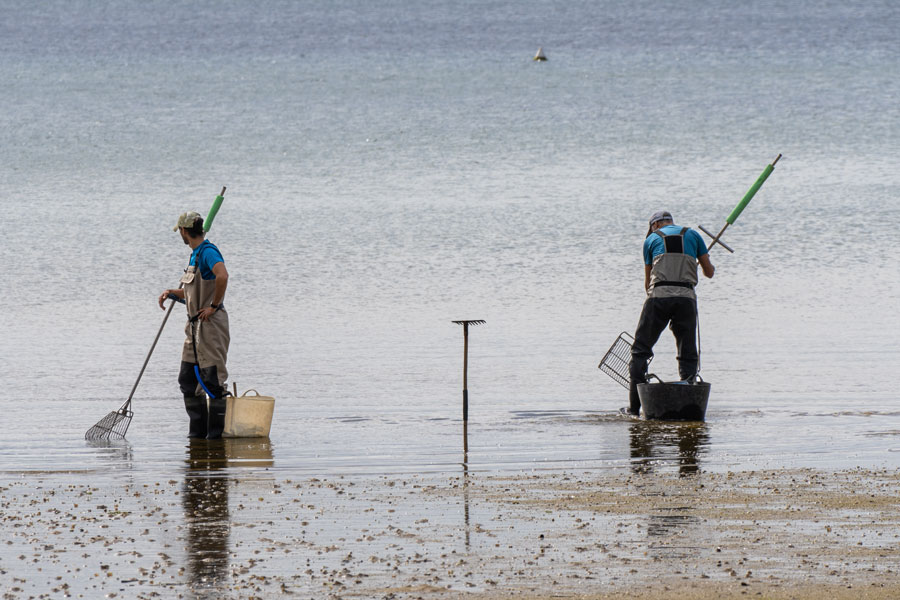
Long Island has a long tradition of recreational clamming, with hard clams found in protected bays, harbors, tidal flats, and other shallow coastal waters throughout Nassau County and Suffolk County. Clamming can be done from shallow water or exposed tidal flats using simple hand tools, but where you may legally harvest is tightly regulated. Before digging, recreational clammers must make sure the water is currently certified for shellfish harvesting and check whether the municipality requires a local shellfish permit.
In Short
Long Island offers recreational clamming in portions of Hempstead Bay, Oyster Bay-area waters, the Great South Bay, Shinnecock Bay, the Peconic Bays, Gardiners Bay, Long Island Sound, and other coastal waters, but not every part of these waterways is open to shellfish harvesting. The safest way to find a legal area is to use the New York State Department of Environmental Conservation shellfish closure information and the DECinfo Locator before each trip. Local towns may also require recreational shellfish permits and impose additional residency, access, size, quantity, season, or gear restrictions.
Where Can I Go Clamming on Long Island?
Hard clams live in sandy and muddy bottoms in protected intertidal and shallow subtidal waters, making Long Island’s bays and harbors natural clamming territory. Recreational clamming occurs in certified portions of South Shore bays, North Shore waters, and East End estuaries, including waters associated with Hempstead Bay, Great South Bay, Shinnecock Bay, the Peconic Bays, Gardiners Bay, and Long Island Sound.
However, a bay name alone is not enough to determine whether clamming is legal. One section of a bay may be certified while a nearby creek, marina, canal, harbor, or shoreline area is closed. Other areas may be seasonally certified, meaning shellfish harvesting is permitted during only part of the year. Temporary closures may also be imposed following heavy rainfall, sewage spills, harmful algal blooms, or other conditions that could make shellfish unsafe to eat.
The NYSDEC Shellfish Closures information and DEC’s interactive mapping tools should therefore be checked immediately before harvesting. A public beach, park, marina, road end, or waterfront area is not automatically a legal clamming location simply because people can reach the water there. Parking, beach access, residency rules, local shellfish permits, and restrictions on harvesting from a particular shoreline may all apply.
How Do You Find and Catch Clams?
Recreational clammers generally search shallow sandy or muddy bottom where hard clams live beneath the surface. One traditional method is to use a hand clam rake, pulling the rake through the bottom until the teeth strike a shell. In very shallow water, some experienced clammers also locate clams by feeling the bottom with their feet, a technique commonly called treading.
Once a clam is found, it should be measured before being kept. Hard clams smaller than the legal minimum must be returned immediately to the water where they were found. A shellfish gauge is inexpensive and is one of the most useful pieces of equipment to bring. Other basic equipment may include a hand clam rake permitted under local rules, gloves, water shoes or waders, a basket or floating container, and a container for safely transporting the harvest.
New York Clamming Rules
New York State does not require a state recreational shellfish permit for ordinary recreational shellfish harvesting from state lands, and enrollment in the Recreational Marine Fishing Registry is not required simply to take shellfish recreationally. Local governments, however, may require their own shellfish permits and can establish rules that are more restrictive than the statewide regulations. Always check the rules of the town whose underwater lands you intend to harvest from.
Under current New York recreational shellfish limits, a hard clam must measure at least 1 inch in thickness at the hinge. The statewide recreational limit is 100 hard clams per person per day. New York also limits recreational harvesters to no more than one bushel in combined total volume of clams, oysters, and mussels per day. Local limits may be lower.
Hard clams may generally be taken year-round under state regulations, but harvesting is prohibited from uncertified or closed waters, and local seasonal restrictions may apply. Shellfish may not be harvested between sunset and sunrise. Review the current NYSDEC shellfishing information and shellfish closure information before every trip because classifications and temporary closures can change.
Do I Need a Local Clamming Permit?
Possibly. Unlike the statewide recreational rules, shellfish permitting on Long Island is heavily influenced by the individual town. Several Long Island towns require permits to take shellfish from town waters, and eligibility may depend on residency or property ownership.
For example, the Town of Hempstead issues non-commercial clam permits and requires proof of town residency. The Town of Oyster Bay requires recreational shellfish permits for eligible town residents. The Town of Southampton administers recreational shellfish permits through its Trustees, while the Town of Southold also requires non-commercial shellfish permits for qualifying residents and property owners. East Hampton maintains its own detailed shellfish rules and permit system.
Because these requirements and fees can change, do not assume that a permit issued by one town allows clamming in another town. Check with the municipality responsible for the waters you plan to visit before harvesting.
How Do I Know if the Water Is Open for Clamming?
This is one of the most important parts of recreational clamming. Clams are filter feeders, meaning they continuously filter particles from the surrounding water. Bacteria, toxins, and other contaminants present in the water can therefore become concentrated in shellfish even when the water looks perfectly clean.
NYSDEC classifies shellfish lands based on sanitary conditions and maintains permanent, seasonal, and temporary closure information. Temporary closures can occur after events such as heavy rainfall, wastewater discharges, or harmful algal blooms. The state also monitors marine biotoxins that can accumulate in shellfish and cause serious illness.
Never judge shellfish safety by the appearance, smell, or clarity of the water. Check the current NYSDEC shellfish closure information on the same day you plan to harvest. If the location cannot be confidently identified as certified and open, do not take clams there.
What Types of Clams Are Found on Long Island?
The species most closely associated with Long Island recreational clamming is the hard clam (Mercenaria mercenaria), also known as the northern quahog or round clam. Hard clams are commonly described by market-size names including littlenecks, middlenecks or topnecks, cherrystones, and chowder clams. These names describe different sizes of the same species rather than different types of clam.
Long Island waters also contain soft-shell clams, razor clams, surfclams, and other shellfish, but each can have different size and harvest limits. The statewide recreational minimum for soft-shell clams, for example, differs from the hard-clam minimum. Anyone intending to harvest species other than hard clams should review the current NYSDEC marine shellfish information and applicable local regulations.
Clamming Safety and Handling
Check tide conditions before entering tidal flats or shallow bay waters because an accessible area at low tide can become submerged as the tide returns. Wear footwear that protects against sharp shells and submerged debris, be cautious around deep channels and soft mud, and avoid harvesting alone in unfamiliar areas.
Harvested clams should be protected from heat and direct sunlight and kept cool as soon as practical. Do not harvest shellfish that are dead, badly damaged, or have shells that remain open when handled. Most importantly, never eat shellfish collected from closed or uncertified waters. Cooking does not necessarily eliminate every toxin that may accumulate in contaminated shellfish.
Quick Facts
| Looking For… | Recommended Starting Point or Information |
|---|---|
| Where to go clamming | Start with the NYSDEC shellfish closure information and identify certified/open shellfish waters before choosing an access point |
| Common Long Island clam | Hard clam, also called the northern quahog or round clam |
| Hard-clam minimum size | At least 1 inch thick at the hinge under current New York State recreational rules |
| Hard-clam daily limit | Up to 100 hard clams per person per day under the statewide recreational limit; local rules may be stricter |
| Basic equipment | Shellfish gauge, permitted hand clam rake, gloves, protective footwear or waders, and a basket or container |
| State recreational permit | No New York State recreational shellfish permit is generally required for harvesting from state lands |
| Town permit | May be required depending on the municipality; residency, property-ownership, fee, age, and other requirements vary by town |
| Water safety | Clams may be harvested only from waters currently classified as certified/open for shellfish harvesting |
| Temporary closures | Can occur because of rainfall, wastewater incidents, harmful algal blooms, marine biotoxins, or other sanitary concerns |
| Current rules and closures | NYSDEC Shellfishing and NYSDEC Shellfish Closures |
Whether you are pulling a clam rake through a shallow bay bottom, searching a tidal flat at low tide, or introducing your family to one of Long Island’s oldest coastal traditions, recreational clamming can be a rewarding way to experience the island’s marine environment. The most important steps are to identify a legal access point, obtain any required town permit, confirm that the water is currently certified and open, measure every clam you keep, and follow both state and local harvest limits.
Are you ready for fall on Long Island? Check out these local seasonal guides:
🍎 Apple Picking 🍓 Strawberry Picking 🎃 Pumpkin Picking 👻 Haunted Houses 🍂 Farm Festivals