
Wyandanch, New York
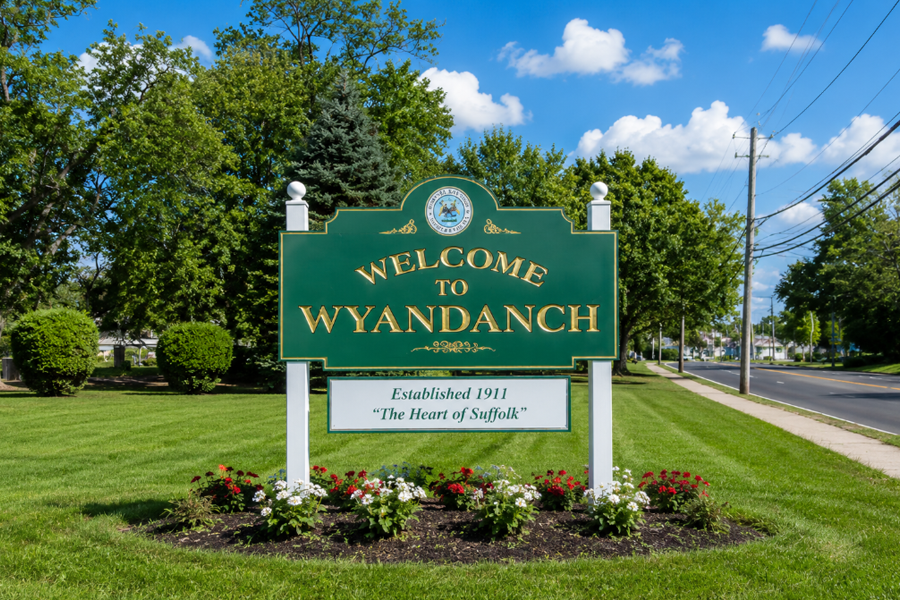
Wyandanch is a hamlet and census-designated place (CDP) in the Town of Babylon, Suffolk County, on western Long Island. An inland community with longstanding railroad connections, Wyandanch has developed from a rural 19th-century settlement and brickmaking center into a densely populated residential community with a revitalized core centered around its Long Island Rail Road station.
Wyandanch had 12,990 residents in the 2020 Census and is one of the Town of Babylon’s most diverse communities. Its modern identity is closely associated with neighborhood organizations, faith communities, local businesses, schools, parks, and the long-running Wyandanch Rising redevelopment effort, which has brought new housing, commercial space, public improvements, and investment to the area surrounding the railroad station.
History of Wyandanch
The area that became Wyandanch was historically part of the lower Half Hollow Hills and was known during much of the 19th century as West Deer Park. The arrival of the Long Island Rail Road’s Main Line through the area in 1842 helped open what had been a sparsely settled rural landscape to industry, transportation, and eventually residential development.
The natural clay and sand found in the lower Half Hollow Hills proved particularly well suited to brickmaking. Local brickyards became an important part of the area’s early economy, and by the late 19th century more than 1.6 million bricks were being produced annually in local yards and shipped by railroad for construction projects in New York City. The combination of available raw materials and direct rail transportation gave the developing community an industrial role that is easy to overlook when viewing modern Wyandanch today.
The first railroad depot in the community was constructed in 1875 and was originally named West Deer Park. The similarity between West Deer Park and nearby Deer Park reportedly created confusion among railroad passengers. In 1889, the station was renamed Wyandance, an early spelling of the name that eventually became Wyandanch. By the early 20th century, Wyandanch had become the preferred spelling for both the railroad station and community.
The Wyandanch Name
Wyandanch is unusual among Town of Babylon communities because its name honors a historical person. Sachem Wyandanch was a 17th-century leader of the Montaukett people of eastern Long Island who appears in numerous records involving Native communities and European settlers. Historical records contain several different spellings of his name, including Wyandance and Wyandanch.
The name was adopted for the railroad station during the late 19th century and subsequently became the name of the surrounding community. Despite the connection through the name, Town of Babylon historical research notes that there is no evidence that Sachem Wyandanch himself lived in the present-day hamlet. The name instead reflects the broader Native American history of Long Island.
Growth of the Community
Wyandanch remained relatively rural through much of the 19th century before gradually developing around the railroad and local industries. Children from the small community originally attended school in neighboring Deer Park. As the population increased, Wyandanch’s first schoolhouse opened in 1912 on the site now occupied by the Wyandanch Public Library.
Like many communities in the Town of Babylon, Wyandanch changed considerably during the 20th century as farms and undeveloped land gave way to residential neighborhoods. The railroad remained an important part of the community, providing a transportation connection that would eventually become central to plans for a new downtown around the station.
Wyandanch Rising and Downtown Revitalization
One of the most significant chapters in modern Wyandanch has been the Wyandanch Rising initiative, a comprehensive revitalization effort focused on the area surrounding the railroad station. Planning began during the early 2000s with extensive community participation intended to create a vision for a more walkable downtown with housing, businesses, public spaces, employment opportunities, and improved infrastructure.
The resulting redevelopment has included new residential and mixed-use buildings, retail space, streetscape improvements, infrastructure work, parking, and a public plaza next to the LIRR station. Wyandanch Plaza, completed in 2016, created a public gathering space at the center of the redevelopment area and helped establish a more recognizable downtown around the transportation hub.
The project has been notable not simply for new construction but for its emphasis on transit-oriented development. By concentrating housing, services, businesses, and public spaces near an existing railroad station, Wyandanch Rising has sought to use one of the community’s oldest assets, its rail connection, as the foundation for its modern redevelopment.
Geiger Lake Memorial Park and Recreation
Geiger Lake Memorial Park is one of the area’s most important recreational spaces. Real estate developer William Geiger, whose projects included residential developments in Wyandanch, Deer Park, and Wheatley Heights, set aside approximately 23 acres containing the lake for the Town of Babylon before his death in 1934. The Town formally dedicated Geiger Memorial Park in 1957.
Today the park includes recreational facilities such as athletic courts and fields, a playground, picnic areas, fishing, a spray park, and the Carlls River Botanical Garden. Geiger Lake is part of the Carlls River system, which flows south through Belmont Lake, Southard’s Pond, and Argyle Lake before eventually reaching the Great South Bay.
Wyandanch Park on Mount Avenue provides additional athletic fields, courts, a playground, and other neighborhood recreation. These public spaces give the inland hamlet its own recreational resources while larger parks and South Shore destinations elsewhere in the Town of Babylon remain within driving distance.
Community Character
Wyandanch is primarily a residential and community-centered hamlet rather than a conventional sightseeing destination. Its character is shaped by longtime residents, newer families, local organizations, churches and other faith institutions, schools, neighborhood businesses, and civic groups. The station area has become a more visible mixed-use center as redevelopment has progressed, while residential neighborhoods extend outward from the downtown core.
For visitors, Wyandanch offers a different perspective on Long Island from the region’s beaches, historic villages, and resort communities. Its story is closely connected to industrial history, the railroad, suburban growth, community advocacy, and modern redevelopment, making it an example of how an established Long Island hamlet can change while retaining a strong local identity.
Transportation
Rail transportation has influenced Wyandanch for more than 180 years and remains one of the community’s defining features. The Wyandanch station on the Long Island Rail Road provides service toward New York City as well as connections to other destinations across Long Island. The station’s central location is also why it became the focal point of the Wyandanch Rising redevelopment initiative.
Drivers can reach the surrounding area through the Southern State Parkway, Sunrise Highway, and a network of local roads connecting Wyandanch with neighboring western Suffolk County communities. Travelers using the railroad should check current schedules, service changes, and parking information before making a trip.
Wyandanch Today
Modern Wyandanch reflects several different periods of Long Island development within the same community. Its railroad dates to the 19th century, its residential neighborhoods grew through later waves of suburban development, and its station district represents a more recent approach centered on mixed-use construction and public transportation. With 12,990 residents counted in the 2020 Census, Wyandanch remains a substantial residential community within the Town of Babylon as well as an ongoing example of transit-centered revitalization in western Suffolk County.
Wyandanch, New York
Key Facts and Details
| Community | Wyandanch |
| Community Type | Hamlet and census-designated place |
| Town | Town of Babylon |
| County | Suffolk County |
| Region | Western Long Island |
| 2020 Census Population | 12,990 |
| Historic Name | West Deer Park |
| Name Origin | Named for the 17th-century Montaukett sachem Wyandanch |
| Railroad | Main Line railroad service through the area dates to 1842 |
| First Railroad Depot | 1875, originally named West Deer Park |
| Station Renamed | Wyandance in 1889; Wyandanch became the preferred spelling by the early 20th century |
| Historic Industry | Brickmaking using clay and sand from the lower Half Hollow Hills |
| Historic Brick Production | More than 1.6 million bricks annually by the late 19th century |
| First Local Schoolhouse | Opened in 1912 on the present site of the Wyandanch Public Library |
| Major Revitalization | Wyandanch Rising |
| Downtown Focus | Mixed-use and transit-oriented development surrounding the LIRR station |
| Public Gathering Space | Wyandanch Plaza |
| Major Recreation Area | Geiger Lake Memorial Park |
| Rail Transportation | Wyandanch Long Island Rail Road station |
| Road Access | Southern State Parkway, Sunrise Highway, and local roads |
| Community Character | Residential, diverse, community-centered, and undergoing continued station-area redevelopment |
Wyandanch’s story reaches well beyond its recent redevelopment, from the arrival of the railroad in 1842 and a once-important brickmaking industry to generations of residential growth and the modern transformation surrounding its LIRR station. Today, the hamlet combines established neighborhoods, active community institutions, local parks, public transportation, and the continuing legacy of Wyandanch Rising, offering a distinctive example of how an inland Suffolk County community has evolved while maintaining a strong identity within the Town of Babylon.
Are you ready for fall on Long Island? Check out these local seasonal guides:
🍎 Apple Picking | 🍂 Fall Festivals & Farm Activities | 👻 Haunted Houses | 🎃 Pumpkin Picking