
Tuckahoe, New York
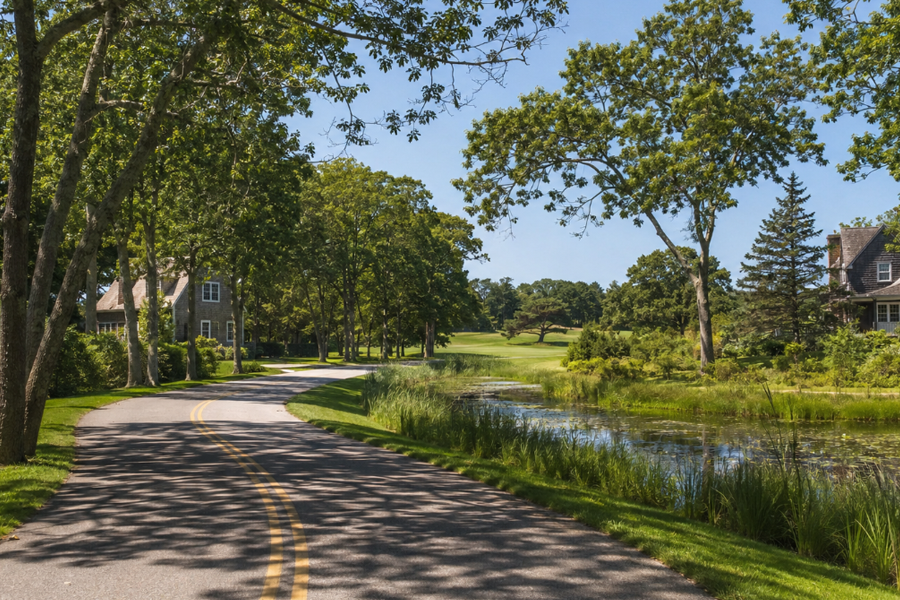
Tuckahoe is a hamlet and census-designated place in the Town of Southampton, Suffolk County, New York. Located on the South Fork of Long Island, the community lies immediately northwest of Southampton Village and forms part of the western Hamptons landscape.
Tuckahoe is primarily residential, with wooded neighborhood roads, wetlands, open land, golf courses, estate properties, and smaller homes located within a short drive of downtown Southampton. Although the hamlet does not have the commercial center or oceanfront identity of Southampton Village, it is closely connected with the village for shopping, dining, schools, transportation, health care, and everyday services.
Tuckahoe on Long Island
Tuckahoe, Suffolk County, should not be confused with the incorporated Village of Tuckahoe in Westchester County. Long Island’s Tuckahoe is an unincorporated hamlet governed by the Town of Southampton. It does not have its own village mayor, board of trustees, or municipal government.
The community normally uses the Southampton postal designation and ZIP code 11968. A Southampton mailing address does not necessarily mean that a property is located inside the incorporated Village of Southampton. Tuckahoe properties generally remain under Town of Southampton jurisdiction, although school, fire, ambulance, postal, election, and special-district boundaries may follow different lines.
Location and Geography
Tuckahoe is situated northwest of Southampton Village, north of Shinnecock Hills, and west of Water Mill. The hamlet occupies a transitional area between the busy County Road 39 corridor, wooded inland neighborhoods, freshwater wetlands, golf properties, and shoreline areas associated with Sebonac Creek and Shinnecock Bay.
The United States Census Bureau counted 1,505 residents in the Tuckahoe census-designated place during the 2020 Census. The CDP covers approximately 4.74 square miles, including about 4.07 square miles of land and 0.67 square miles of water.
Census boundaries are created for statistical purposes and do not necessarily match postal designations, neighborhood identity, school-district lines, fire districts, or the boundaries residents use when describing the community. Anyone evaluating a particular property should verify its town jurisdiction and applicable service districts by address.
History and the Tuckahoe Name
The name Tuckahoe is commonly traced to an Indigenous or Algonquian term associated with edible roots or tuber-like plants. Variations of the name appear in several parts of the eastern United States, and historical explanations of its exact meaning differ.
The broader Southampton region has been connected with the Shinnecock people for thousands of years. Indigenous communities relied on the bays, wetlands, woodlands, fisheries, shellfish beds, and other natural resources of the eastern South Fork long before European settlement began.
European settlement of Southampton began during the 17th century. Farming, fishing, livestock, woodland use, and small local roads shaped the surrounding countryside for generations. Tuckahoe remained substantially rural even as Southampton Village developed into a nationally known summer resort during the late 19th and early 20th centuries.
Railroad access, tourism, seasonal estates, and the development of major golf courses gradually changed the surrounding landscape. Tuckahoe nevertheless retained a less concentrated settlement pattern than the neighboring village, with large properties, wooded roads, wetlands, and substantial areas devoted to recreation and open space.
Residential Character
Tuckahoe does not have a traditional walkable downtown. Its residential development is spread among local roads extending north and west from the Southampton area. Tuckahoe Road, Magee Street, Sebonac Road, North Magee Street, Barkers Island Road, and connecting neighborhood streets serve different portions of the hamlet.
Housing includes detached single-family homes, older cottages, renovated residences, estate properties, seasonal homes, and properties on wooded or unusually large parcels. Conditions can vary considerably between the southern portion of the hamlet near County Road 39 and quieter areas farther north.
The Southampton postal designation and proximity to the Hamptons influence the local real-estate market, but Tuckahoe has a more varied residential character than the oceanfront estate districts commonly pictured in national coverage of the Hamptons. Year-round residents, working families, second-home owners, seasonal occupants, and employees of nearby businesses and institutions all form part of the community.
Golf Courses and the Local Landscape
Golf is one of the most visible features of Tuckahoe and the surrounding Southampton area. Large portions of the landscape are associated with internationally recognized private golf clubs whose fairways, natural terrain, and preserved open areas contribute to the low-density character of the western Southampton corridor.
National Golf Links of America is located along Sebonac Inlet Road. Designed by Charles B. Macdonald and opened during the early 20th century, it is widely regarded as one of the most historically important golf courses in the United States.
Sebonack Golf Club occupies waterfront land overlooking Great Peconic Bay and Cold Spring Pond. The private club opened in the early 2000s and was designed to reflect the rolling terrain, coastal vegetation, and open views of the surrounding property.
The nearby Shinnecock Hills Golf Club, located along Tuckahoe Road in the neighboring Shinnecock Hills area, is one of the oldest and most famous golf clubs in the country. Together, these courses make Tuckahoe and its immediate surroundings one of the most significant golf landscapes on Long Island. These are private clubs rather than public recreational facilities, and access is restricted.
Tuckahoe Common School District
Public-school students in much of the community are served by the Tuckahoe Common School District. The district is headquartered at Tuckahoe School, located at 468 Magee Street in Southampton.
Tuckahoe School serves students from prekindergarten through eighth grade. The district operates a single school and serves all or portions of Tuckahoe, Shinnecock Hills, the Art Village area, and part of the incorporated Village of Southampton.
Because the common school district does not operate its own high school, eligible district students generally attend Southampton High School under a tuition arrangement with the Southampton Union Free School District. Families should confirm current placement policies, transportation, eligibility, and school assignments directly with the district.
School-district boundaries do not necessarily match the Tuckahoe CDP, Southampton mailing addresses, or town and village lines. The school district should always be verified for the exact residential property rather than assumed from the community name.
Major Roads and Driving
County Road 39 forms the principal east-west commercial and transportation corridor along the southern side of the Tuckahoe area. The roadway carries traffic between Shinnecock Hills, Southampton Village, Water Mill, Bridgehampton, and destinations farther east on the South Fork.
Tuckahoe Road provides an important north-south connection between County Road 39, residential areas, the golf-course corridor, Sebonac Road, and lands extending toward Peconic Bay. Magee Street and North Magee Street serve the school, residential neighborhoods, wetlands, and properties in the central and northern parts of the community.
Drivers traveling to Tuckahoe from western Long Island generally use Sunrise Highway and the NY 27 corridor. Route names and roadway characteristics change as NY 27 enters the Southampton area, where the highway becomes a heavily traveled surface corridor with intersections, local businesses, turning traffic, and seasonal congestion.
Summer Fridays, Sunday return traffic, holiday weekends, beach days, major golf events, and seasonal activities can substantially increase travel times. County Road 39 is one of the principal approaches to the eastern Hamptons, so congestion in Tuckahoe may result from regional travel as well as local traffic.
Public Transportation
Tuckahoe does not have its own Long Island Rail Road station. The nearest station is generally Southampton, located near downtown Southampton Village on the Montauk Branch.
Southampton station provides service toward communities including Hampton Bays, Westhampton, Speonk, Patchogue, Jamaica, and New York City, as well as eastbound service toward Bridgehampton, East Hampton, Amagansett, and Montauk. Train frequency and stopping patterns vary by time, season, and day of the week.
Suffolk County Transit serves the Southampton and County Road 39 corridor, while the Hampton Jitney provides scheduled coach transportation between the Hamptons and New York City. Stops, schedules, reservations, and local connections should be confirmed before traveling.
Most parts of Tuckahoe remain easiest to reach by automobile. Homes, golf properties, wetlands, and community roads are distributed across a relatively broad area, and pedestrian infrastructure is limited outside the more developed roadway corridors.
Shopping, Dining, and Health Care
Commercial activity is concentrated primarily along County Road 39 and in nearby Southampton Village. The corridor contains service businesses, professional offices, home-improvement companies, markets, automotive businesses, medical offices, and other establishments serving the surrounding population.
Downtown Southampton offers restaurants, cafés, boutiques, galleries, banks, personal services, cultural institutions, and seasonal events. Additional shopping and professional services are available in Water Mill, Bridgehampton, Hampton Bays, and other South Fork communities.
Stony Brook Southampton Hospital is the nearest major hospital and provides emergency, inpatient, surgical, and other medical services. It is part of Stony Brook Medicine. Urgent-care centers, pharmacies, specialists, dental offices, and outpatient medical practices are also available throughout the Southampton area.
Wetlands and Natural Areas
Tuckahoe contains freshwater wetlands, wooded parcels, ponds, drainage areas, and low-lying land that contribute to its natural character. Tuckahoe Swamp is one of the better-known wetland areas in the northern part of the community.
Sections of Tuckahoe Swamp are included in a cooperative hunting area administered through the Town of Southampton and the New York State Department of Environmental Conservation. Hunting access, parking, seasons, methods, permits, quotas, and restricted areas are regulated and may change. Visitors should never assume that privately owned land or an undeveloped parcel is open for public recreation.
Wetlands help store stormwater, support wildlife habitat, filter runoff, and contribute to the environmental health of surrounding watersheds. They can also affect property development, clearing, drainage, sewage disposal, and construction.
Owners of property near wetlands, ponds, creeks, flood-prone areas, or sensitive habitat should verify applicable town, county, state, and federal requirements before altering land. A Southampton mailing address or Tuckahoe community designation does not establish whether a particular parcel contains regulated environmental features.
Beaches, Culture, and Recreation
Tuckahoe itself is not an oceanfront beach community, but its location provides convenient access to Southampton’s recreational and cultural destinations. Coopers Beach, other Atlantic Ocean beaches, bayfront areas, parks, and boating locations are within a short drive.
Beach parking, resident permits, daily passes, lifeguard coverage, and seasonal access rules vary by facility. Tuckahoe residency or a Southampton postal address does not automatically establish eligibility for every village- or town-regulated beach permit.
Nearby cultural resources include the Southampton History Museum, galleries, libraries, historic properties, community events, and the arts and educational programs associated with the Southampton area. Additional museums, performance venues, beaches, golf facilities, and outdoor destinations are found throughout the East End.
Fire Protection and Public Safety
Police services in the unincorporated portions of Tuckahoe are generally provided by the Town of Southampton Police Department. Fire protection is associated with the Southampton Fire District and Southampton Fire Department service area, while emergency medical arrangements may involve Southampton-area ambulance providers.
Emergency-service districts do not necessarily follow census, postal, school, or neighborhood boundaries. Property owners should verify the responsible fire district, ambulance service, police jurisdiction, and emergency address for the specific property.
Year-Round and Seasonal Life
Tuckahoe combines year-round residential life with the substantial seasonal activity found throughout the Hamptons. Permanent residents use the same roads, schools, businesses, medical facilities, and public services that experience increased demand during the summer.
Seasonal occupancy affects traffic, housing costs, property maintenance, employment, retail activity, and demand for local services. The community can feel considerably busier during summer weekends and major events, while fall, winter, and early spring generally bring quieter conditions.
Despite its proximity to one of the country’s best-known resort villages, Tuckahoe maintains a comparatively private and low-density atmosphere. Wooded roads, wetlands, golf landscapes, and the absence of a concentrated downtown distinguish it from nearby commercial and oceanfront areas.
Tuckahoe, New York
Key Facts & Details
| Category | Details |
|---|---|
| Community Name | Tuckahoe, New York |
| Community Type | Hamlet and census-designated place |
| Town | Town of Southampton |
| County | Suffolk County |
| Region | South Fork, East End, and Hamptons |
| 2020 Census Population | 1,505 |
| Total CDP Area | Approximately 4.74 square miles, including about 4.07 square miles of land and 0.67 square miles of water |
| ZIP Code | 11968 using the Southampton postal designation |
| School District | Tuckahoe Common School District; verify by property address |
| Local School | Tuckahoe School, serving prekindergarten through eighth grade |
| Nearest LIRR Station | Southampton station on the Long Island Rail Road Montauk Branch |
| Major Roads | County Road 39, Tuckahoe Road, Magee Street, North Magee Street, and Sebonac Road |
| Nearest Major Hospital | Stony Brook Southampton Hospital |
| Police Services | Town of Southampton Police Department in unincorporated areas |
| Known For | Wooded residential neighborhoods, Tuckahoe School, wetlands, the County Road 39 corridor, and proximity to National Golf Links of America, Sebonack Golf Club, and Shinnecock Hills Golf Club |
Tuckahoe offers a quieter residential setting immediately outside Southampton Village while remaining closely connected with the transportation, schools, businesses, beaches, cultural institutions, and seasonal activity of the surrounding Hamptons. Its wooded neighborhoods, wetlands, school district, golf landscape, and convenient position near County Road 39 give the hamlet an identity distinct from both neighboring Shinnecock Hills and the more concentrated village center of Southampton.
Are you ready for fall on Long Island? Check out these local seasonal guides:
🍎 Apple Picking | 🍂 Fall Festivals & Farm Activities | 👻 Haunted Houses | 🎃 Pumpkin Picking