
Shinnecock Lighthouse
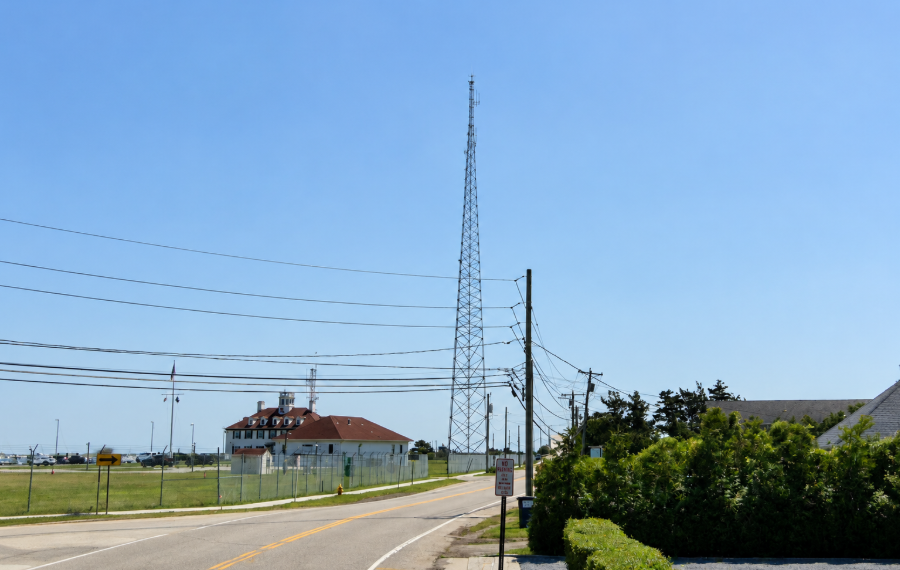
Shinnecock Lighthouse, also known as the Ponquogue Lighthouse and Shinnecock Bay Lighthouse, was once one of the most prominent navigation landmarks on Long Island’s South Shore. The 168-foot red-brick tower stood at Ponquogue Point on the northern side of Shinnecock Bay, near present-day Hampton Bays in Suffolk County.
Built to fill the long gap between Fire Island Lighthouse and Montauk Point Lighthouse, Shinnecock Lighthouse guided ships along the Atlantic coast for more than seven decades. The station was decommissioned in 1931 and demolished in 1948, leaving the former lighthouse site as an important but largely overlooked part of Long Island’s maritime history.
Why Shinnecock Lighthouse Was Built
During the nineteenth century, ships traveling along Long Island’s South Shore faced a dangerous 67-mile stretch of coastline between the Fire Island and Montauk Point lights. Storms, shoals and limited visibility caused numerous shipwrecks, and mariners argued that another powerful lighthouse was needed approximately midway between the two existing stations.
Congress appropriated approximately $35,000 for the new station, and the federal government acquired land at Ponquogue Point. Construction began in the mid-1850s, and the completed lighthouse was first illuminated on January 1, 1858, under the name Great West Bay Lighthouse.
The Great West Bay Lighthouse
The original tower was a massive red-brick structure that rose approximately 168 feet above the ground. It contained 178 steps and was paired with a keeper’s dwelling and other station buildings. The lighthouse was built inland from the ocean because the unstable shoreline and shifting sands near the beach made Ponquogue Point a more secure location.
A first-order Fresnel lens produced a powerful fixed white light that could be seen approximately 18 miles at sea. The tower was positioned so mariners could use it together with the Fire Island and Montauk lights to determine their location while sailing along the coast.
A Tragic Early Shipwreck
Only weeks after the new lighthouse began operating, the three-masted ship John Milton approached Long Island after a lengthy voyage. Its captain reportedly mistook the new Shinnecock light for the Montauk light and altered course toward shore. The vessel ran aground in February 1858, and all 33 people aboard died.
The tragedy illustrated both the importance and the potential danger of introducing a new lighthouse into a familiar coastal landscape. Over time, mariners became accustomed to the additional light, and Shinnecock Lighthouse became an essential point of reference for vessels traveling between New York Harbor and New England.
Changes to the Station
The lighthouse was renamed Shinnecock Lighthouse in 1893 to reflect its location near Shinnecock Bay. An oil house was added in 1890, and improvements to the lighting system increased the beacon’s intensity. In 1915, the light characteristic was changed from a fixed white light to three white flashes every seven and one-half seconds.
Several generations of keepers and their families lived at the station. Their duties included maintaining the massive Fresnel lens, tending the fuel supply, cleaning the lantern room and keeping the light operating during storms and other difficult conditions. The station was also part of the community’s visual identity, and local residents commonly referred to it as the Ponquogue Lighthouse.
Deactivation and Demolition
In 1931, the Coast Guard replaced the tall brick lighthouse with a smaller electric light mounted on a skeletal tower near the beach and the entrance to Shinnecock Inlet. The original station was abandoned after the new light was placed into service.
The red skeletal tower was later destroyed by the Great Hurricane of 1938, while the abandoned Shinnecock Lighthouse survived for another decade. Despite efforts by local residents and historical supporters to preserve the building, the lighthouse was deliberately demolished in December 1948. The tower was weakened at its base and brought down, scattering thousands of bricks across the former station site.
Remembering the Lost Lighthouse
Shinnecock Lighthouse was one of the tallest lighthouses ever built on Long Island, and its disappearance left a significant gap in the region’s maritime landscape. Unlike Fire Island Lighthouse and Montauk Point Lighthouse, the Shinnecock tower was not preserved as a museum or public historic site.
A historical marker was unveiled near the former lighthouse site in 2012 through efforts involving descendants of lighthouse keepers, the Town of Southampton, the Hampton Bays Historical Society and local preservation supporters. The marker recognizes the lighthouse and the people who worked to keep its light burning.
Can the Public Visit Shinnecock Lighthouse?
There is no surviving lighthouse tower to visit. The original structure was demolished in 1948, and the former station site is not operated as a conventional lighthouse museum. Visitors should not assume that the precise historic location provides public access or that remaining communication or navigation equipment represents the original lighthouse.
The history of Shinnecock Lighthouse can instead be explored through local historical resources, maritime exhibits and nearby coastal landmarks. Conditions around Shinnecock Bay, Ponquogue Point and Shinnecock Inlet may change, so visitors should confirm current access rules before approaching any restricted waterfront property.
Shinnecock Lighthouse and Long Island’s South Shore
Shinnecock Lighthouse was part of the network of navigational aids that made the South Shore of Long Island safer for commercial vessels, fishing boats and coastal travelers. Its location connected the maritime communities of Hampton Bays and Southampton with the broader shipping routes between New York Harbor, Fire Island and the eastern end of Long Island.
Although the lighthouse no longer stands, its story remains closely tied to the waters of Shinnecock Bay and the communities that grew around them. The lost tower is a reminder that many of Long Island’s most important maritime landmarks have disappeared, even though their influence can still be seen in the region’s coastal history.
Former Shinnecock Lighthouse Site
Key Facts & Details
| Feature | Details |
|---|---|
| Official name | Shinnecock Light |
| Original name | Great West Bay Lighthouse |
| Common names | Shinnecock Lighthouse, Shinnecock Bay Lighthouse and Ponquogue Lighthouse |
| Type | Historic coastal lighthouse and former navigational aid |
| Location | Ponquogue Point on the northern side of Shinnecock Bay |
| Nearby community | Hampton Bays |
| County | Suffolk County |
| Waterway | Shinnecock Bay and the Atlantic Ocean |
| Station established | 1857 |
| First lit | January 1, 1858 |
| Original construction cost | Approximately $35,000 |
| Construction material | Red brick |
| Tower height | Approximately 168 feet |
| Number of steps | Approximately 178 |
| Original lens | First-order Fresnel lens |
| Original light characteristic | Fixed white light |
| Later light characteristic | Three white flashes every seven and one-half seconds, beginning in 1915 |
| Approximate range | 18 miles at sea |
| Oil house | Added in 1890 |
| Renamed | Shinnecock Lighthouse in 1893 |
| Deactivated | 1931 |
| Replacement aid | Electric light mounted on a skeletal tower near Shinnecock Inlet |
| Original tower demolished | December 1948 |
| Current status | Demolished historic lighthouse; no original tower remains |
| Public access | No surviving lighthouse structure or conventional public museum |
| Historical marker | Unveiled near the former site in 2012 |
| Coordinates | Approximately 40.8505, -72.5041 |
| Official historical source | U.S. Coast Guard Historian’s Office |
| Long Island Lighthouses | How many lighthouses are on Long Island? |
Shinnecock Lighthouse once stood as a towering guide between Fire Island and Montauk Point, helping ships navigate one of the most dangerous stretches of Long Island’s Atlantic coast. First lit in 1858, the 168-foot brick tower remained an important coastal landmark until it was decommissioned in 1931 and demolished in 1948. Although the lighthouse is gone, its history survives through the historical marker near Ponquogue Point and the records preserved by maritime historians and former keepers’ families. The lost tower remains an important part of the heritage of Hampton Bays, Shinnecock Bay and Long Island’s South Shore.
Are you ready for fall on Long Island? Check out these local seasonal guides:
🍎 Apple Picking 🍓 Strawberry Picking 🎃 Pumpkin Picking 👻 Haunted Houses 🍂 Farm Festivals