
Fire Island Lighthouse
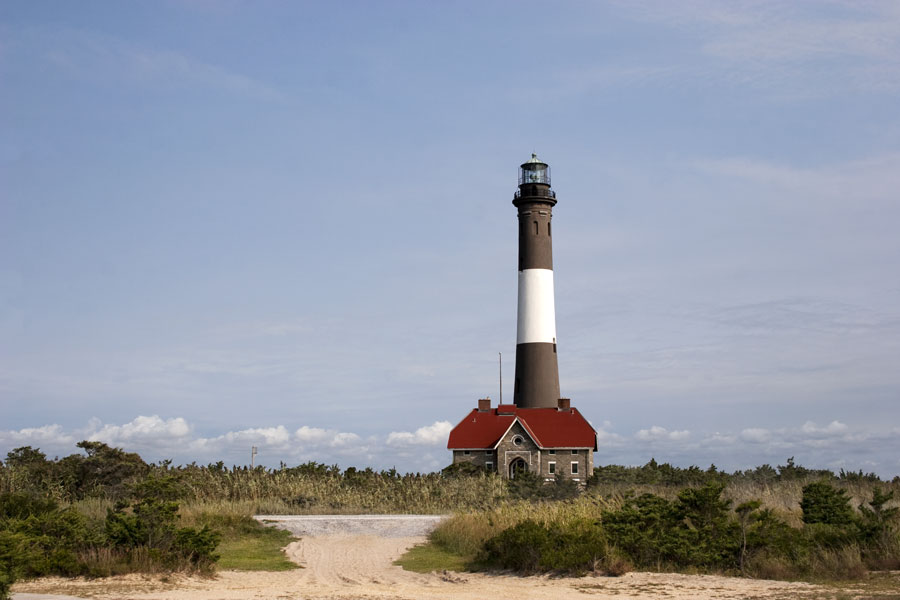
The Fire Island Lighthouse stands near the western end of Fire Island, New York, within Fire Island National Seashore and just east of Robert Moses State Park. One of Long Island’s best-known coastal landmarks, the tower has helped mariners identify the approaches to New York since the 19th century and remains a popular destination for history lovers, walkers, photographers, and visitors exploring the South Shore.
Early Construction
The first Fire Island Lighthouse was built in 1826 to aid ships navigating the busy coastal routes approaching New York Harbor. That original structure stood about 74 feet tall and was built of stone. As maritime traffic increased and vessels grew larger, officials determined that a taller and more powerful light was needed.
The Current Lighthouse
The current lighthouse was completed in 1858. Built of red brick and rising 168 feet, it became one of the tallest lighthouses in the United States. The tower is associated with engineer John Newton, who later became a major general. Equipped with a first-order Fresnel lens, the new light could be seen far offshore and quickly became an important navigational landmark on the Atlantic coast.
Operational History
The Fire Island Lighthouse played a major role in guiding vessels traveling along the South Shore and toward New York. For decades, lighthouse keepers maintained the tower, lantern, and surrounding station. As navigation technology evolved in the 20th century and other coastal aids took on greater importance, the station’s role gradually changed. The original Fresnel lens was eventually removed, and the lighthouse later went dark for a period before preservation efforts brought new life to the site.
Restoration and Preservation
Preservation efforts gained momentum in the 1980s through the work of the Fire Island Lighthouse Preservation Society. The lighthouse was restored and relit in 1986, helping return the tower to its place as one of Long Island’s signature historic landmarks. Today, the site includes interpretive exhibits and a Fresnel lens display that help tell the story of the station and its maritime importance.
Architecture and Design
The Fire Island Lighthouse is a classic example of 19th-century lighthouse design. Its tapered brick tower, lantern room, and interior iron stairway reflect the practical engineering of the era, while the bold black-and-white bands function as a daymark visible in daylight. The nearby keeper’s quarters and related station buildings offer additional insight into the daily life of those who once operated and maintained the light.
Visiting the Lighthouse
Visitors commonly reach the lighthouse grounds from the Robert Moses State Park Field 5 area via a boardwalk and sandy trail. When the tower is open, guests may climb 182 steps to the top for sweeping views of Fire Island, the Great South Bay, and the Atlantic Ocean. The visitor complex also features exhibits on maritime history, lighthouse technology, and the natural environment of Fire Island. Hours, tower-climb availability, admission, and parking details may vary by season, weather, and staffing, so it is wise to check the Fire Island Lighthouse Preservation Society or the National Park Service before making a special trip.
Educational Programs and Events
The Fire Island Lighthouse Preservation Society regularly presents seasonal programs and special events that may include tower tours, history talks, family activities, holiday programming, and occasional evening or themed climbs. Offerings can change throughout the year, but the site remains one of the most engaging places on Long Island to learn about coastal navigation, barrier island ecology, and the region’s maritime past.
Vicinity of the Lighthouse
Key Facts & Details
| Location | Western Fire Island, within Fire Island National Seashore |
| Nearest Park Access | Robert Moses State Park, Field 5 |
| Current Tower Completed | 1858 |
| Height | 168 feet |
| Steps to the Top | 182 steps |
| Best Known For | Its black-and-white daymark, historic maritime role, and panoramic coastal views |
| Site Features | Historic tower, keeper’s quarters, interpretive exhibits, Fresnel lens display, boardwalk access, and coastal trails |
| Nearby Natural Areas | Atlantic Ocean beaches, the Great South Bay, dunes, maritime forest, and protected barrier-island habitat |
| Visitor Information | Tower-climb availability, hours, admission, parking, and programs vary by season. Check the Fire Island Lighthouse Preservation Society before visiting. |
| Long Island Lighthouses | How many lighthouses are on Long Island? |
A visit to the Fire Island Lighthouse is more than just a stop at a historic structure; it is also an opportunity to experience one of Long Island’s most scenic and naturally preserved coastal environments. From the lighthouse grounds, visitors can easily access sandy shoreline, maritime forest, and boardwalk trails that help define the beauty of Fire Island National Seashore.
Just to the west, Robert Moses State Park offers expansive ocean beaches, picnic areas, fishing access, and some of the most convenient parking on the western end of Fire Island. The proximity makes the lighthouse an easy addition to a full beach day, whether you are planning a casual walk, a family outing, or a photography excursion.
The surrounding area is especially popular with walkers, birdwatchers, and nature enthusiasts. Depending on the season, you may spot coastal birds, deer, and native dune plant life thriving in this protected landscape. The boardwalk approach is generally straightforward, though conditions on sand paths and around the dunes can vary.
For those looking to make the most of their trip, consider arriving early or later in the day when the light can be especially appealing and crowds may be lighter. Whether you climb the tower for panoramic views or simply take in the peaceful surroundings below, the Fire Island Lighthouse remains one of the South Shore’s most rewarding and memorable destinations.
Are you ready for fall on Long Island? Check out these local seasonal guides:
🍎 Apple Picking | 🍂 Fall Festivals & Farm Activities | 👻 Haunted Houses | 🎃 Pumpkin Picking