
Centerport, New York
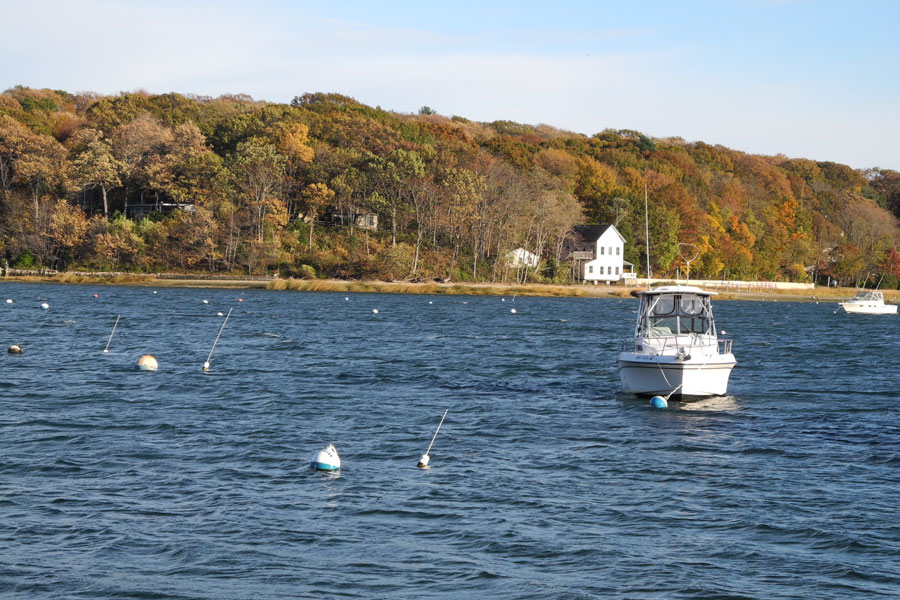
Centerport is a waterfront hamlet and census-designated place in the Town of Huntington, Suffolk County, on the North Shore of Long Island. Built around sheltered harbors, coves and wooded hills overlooking the water, the community combines a long maritime and agricultural history with residential neighborhoods, beaches and one of the North Shore’s most distinctive historic estates.
Centerport had a population of 5,822 at the 2020 U.S. Census, up from 5,508 in 2010. Unlike nearby Northport, Centerport is not an incorporated village and does not maintain a separate village government. Municipal government is provided primarily through the Town of Huntington and Suffolk County, while the U.S. Census Bureau defines Centerport as a census-designated place for statistical purposes.
The community’s identity is closely tied to its waterfront. Centerport Harbor extends inland from the waters surrounding the North Shore, while peninsulas and elevated residential areas create broad views across the harbor and toward Northport Bay. The geography has influenced Centerport for centuries, first supporting farming, milling and maritime activity and later helping transform the community into a summer destination and residential enclave.
History of Centerport
Centerport was historically known as Little Cow Harbor, a name that distinguished it from neighboring Northport, which was once known as Great Cow Harbor. Farming and livestock were important to the early communities surrounding the protected harbors of Huntington’s North Shore, and the Cow Harbor names reflected the agricultural character of the area.
Centerport and neighboring Greenlawn developed a relationship long before the two communities were joined through modern institutions. Greenlawn was historically known as Old Fields, and grain grown on its inland plains was transported to mills at Little Cow Harbor. A significant gristmill operated in Centerport by the late 18th century, illustrating the importance of the harbor community to the surrounding agricultural area.
The name Centerport eventually replaced Little Cow Harbor, while the old names survived in local history. Their legacy can still be seen in the name Harborfields, which combines the “Harbor” of Little Cow Harbor with the “Fields” of Old Fields. Today, the name is used by both the Harborfields Central School District and Harborfields Public Library, continuing the historic association between Centerport and Greenlawn.
From Farming Community to Summer Retreat
During the 19th and early 20th centuries, Centerport gradually changed from a predominantly agricultural and working harbor community into a destination for summer residents. Improved transportation made the North Shore increasingly accessible to people traveling from New York City, and waterfront communities throughout the Town of Huntington developed summer hotels, boarding houses, cottages and estates.
Centerport became part of that summer-resort culture. Historic accounts describe dozens of local homes accommodating hundreds of summer guests. Travelers could reach nearby Greenlawn by railroad and continue toward Centerport, strengthening the connection between the two communities. The arrival of wealthy seasonal residents also contributed to the estate development that became one of the defining features of Long Island’s North Shore during the Gold Coast era.
Vanderbilt’s Eagle’s Nest
Centerport’s most prominent historic property is the Suffolk County Vanderbilt Museum and Planetarium, occupying the former Eagle’s Nest estate of William K. Vanderbilt II. Vanderbilt purchased property overlooking Northport Bay in 1910 and developed the site into a sprawling summer estate that eventually encompassed approximately 43 acres.
Vanderbilt commissioned the architectural firm Warren & Wetmore, known for its work on Grand Central Terminal, to help develop the estate. The resulting Spanish Revival mansion and associated buildings reflected Vanderbilt’s interests in travel, natural history, automobiles and the sea. The mansion contains elaborate architectural details, collections gathered during Vanderbilt’s travels and extensive ornamental ironwork.
Vanderbilt was an explorer and avid yachtsman who traveled extensively and assembled collections of marine specimens, wildlife and cultural artifacts. He established the Hall of Fishes at Eagle’s Nest in 1922, creating the foundation of the private museum that eventually became today’s public institution. Eagle’s Nest is listed on the National Register of Historic Places.
Following Vanderbilt’s death in 1944, the estate eventually became a Suffolk County museum and park, opening to the public in 1950. Today, visitors can explore museum exhibits, historic rooms, natural-history collections, landscaped grounds and the Charles and Helen Reichert Planetarium. Programs, tours, exhibits and operating schedules change throughout the year, so visitors should confirm current information before traveling.
Suydam Homestead and Local History
Centerport’s history extends well beyond its Vanderbilt estate. The community is also home to the Suydam Homestead, a historic property dating to approximately 1730. Located along Fort Salonga Road, the homestead is maintained by the Greenlawn-Centerport Historical Association as one of the organization’s principal historic properties.
The Greenlawn-Centerport Historical Association was established in 1973 to research, collect, record and preserve the history of the two communities. Its collections include photographs, documents, genealogical material and written histories, while its historic properties and educational programs help preserve evidence of the area’s agricultural, residential and community development.
Harbors, Beaches and Recreation
Water remains central to Centerport’s character. The sheltered harbor and surrounding North Shore waters support recreational boating, sailing, fishing, kayaking and paddleboarding, while winding shoreline roads provide views across the coves and mooring fields. Seasonal changes are particularly visible along the wooded hills surrounding the harbor, giving Centerport a different appearance throughout the year.
Centerport Beach Park provides public recreational space along the waterfront and is a popular local destination during warmer months. Beach access, parking requirements, residency rules, lifeguard schedules and other regulations may vary by season and should be confirmed with the Town of Huntington before a visit.
The area’s protected waters and irregular shoreline are also important to Centerport’s visual identity. Unlike communities organized around a large commercial downtown, much of Centerport consists of residential roads that follow hills, coves and peninsulas. The result is a community whose most recognizable features are its harbor, shoreline, historic properties and views rather than a single central business district.
Location and Surrounding Communities
Centerport lies between the larger Huntington area to the west and Northport and East Northport to the east. Greenlawn lies immediately inland and shares many community institutions with Centerport. This location gives residents convenient access to the restaurants, shops, entertainment venues and business districts found in neighboring communities while allowing Centerport itself to retain a predominantly residential and waterfront character.
The hamlet uses ZIP Code 11721. According to the U.S. Census Bureau’s 2020 geographic boundaries, the Centerport census-designated place includes approximately 2.2 square miles of land along with a substantial area of surrounding water, reflecting the importance of its harbor geography.
Transportation and Getting Around
Centerport is primarily an automobile-oriented community. New York State Route 25A, known locally through this area as Fort Salonga Road, provides an important east-west connection across Huntington’s North Shore and links Centerport with communities including Huntington, Greenlawn, Northport and points farther east and west.
There is no Long Island Rail Road station within Centerport itself. Rail travelers generally use nearby stations such as Huntington, Greenlawn or Northport depending on their destination and travel plans. Local transportation from a station is therefore necessary for most visitors arriving by train, particularly those traveling to waterfront destinations or the Vanderbilt Museum.
Schools, Library and Community
Centerport is closely associated with the Harborfields Central School District, which brings together Centerport, Greenlawn and a portion of Huntington. The district operates Harborfields High School, Oldfield Middle School, Thomas J. Lahey Elementary School and Washington Drive Primary School.
The Harborfields Public Library in neighboring Greenlawn similarly serves the broader Harborfields community. The library was established in 1970 and also became important to organized local-history preservation. Interest in Centerport and Greenlawn history helped lead to the formation of the Greenlawn-Centerport Historical Association in the early 1970s, and the library continues to house the association’s Russell B. Brush Research Center.
These shared institutions illustrate how closely Centerport and Greenlawn remain connected despite being separately recognized communities. Their relationship stretches from the agricultural era, when grain from Old Fields was taken to mills at Little Cow Harbor, through the arrival of the railroad and summer tourism and into today’s school, library and historical organizations.
Centerport, New York
Key Facts and Details
| Feature | Details |
|---|---|
| Community | Centerport, New York |
| Community Type | Hamlet and census-designated place; not an incorporated village |
| Town | Town of Huntington |
| County | Suffolk County |
| Region | North Shore of Long Island |
| Historic Name | Little Cow Harbor |
| 2020 Census Population | 5,822 |
| 2010 Census Population | 5,508 |
| ZIP Code | 11721 |
| Major Landmark | Suffolk County Vanderbilt Museum and Planetarium |
| Historic Estate | Eagle’s Nest, former estate of William K. Vanderbilt II |
| Historic Property | Suydam Homestead, dating to approximately 1730 |
| Waterfront | Centerport Harbor and surrounding North Shore waters |
| Recreation | Centerport Beach Park, boating, sailing, fishing, kayaking, paddleboarding and shoreline recreation |
| Major Road | New York State Route 25A / Fort Salonga Road |
| Rail Access | No LIRR station within Centerport; nearby service is available from Huntington, Greenlawn and Northport |
| School District | Primarily Harborfields Central School District |
| Library | Harborfields Public Library in neighboring Greenlawn |
| Nearby Communities | Greenlawn, Northport, East Northport, and Huntington |
| Community Character | Residential North Shore hamlet shaped by its harbor, wooded hills, historic estates and longstanding connection with Greenlawn |
Centerport’s identity has been shaped by the same waterfront that influenced the community when it was known as Little Cow Harbor. Its evolution from an agricultural and milling settlement to a summer destination and established residential hamlet remains visible in places ranging from the 18th-century Suydam Homestead to William K. Vanderbilt II’s Eagle’s Nest estate. Today, Centerport combines those layers of history with beaches, boating, wooded neighborhoods and a close relationship with Greenlawn, Huntington, and Northport. That combination of preserved history, dramatic harbor geography and quiet residential character gives Centerport a particularly recognizable place among the communities of Long Island’s North Shore.
Are you ready for fall on Long Island? Check out these local seasonal guides:
🍎 Apple Picking | 🍂 Fall Festivals & Farm Activities | 👻 Haunted Houses | 🎃 Pumpkin Picking