
Great Cow Harbor
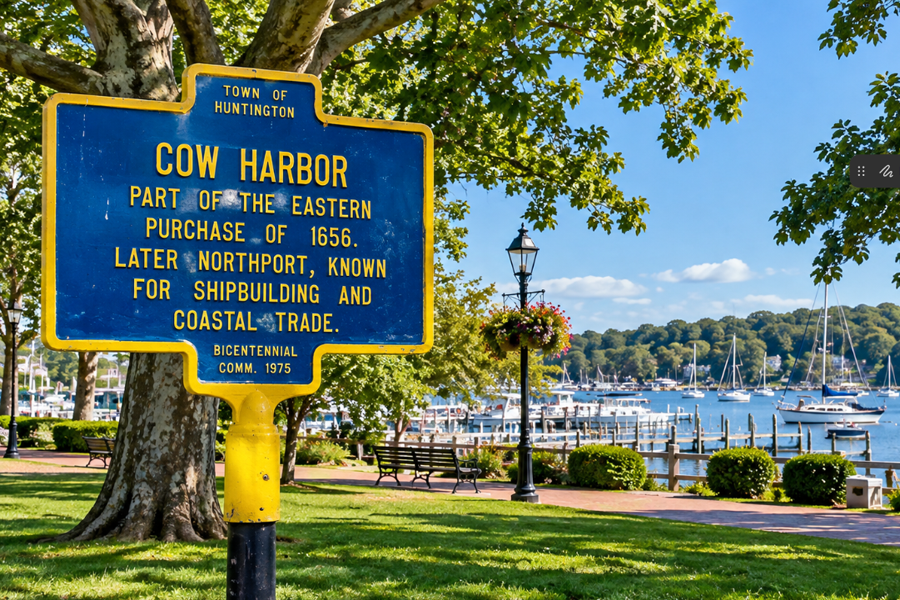
Great Cow Harbor is the historic name of the area that developed into present-day Northport, an incorporated waterfront village in the Town of Huntington, Suffolk County, on the North Shore of Long Island. The name dates to the area’s early agricultural history, when settlers grazed cattle on land surrounding the protected harbor.
Great Cow Harbor had a historical counterpart immediately to the west. Present-day Centerport was once known as Little Cow Harbor. Together, the two names preserve an earlier geographic vocabulary of Huntington’s North Shore, when communities were commonly identified by harbors, fields, necks and other prominent features of the landscape.
Unlike Little Cow Harbor, however, the Great Cow Harbor name remains particularly visible in modern community life. Northport continues to celebrate its Cow Harbor heritage through Cow Harbor Park, the Great Cow Harbor 10K Run and the annual Cow Harbor Day celebration, making the centuries-old name an enduring part of the village’s identity.
Where Was Great Cow Harbor?
Great Cow Harbor was centered around the protected waterfront now known as Northport Harbor and the surrounding area of modern Northport. The harbor opens toward Northport Bay and the broader waters of the North Shore, providing a naturally sheltered location that became important first to farmers and later to merchants, shipbuilders and other maritime industries.
The historic name referred not simply to the water itself but to the developing settlement around it. Early farms were scattered across the surrounding countryside, while the harbor provided access to coastal transportation at a time when movement by water was often easier and more practical than transporting heavy goods across unimproved roads.
Great Cow Harbor is no longer the official name of a separate municipality or census-designated community. The historic settlement evolved into Northport, which was formally incorporated as a village in 1894 and remains within the Town of Huntington.
Why Was It Called Great Cow Harbor?
The name originated in the agricultural use of the land surrounding the harbor. According to the Village of Northport’s history, early European settlers found the area well suited to farming and grazed cattle on pastures around the waterfront. The settlement consequently became known as Great Cow Harbor.
The word “Great” distinguished the community from neighboring Little Cow Harbor, the historic name of present-day Centerport. The paired names reflected the relative size and identity of two neighboring harbor communities rather than two formally incorporated municipalities.
Although the names can sound unusual today, they reflect the practical way early Long Island communities were often identified. Geographic features and agricultural uses frequently supplied local place names long before modern municipal boundaries, postal addresses and census designations existed.
Early Settlement
Long before European settlement, the Northport area was associated with the Matinecock people, one of the Indigenous peoples of northern Long Island. The Village of Northport’s historical account records the Matinecock name for the area as Opcathontyche, translated as “wading place creek.”
European settlement developed during the 17th century. In 1656, Chief Asharoken of the Matinecocks sold land in the area to three Englishmen. Farms gradually appeared around the harbor and surrounding countryside, establishing the agricultural settlement that became Great Cow Harbor.
The community remained small for generations. Even during the early 19th century, Great Cow Harbor was still predominantly rural. Historical accounts cited by the Village of Northport indicate that only eight dwellings stood in the village during the 1830s, shortly before a major economic transformation changed the settlement permanently.
From Farming to Shipbuilding
Shipbuilding transformed Great Cow Harbor during the 19th century. The protected harbor, access to regional waterways and availability of skilled labor helped support an industry that gradually displaced agriculture as the community’s defining economic activity.
Wooden shipbuilding brought workers, businesses and investment to the waterfront. Shipyards and marine railways developed around the harbor, while stores, hotels and other businesses expanded to serve the growing population and maritime economy. Great Cow Harbor was evolving from a small farming settlement into one of the more important commercial waterfront communities on Suffolk County’s North Shore.
The scale of the transformation was substantial. Northport’s population reached 1,016 by the 1860 Census. By 1874, historical accounts described the community as one of the most flourishing villages along Suffolk County’s North Shore, with three shipyards, five sets of marine railways, two hotels and at least six general stores.
The wooden shipbuilding boom lasted for approximately half a century. By the end of the 19th century, however, steel-hulled vessels were increasingly replacing the wooden ships produced by communities such as Northport. The local industry declined, but the prosperity and physical development generated during the shipbuilding period had permanently changed the former Great Cow Harbor.
From Great Cow Harbor to Northport
As the community moved away from its agricultural origins and developed a larger maritime economy, the old Great Cow Harbor name gradually gave way to Northport. The Village of Northport records that the community was being referred to as Northport by 1837.
The new name better reflected the settlement’s growing identity as a harbor and shipping community. Historical descriptions from the 19th century referred to Northport Harbor while noting that it had formerly carried the name Great Cow Harbor, demonstrating that the older terminology remained familiar even after Northport became established.
Northport was formally incorporated as a village in 1894, becoming the first incorporated village in the Town of Huntington. By then, Great Cow Harbor had largely passed from everyday geographic use, although the name remained an important part of local history.
Railroad and Trolley Era
The arrival of the Long Island Rail Road added another chapter to Northport’s development. A railroad station opened within the village in 1868, giving residents and businesses a direct transportation connection that complemented the community’s longstanding maritime access.
The railroad later relocated the Northport station to Larkfield Road as its line was extended toward Port Jefferson. The area surrounding the relocated station eventually became known as East Northport.
After the original village station closed, Northport established a trolley connection between its Main Street waterfront district and the relocated railroad station. The approximately 2.5-mile commuter trolley began operating in 1902 and continued until 1924, when automobiles and changing transportation patterns made the service obsolete.
The Waterfront After Shipbuilding
Northport Harbor had supported the community through agriculture, shipping and shipbuilding, but the waterfront changed as those industries declined. By the early 20th century, portions of the heavily used harborfront had deteriorated after generations of commercial activity.
The village eventually began transforming former working waterfront property into public recreational space. Northport Memorial Park was established along the harbor in 1932, helping create the waterfront landscape that has become one of modern Northport’s defining features.
That transition represents a broader change in the role of the harbor. The waterfront that once supported farms, schooners, shipyards and marine commerce increasingly became a place for recreation, boating, community gatherings and public access while retaining its importance to the identity of the village.
Cow Harbor Park
The Great Cow Harbor name remains visible along the modern Northport waterfront at Cow Harbor Park, also associated with Northport Village Park. Located near the western end of Main Street, the waterfront park places the historic name within the same harbor landscape that helped give rise to it centuries ago.
The park includes waterfront paths, gazebos, playground areas and access to the village’s harborfront. Its location just steps from Northport’s Main Street connects the recreational waterfront with the historic commercial center of the village.
Cow Harbor Park should not be confused with a surviving municipality called Great Cow Harbor. Rather, its name is one of several modern reminders that Northport continues to identify strongly with its earlier Cow Harbor history.
Great Cow Harbor 10K and Cow Harbor Day
Perhaps the most visible survival of the historic name is the Great Cow Harbor 10K Run, a longstanding road race held in Northport. The event brings runners through the village and finishes near the waterfront, tying the Great Cow Harbor name directly to modern Northport.
The race is traditionally associated with Cow Harbor Day, Northport’s annual community celebration. The festivities have helped turn what could have become an obscure historic place name into one that remains familiar to generations of Long Island residents.
The continued use of Great Cow Harbor in a major community event is particularly significant because the name disappeared from official geographic use nearly two centuries ago. Instead of surviving only in archives and historical accounts, Cow Harbor remains part of Northport’s public identity.
Great Cow Harbor and Little Cow Harbor
The histories of Great Cow Harbor and Little Cow Harbor are closely connected. Both developed around protected waterways on the North Shore within the Town of Huntington, and both began as small agricultural communities whose economies depended partly on access to the water.
Their later development diverged. Little Cow Harbor became Centreport and eventually Centerport, developing as a smaller residential and summer community with mills, estates and recreational waterfront activity. Great Cow Harbor became Northport, where shipbuilding produced more intensive commercial development and helped create the village center that remains recognizable today.
Together, the two historic names provide a window into an earlier Long Island. They reflect a period before modern municipal boundaries, railroad stations and suburban development, when livestock, farmland, navigable water and natural geography played an important role in determining how communities were identified.
What Is Great Cow Harbor Today?
The historic Great Cow Harbor area is now identified primarily with the Village of Northport. Modern Northport retains the deep-water harbor, hills and waterfront geography that influenced the original settlement, but the farming pastures and wooden shipyards have given way to homes, parks, marinas, restaurants, shops and other village uses.
Northport’s historic Main Street and waterfront still make the relationship between the village and its harbor immediately apparent. Boats remain a prominent part of the landscape, although recreational sailing and pleasure craft have largely replaced the commercial vessels and wooden ships associated with earlier centuries.
The old name has consequently acquired a different meaning. Great Cow Harbor no longer identifies a working agricultural settlement, but it remains a shorthand for Northport’s origins and its continuing relationship with the harbor around which the community developed.
Cow Harbor Park
Key Facts and Details
| Feature | Details |
|---|---|
| Historic Name | Great Cow Harbor |
| Modern Community | Northport, New York |
| Town | Town of Huntington |
| County | Suffolk County |
| Region | North Shore of Long Island |
| Modern Harbor | Northport Harbor |
| Indigenous History | Area associated with the Matinecock people before European settlement |
| Recorded Indigenous Place Name | Opcathontyche, translated by the Village of Northport as “wading place creek” |
| European Land Transaction | Village history records a 1656 sale by Chief Asharoken to three Englishmen |
| Origin of Cow Harbor Name | Early settlers grazed cattle on pastures surrounding the harbor |
| Historic Neighbor | Little Cow Harbor, now Centerport |
| Early Economy | Agriculture and maritime activity |
| Major 19th-Century Industry | Wooden shipbuilding |
| Northport Name | The community was being called Northport by 1837 |
| 1860 Population | 1,016 |
| 1874 Maritime Economy | Three shipyards and five sets of marine railways, along with hotels, stores and other businesses |
| Original LIRR Service | Village railroad station opened in 1868 |
| Northport Trolley | Connected the village with the relocated railroad station from 1902 to 1924 |
| Village Incorporation | 1894 |
| Historic Distinction | First incorporated village in the Town of Huntington |
| Modern Cow Harbor Landmark | Cow Harbor Park on the Northport waterfront |
| Modern Traditions | Great Cow Harbor 10K Run and Cow Harbor Day |
| Current Status | Historical place name associated with modern Northport rather than a separate municipality |
| Historical Significance | Represents Northport’s transformation from an agricultural harbor settlement into a major 19th-century North Shore shipbuilding community |
Great Cow Harbor tells the story of Northport before it was Northport, beginning with an agricultural settlement where cattle grazed beside a protected harbor and continuing through the rise of wooden shipbuilding, maritime commerce and a growing waterfront village. Although the Northport name replaced Great Cow Harbor during the 19th century, the older identity never disappeared completely. Cow Harbor Park, the Great Cow Harbor 10K and Cow Harbor Day continue to connect modern Northport with the landscape and history that shaped the community centuries ago. Together with neighboring Little Cow Harbor, the name preserves an unusually vivid piece of Long Island’s early geographic and maritime history.
Are you ready for fall on Long Island? Check out these local seasonal guides:
🍎 Apple Picking | 🍂 Fall Festivals & Farm Activities | 👻 Haunted Houses | 🎃 Pumpkin Picking