
Upton, New York
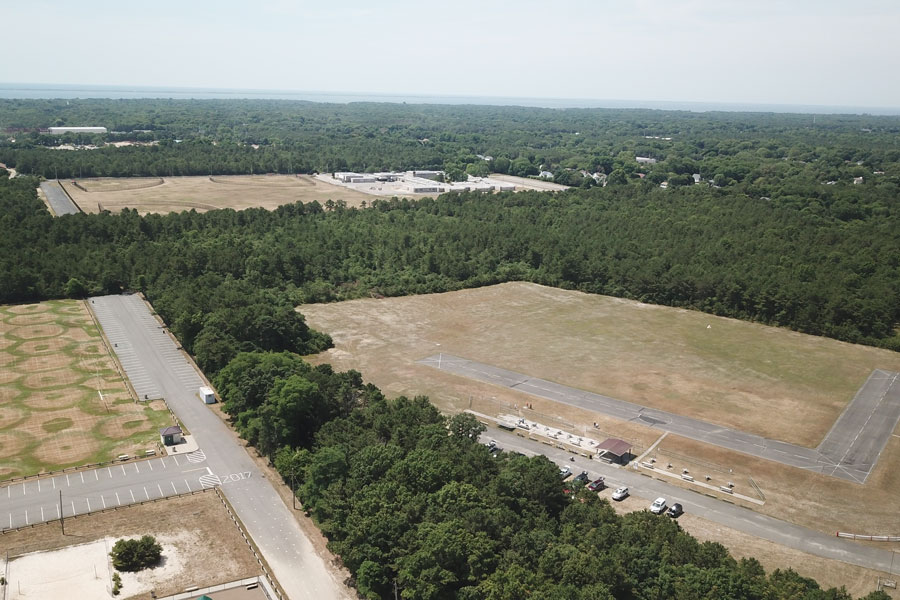
Upton is a small hamlet in the Town of Brookhaven in central Suffolk County, on Long Island. Although it has a relatively small residential population, Upton is widely recognized as the home of Brookhaven National Laboratory, one of the nation’s leading scientific research facilities. Surrounded by extensive woodlands and protected open space, Upton occupies a unique place on Long Island, blending scientific innovation, history, and natural beauty.
History
The area now known as Upton remained largely rural through much of its early history. Its most significant historical role emerged during the early 20th century when the federal government established Camp Upton, a major military training facility used during both World War I and World War II. After the war, much of the site was repurposed for scientific research, eventually becoming Brookhaven National Laboratory in 1947.
Today, Upton remains closely tied to the laboratory and its scientific mission. While it lacks a traditional downtown business district, it serves as an important center for research, education, and technological advancement.
Brookhaven National Laboratory
The defining landmark in Upton is Brookhaven National Laboratory (BNL). Operated for the U.S. Department of Energy, the laboratory conducts internationally significant research in physics, chemistry, biology, energy science, environmental science, computing, and medicine. Thousands of scientists, engineers, students, and researchers visit the facility each year.
Major facilities at BNL include the Relativistic Heavy Ion Collider (RHIC), National Synchrotron Light Source II (NSLS-II), and the Center for Functional Nanomaterials (CFN). The laboratory has contributed to numerous scientific breakthroughs and Nobel Prize-recognized discoveries.
Natural Environment
Upton is surrounded by large areas of undeveloped woodland, pine barrens habitat, and protected open space. The community lies within the broader region of the Long Island Central Pine Barrens, one of the most environmentally important ecosystems in New York State. The surrounding landscape provides habitat for numerous plant and animal species while helping protect Long Island’s groundwater resources.
Visitors exploring the area will find nearby hiking opportunities, nature preserves, and scenic woodland roads that offer a very different side of Long Island from its beaches and suburban communities.
Location and Transportation
Upton is centrally located in Suffolk County near Shirley, Manorville, Yaphank, and Medford. The community is accessible via the Long Island Expressway and William Floyd Parkway. While there is no Long Island Rail Road station in Upton itself, nearby stations in Yaphank and Medford provide regional rail access.
Education and Research
Research and education are central to Upton’s identity. Through Brookhaven National Laboratory, the community regularly hosts visiting scientists, educational programs, internships, student initiatives, and public science outreach events. The laboratory’s partnerships with universities and research institutions help position Long Island as an important center for scientific discovery and innovation.
Vicinity of Upton
Key Facts and Details
| Feature | Details |
|---|---|
| Location | Central Suffolk County, within the Town of Brookhaven |
| Known For | Brookhaven National Laboratory and scientific research |
| Historic Significance | Former location of Camp Upton during World War I and World War II |
| Environment | Located within the Central Pine Barrens region |
| Nearby Communities | Shirley, Manorville, Yaphank, and Medford |
| Transportation | Long Island Expressway, William Floyd Parkway, nearby LIRR service |
| Character | Research-focused community surrounded by protected woodland and open space |
While Upton may not have the size or visibility of many Long Island communities, its impact extends far beyond Suffolk County. As the home of Brookhaven National Laboratory and a gateway to the Central Pine Barrens, Upton combines scientific achievement, environmental importance, and historical significance in a way few places on Long Island can match.
Are you ready for fall on Long Island? Check out these local seasonal guides:
🍎 Apple Picking 🍓 Strawberry Picking 🎃 Pumpkin Picking 👻 Haunted Houses 🍂 Farm Festivals