
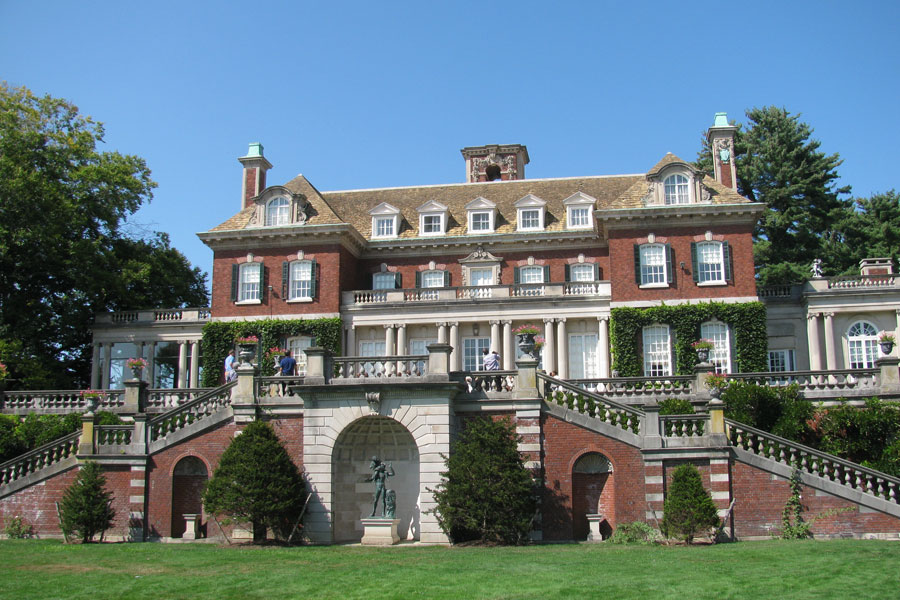
Old Westbury Gardens is a historic mansion, museum, and public garden located at 71 Old Westbury Road in the Village of Old Westbury, Nassau County, New York. Set on approximately 200 acres of landscaped grounds, the estate is one of the most celebrated surviving examples of the magnificent country properties built along Long Island’s North Shore during the early twentieth century. Its centerpiece, Westbury House, was completed in 1906 for John Shaffer Phipps and his wife, Margarita Grace Phipps, and remains surrounded by formal gardens, wooded landscapes, ponds, and sweeping lawns.
Unlike many of the grand residences constructed during Long Island’s Gold Coast era, Westbury House and its surrounding landscape have been preserved together as a historic estate. Visitors can explore the grounds, admire the mansion’s architecture, discover its original furnishings and decorative arts, and learn about the family whose country home became an important cultural institution. The property is listed on the National Register of Historic Places and has welcomed the public since 1959.
Old Westbury Gardens attracts visitors interested in architecture, horticulture, photography, history, and seasonal recreation. Spring brings flowering trees, summer offers lush gardens, and autumn transforms the landscape with colorful foliage. Throughout its public season, the estate also hosts educational programs, guided tours, exhibitions, concerts, and special events.
The History of Old Westbury Gardens
The story of Old Westbury Gardens is closely connected to the extraordinary wealth generated during America’s industrial expansion in the late nineteenth century and the rise of Long Island’s Gold Coast. John Shaffer Phipps, commonly known as Jay Phipps, was the son of Henry Phipps Jr., a prominent businessman who had been associated with Andrew Carnegie and the Carnegie Steel Company.
Following the sale of Carnegie Steel in 1901, the Phipps family possessed the financial resources to establish substantial country estates. Jay Phipps, who attended Yale University and Harvard Law School, married Margarita Grace, known as Dita, whose family was associated with the Grace shipping business.
The couple’s country home was conceived as an English-inspired estate reflecting Margarita’s background and familiarity with traditional English country houses. Jay acquired approximately 175 acres in Westbury, and plans were developed for a residence that would combine impressive architecture with carefully designed gardens and extensive landscaped grounds.
Construction began in 1904, following the birth of the couple’s first child. The mansion was completed in 1906, and the family moved into Westbury House in March 1907. Over the following decades, the property became the family home of Jay and Margarita Phipps and their four children.
The estate reflects an era when wealthy industrial families established expansive retreats outside New York City. These properties offered privacy, recreation, entertaining spaces, and landscaped surroundings while remaining within reach of Manhattan. Many such estates were eventually subdivided, demolished, or converted to other uses as ownership patterns and development pressures changed.
Westbury House and Its Architecture
Westbury House is a monumental brick residence inspired by English architecture of the late seventeenth century. Its design is commonly described as Charles II or Carolean Revival, a style associated with classical proportions, formal symmetry, decorative brickwork, and an imposing but carefully balanced exterior.
English designer George Abraham Crawley played a central role in creating the mansion, with American architect Grosvenor Atterbury also associated with the architectural development of the estate. The resulting building was designed to complement the surrounding gardens and landscaped approaches characteristic of Long Island’s Gold Coast mansions.
The house’s long brick façade, prominent windows, classical detailing, and carefully arranged architectural features convey the grandeur of an English country residence. Formal staircases and terraces create a visual relationship between the mansion and the garden spaces below, allowing the architecture and landscape to function as parts of a unified composition.
The interior is equally important to the estate’s historical significance. Rather than presenting rooms furnished entirely with later museum acquisitions, Westbury House preserves an extensive collection of objects associated with the Phipps family’s residence.
Visitors may encounter period furniture, fine English antiques, paintings, decorative objects, textiles, and architectural details that illustrate the family’s tastes and the craftsmanship associated with affluent country houses of the early twentieth century.
The Phipps Family and Life at the Estate
Like other large estates of the period, the household depended on a considerable amount of work taking place beyond its formal reception rooms. Domestic staff, gardeners, maintenance workers, and other employees contributed to the daily operation of the house and grounds.
The formal interiors illustrate the public and social aspects of estate life, while the service areas provide another perspective on the labor and organization required to maintain such a residence. Special interpretive programs and behind-the-scenes tours may explore these less visible aspects of the property.
Preservation and Opening to the Public in 1959
Old Westbury Gardens entered a new chapter in 1959 when the estate opened to the public as a nonprofit institution. The preservation effort was closely associated with Margaret Phipps Boegner, the daughter of John and Margarita Phipps, who helped ensure that the family property would remain available for future generations.
Today, Old Westbury Gardens operates as a nonprofit cultural organization dedicated to preserving and interpreting the architecture, collections, gardens, and history of the estate and the broader North Shore. Its mission includes introducing visitors to the early twentieth-century American country estate through educational experiences and public programming.
The Formal Gardens and Landscaped Grounds
The approximately 200-acre landscape is one of the principal reasons visitors return to Old Westbury Gardens. The property includes formal gardens, flowering borders, lawns, ponds, and woodland areas that invite birdwatching, walking, and nature photography throughout the year.
The gardens were designed to complement Westbury House, with formal arrangements and carefully framed views reinforcing the relationship between the mansion and its surroundings. Some areas emphasize symmetry and geometric planting patterns, while others provide a more naturalistic landscape of trees, open spaces, and water features.
One of the most recognizable features is the Walled Garden, where enclosed planting areas and structured landscape elements create a distinct atmosphere. The garden’s appearance changes as flowers and other seasonal plantings develop throughout the growing season.
The Rose Garden is another notable attraction, particularly when flowering conditions are favorable. Visitors interested in ornamental horticulture can observe how roses and other flowering plants contribute to the estate’s formal landscape design.
The Lilac Walk is especially associated with spring, when flowering lilacs add fragrance and color to the grounds. Elsewhere, established trees, woodland paths, ponds, and open lawns provide quieter settings for walking and enjoying the scenery.
Spring Flowers, Summer Gardens, and Autumn Foliage
Old Westbury Gardens offers different experiences throughout its public season. In spring, flowering trees, bulbs, lilacs, and other early-season plants begin transforming the grounds after winter. The timing and intensity of individual blooms depend on temperatures, rainfall, and growing conditions.
Autumn provides another distinctive experience for photography enthusiasts as mature trees begin displaying yellow, orange, and red foliage. The changing leaves create a colorful backdrop for Westbury House and its formal gardens, making the estate particularly appealing for seasonal photography and leisurely walks.
The estate also schedules seasonal exhibitions and activities that complement the changing landscape, including opportunities for seasonal photography. In October 2026, for example, the Scarecrow Garden Exhibit is scheduled to run from October 3 through October 31, allowing visitors to explore creative scarecrow displays as part of the autumn garden experience.
Visitors hoping to see a particular flower or seasonal display should consult the estate’s official website before traveling. Bloom periods can shift from year to year, and individual gardens may look quite different depending on the date of a visit.
Touring Westbury House
A visit to Westbury House provides a closer look at the architectural and decorative features that distinguish the estate from a conventional public garden. The house contains historic rooms furnished with objects associated with the Phipps family, allowing visitors to better understand the property’s original residential purpose.
House tours and interpretive experiences may introduce guests to the family’s history, the design of the residence, its decorative collections, and the social customs of the period. Special tours may also examine service areas or other aspects of the property not emphasized during a standard visit.
Under the estate’s published 2026 visitor arrangements, regular admission includes access to both the gardens and Westbury House. However, the house maintains its own admission and closing times, and access may be affected by preservation work, special events, or operational requirements.
Visitors interested primarily in the mansion should plan to arrive early enough to enjoy the interior rather than leaving the house tour until the end of the day. Checking the current tour arrangements in advance is particularly useful for anyone traveling specifically to see the historic rooms.
Old Westbury Gardens as a Movie and Television Location
Old Westbury Gardens has also become recognizable through its appearances in motion pictures and other productions. The estate’s architecture, formal gardens, and preserved interiors provide a setting that can represent historic country houses, affluent residences, and elegant landscapes.
According to the estate’s official photography and filming information, productions associated with Old Westbury Gardens include Alfred Hitchcock’s North by Northwest (1959), Love Story (1970), The Age of Innocence (1993), and Wolf (1994).
The estate has also hosted commercial photography, television productions, fashion photography, and other professional projects. Such uses are managed separately from ordinary visitor photography and generally require advance arrangements.
Educational Programs, Concerts, and Special Events
In addition to preserving the estate, Old Westbury Gardens operates an active schedule of cultural, educational, and recreational programming. Events vary throughout the year and may include guided garden walks, horticultural demonstrations, art exhibitions, lectures, concerts, and activities for children and families.
Family programming introduces younger visitors to the property through age-appropriate activities, storytelling, creative projects, and outdoor exploration. Some programs are included with general admission, while others require separate tickets or advance registration.
The estate also hosts concerts, wellness classes, classic car events, and special seasonal celebrations. Its annual calendar may include the Long Island Celtic Festival and Highland Games, holiday programming, and other events that draw visitors for experiences beyond ordinary garden admission.
Visitors can consult the official Old Westbury Gardens events calendar to identify upcoming programs and determine whether additional reservations or fees are required.
Photography and Visiting the Estate Grounds
Old Westbury Gardens is particularly appealing for photography because of its varied scenery. Westbury House provides an imposing architectural subject, while the formal gardens, tree-lined paths, ornamental features, and landscaped grounds offer opportunities for seasonal and nature photography.
Casual personal photography is generally permitted under the estate’s visitor policies. However, portrait sessions, professional photography, commercial projects, and filming may require special arrangements or fees.
Visitors should also observe restrictions intended to protect the historic landscape. Climbing trees, entering planted beds, picking flowers, and disturbing garden features are prohibited. Drones and recreational sporting equipment are not permitted under the estate’s general visitor rules.
Hours, Admission, and Tickets
Old Westbury Gardens operates on a seasonal schedule, with additional special events sometimes offered outside its regular public season. For 2026, regular visiting hours are scheduled from April 1 through October 31, from 10 a.m. to 6 p.m., with the property closed on Tuesdays.
General admission is $22 for adults, $20 for visitors ages 62 and older, and $20 for full-time students with valid identification. Admission for children ages 7 through 17 is $12, while children ages 6 and younger are admitted free. Members receive complimentary regular admission according to their membership benefits.
Advance online ticket purchases are required for most visitors, with exceptions for members and qualifying library pass holders. Regular admission includes access to the gardens and Westbury House, although certain special events, workshops, and programs require separate reservations or additional fees.
The final regular admission time is 4 p.m. for non-members and 5 p.m. for members. Westbury House maintains separate closing times, so visitors planning to tour the mansion should review the current schedule before arriving.
Admission prices, operating hours, and policies may change. Visitors should consult the official visitor information page and ticket information before making plans.
Accessibility, Visitor Rules, and Planning Tips
Old Westbury Gardens is a large historic property with a mixture of garden paths, lawns, landscaped approaches, and interior spaces. Comfortable walking shoes are recommended, particularly for visitors planning to explore beyond the formal gardens immediately surrounding the mansion.
Because portions of the property include historic surfaces, stairs, and uneven outdoor terrain, accessibility may vary by location. Visitors with mobility concerns should contact the estate in advance for information about accessible routes, house access, and available accommodations.
Pets and emotional support animals are not generally permitted, although service animals are welcome. The estate also schedules designated dog-friendly weekends when separate rules may apply to leashed dogs.
Visitors should bring water, appropriate clothing, and sun protection during warmer weather. Binoculars may be useful for birdwatching around the landscaped grounds.
For families, the estate provides opportunities for outdoor exploration and educational experiences, but it is not a conventional playground or sports park. Activities such as jogging, ball games, scooter riding, and other athletic recreation are restricted to protect the property and maintain its historic character.
Getting to Old Westbury Gardens
Old Westbury Gardens is located at 71 Old Westbury Road in Old Westbury, Nassau County, and is accessible from Suffolk County and New York City.
Motorists can approach the estate using the Long Island Expressway, the Northern State Parkway, and local roads. The estate’s official directions identify the public entrance at 71 Old Westbury Road.
Visitors should use this address rather than 60 Post Road, which is not the general public admission entrance. Entering the correct destination into a navigation system is important because the estate covers a substantial area and not every entrance is available to the public.
Travelers using the Long Island Rail Road may consider nearby stations such as Westbury or Hicksville, followed by a taxi or rideshare connection. Public transportation arrangements should be planned in advance because the estate is not immediately adjacent to a railroad station.
Visitors can consult the official driving directions for recommended approaches and current entrance information.
Old Westbury Gardens and Long Island’s Gold Coast
Old Westbury Gardens is an important surviving example of the grand estates associated with Long Island’s historic Gold Coast mansions and the region described in our Gold Coast guide. During the late nineteenth and early twentieth centuries, wealthy families constructed elaborate residences across portions of Nassau County and western Suffolk County, particularly along the North Shore.
These estates reflected the economic influence of industrialists, financiers, and prominent business families whose fortunes helped shape American society during the Gilded Age and the decades that followed. Architects and landscape designers were commissioned to create residences inspired by European country houses, surrounded by gardens, terraces, formal approaches, and extensive private grounds.
Although many historic Gold Coast properties have disappeared or been substantially altered, Old Westbury Gardens retains an unusually complete relationship between its principal residence, interior collections, and surrounding landscape.
For those interested in the region’s history, Old Westbury Gardens provides an opportunity to explore the broader story of Long Island’s transformation from an agricultural landscape into a suburban region containing some of the nation’s most notable historic residential properties.
Old Westbury Gardens
Key Facts and Details
| Official Name | Old Westbury Gardens |
| Historic Residence | Westbury House |
| Address | 71 Old Westbury Road, Old Westbury, NY 11568 |
| Village | Old Westbury |
| County | Nassau County |
| Region | Long Island’s historic Gold Coast |
| Property Type | Historic mansion, public gardens, museum, and cultural institution |
| Estate Size | Approximately 200 acres |
| Construction Began | 1904 |
| Westbury House Completed | 1906 |
| Phipps Family Moved In | March 1907 |
| Original Owners | John Shaffer Phipps and Margarita Grace Phipps |
| Principal Designer | George Abraham Crawley |
| Associated Architect | Grosvenor Atterbury |
| Architectural Style | Charles II / Carolean Revival |
| Opened to the Public | 1959 |
| Historic Recognition | Listed on the National Register of Historic Places |
| Principal Attractions | Westbury House, formal gardens, landscaped grounds, ponds, woodlands, and historic collections |
| Notable Garden Areas | Walled Garden, Rose Garden, Lilac Walk, and other landscaped areas |
| Popular Activities | House tours, garden walks, photography, historical interpretation, and seasonal events |
| Notable Film Productions | North by Northwest, Love Story, The Age of Innocence, and Wolf |
| 2026 Regular Season | April 1 through October 31 |
| 2026 Regular Hours | 10 a.m. to 6 p.m.; closed Tuesdays |
| 2026 Adult Admission | $22 |
| 2026 Senior Admission | $20 for ages 62 and older |
| 2026 Student Admission | $20 for full-time students with valid identification |
| 2026 Youth Admission | $12 for ages 7 through 17 |
| Children Ages 6 and Younger | Free regular admission |
| Advance Tickets | Required for most visitors; members and qualifying library pass holders are exceptions |
| House Admission | Included with regular admission, subject to operating arrangements |
| Pet Policy | Service animals permitted; dogs allowed only during designated dog-friendly events |
| Photography | Casual personal photography permitted; professional and commercial sessions may require approval |
| Public Entrance | 71 Old Westbury Road; no general public admission through 60 Post Road |
| Telephone | 516-333-0048 |
| Official Website | OldWestburyGardens.org |
| Visitor Information | Official Plan Your Visit Page |
| Tickets | Official Admission and Ticket Information |
| Directions | Official Driving Directions |
Old Westbury Gardens remains one of the most significant historic destinations on Long Island, offering visitors an unusually complete example of the architecture, gardens, and cultural traditions associated with the region’s early twentieth-century Gold Coast estates. From the grand rooms of Westbury House to the carefully preserved formal gardens and wooded landscape, the property provides an opportunity to experience a remarkable chapter of Nassau County’s history. Whether visiting for its seasonal flowers, architectural heritage, educational programs, or peaceful surroundings, Old Westbury Gardens continues to preserve the legacy of the Phipps family while welcoming new generations to one of Long Island’s North Shore most distinctive historic estates.