
Cold Spring Harbor Lighthouse
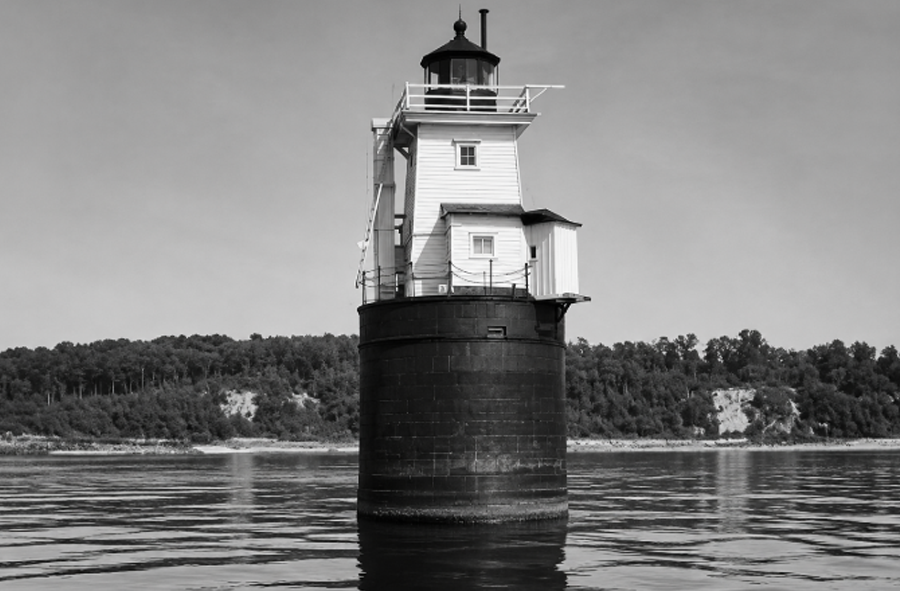
Cold Spring Harbor Lighthouse was a historic offshore lighthouse at the entrance to Cold Spring Harbor on the North Shore of Long Island. Built in 1890 on a shoal in Long Island Sound, the lighthouse warned vessels away from shallow water and helped guide boats into one of the region’s important historic harbors.
The original lighthouse was deactivated in 1965 and removed from its offshore foundation. Rather than being demolished, the wooden tower was purchased for one dollar and relocated to private property on land, where it remains preserved as a distinctive reminder of Cold Spring Harbor’s maritime past.
Construction at the Harbor Entrance
Cold Spring Harbor Lighthouse was built after Congress appropriated $20,000 for the project on March 3, 1875. Construction began in 1889, and the completed lighthouse was first lit on January 31, 1890.
The station stood on a cast-iron and concrete caisson positioned over a shoal at the entrance to Cold Spring Harbor. The original wooden tower was approximately 35 feet tall, with its light positioned about 44 feet above sea level. Its isolated location exposed the lighthouse and its keepers to heavy seas, winter ice and powerful storms.
The Lighthouse and Its Light
The lighthouse originally displayed a fixed red light powered by a fourth-order Fresnel lens. In 1892, the light characteristic was changed to a fixed white light with a red sector covering hazardous waters near the harbor entrance and surrounding navigation markers.
A fog bell was also installed at the station and automatically sounded at regular intervals when visibility was poor. The keepers used a boat suspended from davits to travel between the lighthouse and the mainland, maintain the light and assist vessels in distress.
Life at the Offshore Station
Life at Cold Spring Harbor Lighthouse could be difficult, particularly during winter storms. Ice occasionally struck the structure with enough force to damage the station, and the lighthouse was exposed to strong winds, rough seas and rapidly changing conditions in Long Island Sound.
The keepers also served as an important source of assistance for people on the water. Historical accounts describe keepers rescuing or towing boaters whose vessels were disabled, including people caught in storms or struggling in the cold waters surrounding the harbor.
One of the station’s keepers, Arthur Jensen, had previously served at Execution Rocks Lighthouse. During his brief assignment at Cold Spring Harbor, he was visited by President Theodore Roosevelt, who lived nearby at Sagamore Hill and sometimes rowed his children into the harbor.
Automation and Deactivation
The lighthouse was refitted with an oil-vapor lamp in 1929. Automation followed in 1948, ending the need for a resident keeper at the station. Maintenance responsibility was subsequently assigned to Coast Guard personnel based at Eaton’s Neck Lighthouse.
In 1965, the Coast Guard determined that the original lighthouse was no longer necessary as a navigational structure. The wooden tower was removed from the caisson and replaced by an automated steel skeleton tower and day beacon, which continued to mark the shoal.
Preservation and Relocation
The original lighthouse was scheduled to be demolished after it was removed from the water. A private resident known as “Lady Glen,” however, purchased the structure for one dollar and arranged for it to be moved to land. The relocation preserved the historic tower and saved it from destruction.
The lighthouse was transported by barge and eventually reassembled on private property. It is not operated as a public museum and should not be approached without permission, but its survival provides a tangible connection to the working waterfront and navigational history of Cold Spring Harbor.
Cold Spring Harbor’s Maritime Heritage
Cold Spring Harbor Lighthouse is part of a broader maritime landscape that includes the Cold Spring Harbor Whaling Museum, historic waterfront buildings, boatyards and the harbor’s former shipbuilding and whaling industries. The village developed around the water, and the lighthouse helped protect vessels entering and leaving the harbor during the height of its commercial activity.
Visitors exploring the area can also experience the natural scenery of Cold Spring Harbor State Park and learn about the region’s scientific history at the DNA Learning Center. Together, these destinations show how Cold Spring Harbor combines maritime history, natural landscapes and science-related attractions.
Cold Spring Harbor Lighthouse
Key Facts & Details
| Feature | Details |
|---|---|
| Official name | Cold Spring Harbor Light |
| Common name | Cold Spring Harbor Lighthouse |
| Type | Historic offshore lighthouse and former navigational aid |
| Original location | Shoal at the entrance to Cold Spring Harbor |
| Region | North Shore of Long Island |
| County | Suffolk County |
| Waterway | Long Island Sound |
| Construction began | 1889 |
| First lit | January 31, 1890 |
| Congressional appropriation | $20,000 approved in 1875 |
| Foundation | Cast-iron and concrete caisson |
| Original construction | Wood |
| Original tower height | Approximately 35 feet |
| Height above sea level | Approximately 44 feet |
| Original lens | Fourth-order Fresnel lens |
| Original light | Fixed red light |
| Later light characteristic | Fixed white light with a red sector |
| Fog signal | Automatically operated fog bell |
| Automation | 1948 |
| Deactivated | 1965 |
| Current status | Historic lighthouse relocated to private property; original offshore station replaced by an automated navigation structure |
| Public access | Private property; not open for ordinary public tours |
| Nearby attractions | Cold Spring Harbor Whaling Museum, Cold Spring Harbor State Park and the DNA Learning Center |
| Official historical source | U.S. Coast Guard Historian’s Office |
| Long Island Lighthouses | How many lighthouses are on Long Island? |
Cold Spring Harbor Lighthouse remains an important part of the maritime history of Cold Spring Harbor and the wider North Shore. Although the original tower no longer stands offshore, its relocation preserved a rare nineteenth-century lighthouse that once guided vessels through the shoals at the harbor entrance.The lighthouse’s connection to the harbor’s whaling history, historic waterfront and surrounding Suffolk County communities makes it a valuable landmark for understanding Long Island’s relationship with the sea. Because the preserved tower is privately owned, visitors should admire it only from authorized locations while exploring the many public attractions in Cold Spring Harbor.
Are you ready for fall on Long Island? Check out these local seasonal guides:
🍎 Apple Picking 🍓 Strawberry Picking 🎃 Pumpkin Picking 👻 Haunted Houses 🍂 Farm Festivals