
Sagamore Hill National Historic Site
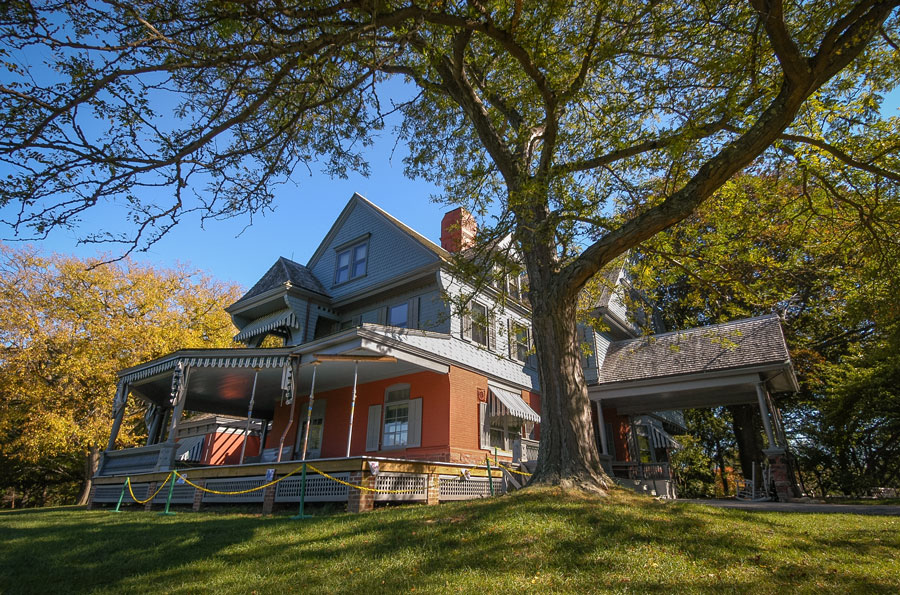
Sagamore Hill National Historic Site, located near Oyster Bay on Long Island’s North Shore, was the beloved home of Theodore Roosevelt, the 26th President of the United States. Often called the “Summer White House” during his presidency, the estate offers visitors a vivid look at Roosevelt’s family life, public career, and lasting legacy in American history.
History and Significance
Completed in 1885, Sagamore Hill became Roosevelt’s home base with his wife Edith and their large family, including Roosevelt’s daughter Alice and the couple’s five children together. From here, he wrote, entertained guests, met with officials, and shaped ideas connected to conservation, military preparedness, reform, and public service. After leaving the White House, Roosevelt returned to Sagamore Hill and lived here until his death in 1919.
The House and Grounds
The Queen Anne–style home is preserved with many original furnishings, books, artwork, hunting trophies, and personal belongings that help bring Roosevelt’s world to life. When house tours are available, they provide a close-up look at the rooms where he worked, relaxed, and welcomed visitors from around the world.
Outside, the roughly 83-acre property includes broad lawns, gardens, wooded paths, and scenic views toward Cold Spring Harbor. Walking the grounds is a major part of the experience and gives visitors a feel for the landscape that meant so much to Roosevelt.
Visiting Sagamore Hill
Sagamore Hill is operated by the National Park Service. Visitor experiences typically include the Roosevelt Home, the Old Orchard Museum, a bookstore or sales area, and the surrounding grounds. Hours, tour schedules, ticket procedures, and access can change by season, staffing, weather, or preservation work, so it is best to check ahead before visiting.
- Location: 20 Sagamore Hill Road, Oyster Bay, NY 11771
- House Tours: Timed entry is commonly required when tours are offered, and advance reservations are often recommended
- Museum & Grounds: Grounds and museum access often follow a broader schedule than the house, but hours vary by season
- Admission: Grounds are generally free to explore; fees may apply for house tours or special programs
Sagamore Hill National Historic Site
Visitor Information Snapshot
| Feature | Details |
|---|---|
| Location | 20 Sagamore Hill Road, Oyster Bay, NY 11771 |
| Type | National Historic Site, Presidential Home & Museum |
| Notable History | Home of President Theodore Roosevelt from 1885 to 1919 and widely known as the “Summer White House” during his presidency |
| Hours | Hours vary by season; verify current grounds, museum, and house-tour schedules before visiting |
| Tours | Timed house tours are typically ticketed and may sell out during busier periods |
| Admission | Grounds are generally free; house tours and special programs may require a paid ticket |
| Parking | On-site parking is usually available, though pleasant weekends and peak seasons can be busier |
| Facilities | Visitor amenities may include the Old Orchard Museum, a bookstore or gift area, restrooms, and walking paths; offerings can vary |
| Accessibility | Some historic areas have access limitations; contact the site directly for current accessibility information and accommodations |
| Best For | History enthusiasts, families, architecture fans, and North Shore sightseers |
| Website | National Park Service – Sagamore Hill National Historic Site |
Whether you are drawn by presidential history, North Shore scenery, or Roosevelt’s larger-than-life personality, Sagamore Hill offers one of Long Island’s most memorable historic experiences. Touring the home when available, exploring the grounds, and standing where Roosevelt welcomed guests and reflected on public life gives visitors a strong sense of his enduring connection to Oyster Bay and the nation.
Are you ready for fall on Long Island? Check out these local seasonal guides:
🍎 Apple Picking 🍓 Strawberry Picking 🎃 Pumpkin Picking 👻 Haunted Houses 🍂 Farm Festivals