
Cedar Island Lighthouse
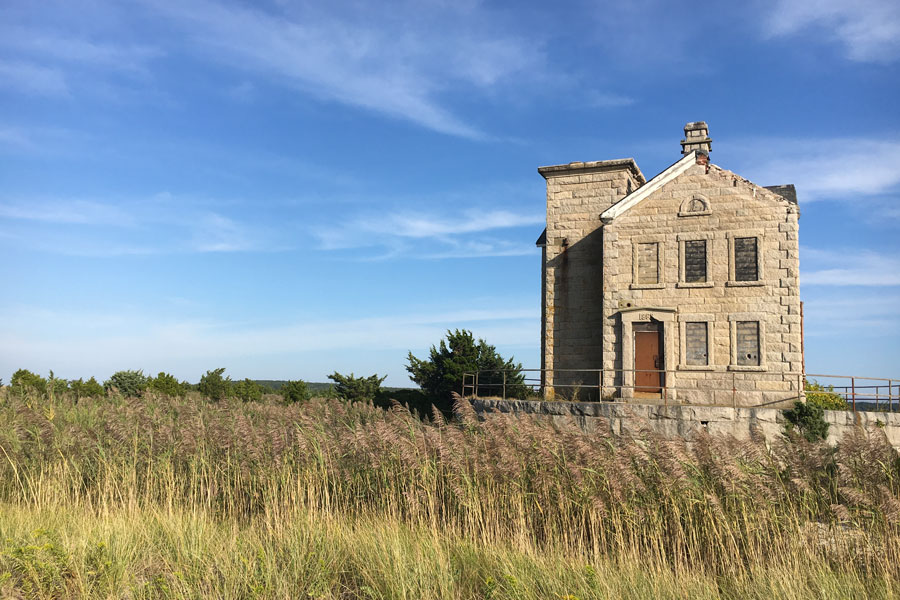
Cedar Island Lighthouse stands at the end of a long peninsula in Cedar Point County Park, overlooking Gardiners Bay near Sag Harbor on Long Island’s South Fork. Built to guide whaling ships and other vessels into Sag Harbor, the historic lighthouse is now a preserved but seriously damaged landmark owned by Suffolk County.
The lighthouse originally stood on Cedar Island, a small island separated from the South Fork by a narrow channel. The Great Hurricane of 1938 deposited enough sand between the island and the mainland to create Cedar Point, linking the lighthouse to Long Island and permanently changing the geography surrounding the station.
Why Cedar Island Lighthouse Was Built
During the early nineteenth century, Sag Harbor was one of Long Island’s most important whaling ports. Ships approaching the harbor had to navigate shoals, shifting sandbars and narrow passages between the South Fork, Shelter Island and the surrounding bays. Local whalers had used temporary stake lights around Sag Harbor as early as 1810, but a permanent federal lighthouse was needed to provide a more reliable navigational aid.
The federal government purchased Cedar Island from the Town of East Hampton in 1838. The first lighthouse was completed in 1839 and guided vessels toward Northwest Bay and Sag Harbor, helping mariners identify the dangerous waters at the entrance to the harbor.
The Original Lighthouse
The original Cedar Island Lighthouse was a wood-frame keeper’s dwelling with a small tower centered on its pitched roof. Nine Winslow Lewis lamps with fourteen-inch reflectors produced a light approximately 32 feet above sea level, with a reported range of about 12.5 nautical miles.
In 1855, the original lamps and reflectors were replaced by a sixth-order Fresnel lens illuminated by an Argand lamp. The heavier lantern equipment placed additional strain on the wooden structure, which was already in poor condition and increasingly threatened by erosion.
The Granite Lighthouse Built in 1868
Congress approved $25,000 for a new lighthouse station, and the present granite structure was built in 1868 under the direction of W. & G. Beattie of Fall River, Massachusetts. The lighthouse consists of an L-shaped keeper’s dwelling with a square tower built into the angle of the building. The tower and dwelling were constructed on a circular granite pier.
The new station was designed in a Victorian Gothic style and used the Fresnel lens from the original lighthouse. The light was displayed approximately 44 feet above the water. A machine-operated fog bell was added in 1882 to warn vessels when fog obscured the beacon.
Erosion and Life at the Station
Erosion was a constant threat to Cedar Island. The island had measured approximately two acres when the lighthouse was established, but its size declined steadily as storms and tides carried away the shoreline. Between 1903 and 1906, approximately 6,600 tons of additional rock were placed around the island in an effort to protect the lighthouse and its foundation.
Several lighthouse keepers and their families lived at the isolated station. Charles J. Mulford, a Civil War veteran who had lost a leg, served as keeper from 1897 to 1906. William H. Follett became the final keeper and remained at Cedar Island until the station was decommissioned in 1934.
During Follett’s tenure, the lighthouse continued to serve as an important aid to vessels entering Sag Harbor. In 1919, Follett rowed out to the yacht Flyer after it caught fire near the station and attempted to rescue three badly burned men aboard the vessel.
Deactivation and Cedar Point
In 1934, the Coast Guard replaced the historic lighthouse with an automated light mounted on a skeletal tower. The old lighthouse was no longer needed as an active navigational station, and the final keeper was reassigned to Long Beach Bar Lighthouse.
The federal government sold the lighthouse and surrounding property in 1937. The following year, a powerful hurricane filled the channel between Cedar Island and the South Fork with sand, creating the peninsula now known as Cedar Point. The former island eventually became part of Cedar Point County Park.
Damage, Preservation and Restoration
After years of private ownership, Suffolk County purchased the lighthouse and surrounding property in 1967 and incorporated it into Cedar Point County Park. A fire set by vandals in 1974 severely damaged the interior. Although the roof was replaced, many windows were bricked over and the burned interior was left unrestored.
Cedar Island Lighthouse was added to the National Register of Historic Places in 2002. The adjacent oil house, built in 1902, was restored in 2004 through preservation efforts involving Suffolk County Parks and the Long Island Chapter of the United States Lighthouse Society.
In 2013, the lighthouse’s approximately four-and-a-half-ton lantern room was removed and transported by barge to Sag Harbor Yacht Yard for restoration. Suffolk County later approved funding for improvements to the lighthouse roof, exterior and foundation pier. Long-term plans have included restoring the building and possibly adapting it for museum or hospitality use, although the structure remains closed to the public.
Can the Public Visit Cedar Island Lighthouse?
The grounds surrounding Cedar Island Lighthouse can be reached through Cedar Point County Park, but the lighthouse itself is not open for ordinary interior visits. The building is located at the end of a roughly mile-and-a-half peninsula, and reaching it requires a substantial walk along the park’s trails and shoreline.
Visitors can view the lighthouse from the park and from the surrounding shoreline, but should not enter the structure or attempt to cross restricted areas. Park conditions, trail access and seasonal rules may change, so visitors should consult Suffolk County Parks before planning a trip.
Cedar Island Lighthouse and the South Fork
Cedar Island Lighthouse is part of the historic network of navigation landmarks surrounding the eastern end of Long Island. Its story is closely connected to Sag Harbor, the whaling industry, Shelter Island, Gardiners Bay and the maritime communities of the South Fork.
Although the lighthouse no longer operates as an active navigational aid, its granite walls, surviving keeper’s dwelling and isolated location preserve an important chapter in Long Island’s maritime history. Cedar Island Lighthouse also illustrates how erosion, hurricanes and shifting coastal geography can transform both a lighthouse station and the landscape around it.
Cedar Island Lighthouse
Key Facts & Details
| Feature | Details |
|---|---|
| Official name | Cedar Island Light |
| Common name | Cedar Island Lighthouse |
| Type | Historic lighthouse and former navigational aid |
| Original location | Cedar Island in Gardiners Bay near Sag Harbor |
| Current location | Cedar Point County Park on Long Island’s South Fork |
| County | Suffolk County |
| Nearby community | Sag Harbor |
| Waterway | Gardiners Bay |
| Station established | 1839 |
| Original structure | Wood-frame keeper’s dwelling with a small tower centered on the roof |
| Current lighthouse completed | 1868 |
| Construction materials | Granite blocks on a circular granite masonry pier |
| Architectural style | Victorian Gothic |
| Tower shape | Square |
| Tower height | Approximately 40 feet |
| Keeper’s dwelling | L-shaped dwelling integrated with the lighthouse tower |
| Original lighting | Nine Winslow Lewis lamps with fourteen-inch reflectors |
| Lens | Sixth-order Fresnel lens installed in 1855 |
| Fog signal | Machine-operated fog bell added in 1882 |
| Automated | 1934 |
| Deactivated | 1934 |
| Current status | Historic lighthouse; no longer an active Coast Guard navigational station |
| Current owner | Suffolk County |
| Park | Cedar Point County Park |
| National Register listing | Added in 2002 |
| Oil house | Built in 1902 and restored in 2004 |
| Fire damage | Interior severely damaged by fire in 1974 |
| Public access | Park grounds may be accessible; lighthouse interior is closed to ordinary public visits |
| Coordinates | 41.04077, -72.26096 |
| Official historical source | U.S. Coast Guard Historian’s Office |
| Long Island Lighthouses | How many lighthouses are on Long Island? |
Cedar Island Lighthouse remains one of the most important historic landmarks associated with Long Island’s maritime past. Built in 1839 and replaced by the present granite structure in 1868, the lighthouse guided whaling ships and other vessels toward Sag Harbor during one of the busiest periods in the harbor’s history.Although the lighthouse has been closed, damaged by fire and altered by decades of coastal exposure, preservation efforts have protected the structure and its historic oil house. Located at the end of Cedar Point in Cedar Point County Park, it remains a striking reminder of the keepers, mariners and coastal communities that shaped Suffolk County’s maritime heritage.
Are you ready for fall on Long Island? Check out these local seasonal guides:
🍎 Apple Picking 🍓 Strawberry Picking 🎃 Pumpkin Picking 👻 Haunted Houses 🍂 Farm Festivals