
What is the highest point on Long Island?
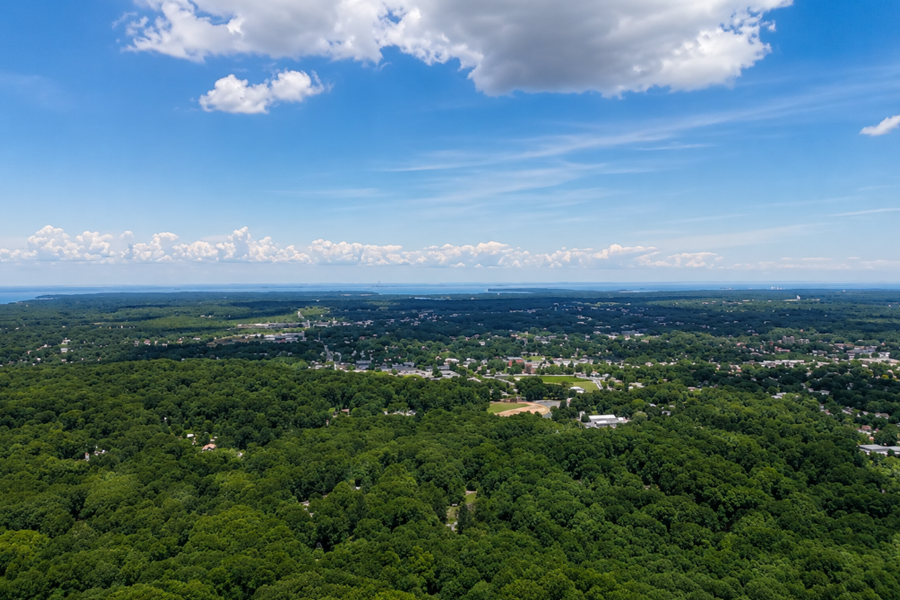
The highest natural point on Long Island is Jayne’s Hill, located in West Hills within the Town of Huntington in Suffolk County. The summit rises approximately 400 to 401 feet, or about 122 meters, above sea level and is reached by hiking through West Hills County Park.
In Short
Jayne’s Hill is Long Island’s highest natural elevation. It stands approximately 400 feet above sea level in West Hills County Park and lies along the Harbor Hill Moraine, the glacial ridge that forms much of Long Island’s northern backbone.
What Is the Highest Point on Long Island?
Jayne’s Hill is the highest point on Long Island, with an elevation generally reported as approximately 400 or 401 feet above sea level. Suffolk County identifies it as Long Island’s highest peak and lists the elevation at 400 feet, while signs and other references commonly round the measurement to 401 feet.
The hill is located within West Hills County Park in the hamlet of West Hills, north of Melville and within the Town of Huntington. It is not a mountain with an exposed summit or steep rocky slopes. Instead, it is a wooded high point surrounded by the rolling terrain of western Suffolk County.
Can You Visit Jayne’s Hill?
Yes. Jayne’s Hill is located on public parkland and can be reached by following the historic Walt Whitman Trail through West Hills County Park. The route passes through mixed hardwood forest and leads to the summit area, where a large boulder and plaque commemorate poet Walt Whitman and his connection to the hill.
The hike is more notable for its history, wooded setting, and geographic significance than for strenuous climbing. The surrounding park contains a larger network of trails for visitors who want a longer outing. Those planning a visit can also explore additional destinations in the guide to hiking on Long Island.
What Is at the Summit?
The summit is wooded and marked by a boulder bearing a plaque with words associated with Walt Whitman’s poem “Paumanok.” Whitman was born nearby and is known to have visited the hill, which once offered broad views across Long Island. Today, mature forest growth limits some of the long-distance views that were available during Whitman’s lifetime.
Visitors should not expect a developed scenic overlook, observation tower, or dramatic mountain summit. Jayne’s Hill is better understood as a quiet natural landmark reached through the forest. Its appeal comes from standing at Long Island’s highest elevation, following the Walt Whitman Trail, and exploring one of the island’s historically significant landscapes.
How Was Jayne’s Hill Formed?
Jayne’s Hill is part of the Harbor Hill Moraine, a ridge formed by glacial deposits during the last Ice Age. As the continental ice sheet advanced and later retreated, it pushed and deposited large amounts of rock, gravel, sand, and soil across the region. These deposits created the elevated ridges that now shape much of Long Island’s northern landscape.
The Harbor Hill Moraine extends along much of the North Shore and is one of the two major glacial ridges that helped form Long Island. Jayne’s Hill represents the highest surviving natural elevation along these glacial landforms.
Why Is Long Island’s Highest Point Only About 400 Feet?
Long Island was formed primarily by glaciers and glacial deposits rather than by the tectonic forces that create mountain ranges. Its landscape consists largely of moraines, outwash plains, low hills, wetlands, and coastal areas. As a result, even the island’s highest elevations are modest compared with the mountains found elsewhere in New York State.
Although Jayne’s Hill is not especially high by mountain standards, its elevation is significant within Long Island’s relatively low and gently rolling terrain. It also provides an easily accessible example of how glacial activity shaped the island’s present-day geography.
Jayne’s Hill and Walt Whitman
Jayne’s Hill has a strong association with Walt Whitman, one of America’s most influential poets. Whitman was born nearby at the Walt Whitman Birthplace State Historic Site and later wrote about visiting the elevated landscape around West Hills.
The Walt Whitman Trail leading to the summit commemorates that connection. Visitors can combine a hike to Jayne’s Hill with a visit to Whitman’s birthplace, creating an outing that brings together Long Island’s natural geography and literary history.
Continue Exploring
Visitors interested in the island’s landscape can explore West Hills County Park, learn more about Jayne’s Hill, follow the guide to Long Island hiking destinations, or browse additional outdoor locations in the Long Island parks guide. Nearby attractions include the Walt Whitman Birthplace State Historic Site and the communities of West Hills and Huntington.
Quick Facts
| Category | Information |
|---|---|
| Highest Point | Jayne’s Hill |
| Elevation | Approximately 400 to 401 feet, or about 122 meters, above sea level |
| Hamlet | West Hills |
| Town | Huntington |
| County | Suffolk County |
| Park | West Hills County Park |
| Trail | Walt Whitman Trail |
| Geologic Feature | Harbor Hill Moraine |
| Primary Activities | Hiking, nature walks, local history, and visiting Long Island’s highest elevation |
| Nearby Historic Site | Walt Whitman Birthplace State Historic Site |
Jayne’s Hill may be modest in elevation, but it holds an important place in the geography, geology, and cultural history of Long Island.Its glacial origins, wooded trail, association with Walt Whitman, and location within West Hills County Park make it both a geographic landmark and a worthwhile destination for visitors interested in hiking, history, and the natural forces that shaped the island.
Are you ready for fall on Long Island? Check out these local seasonal guides:
🍎 Apple Picking 🍓 Strawberry Picking 🎃 Pumpkin Picking 👻 Haunted Houses 🍂 Farm Festivals