
Walt Whitman Birthplace State Historic Site
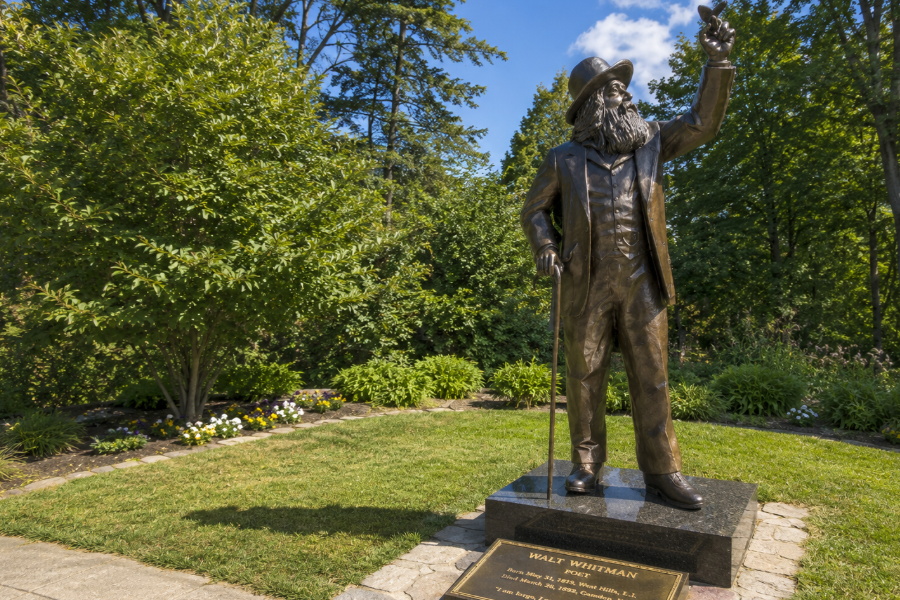
The Walt Whitman Birthplace State Historic Site is one of Long Island’s most significant literary landmarks. Located in West Hills, Suffolk County, the historic farmhouse marks the birthplace of Walt Whitman, one of America’s greatest poets. Preserved as a museum and educational center, the site celebrates Whitman’s life, his literary achievements, and his lasting influence on American literature while providing visitors with an opportunity to explore the home where he was born on May 31, 1819.
Situated near West Hills County Park and Jayne’s Hill, the birthplace combines history, literature, and the natural beauty of Long Island’s rolling woodlands. The property welcomes visitors year-round through guided tours, exhibits, educational programs, and special events dedicated to Whitman’s enduring legacy.
History
The farmhouse was built around 1810 by Walt Whitman’s father, Walter Whitman Sr. Less than a decade later, the family’s second son, Walter “Walt” Whitman Jr., was born in the home. Although the Whitman family relocated during Walt’s childhood, the landscapes, farms, forests, and shoreline of Long Island would later inspire much of his poetry.
Recognizing its historical importance, New York State acquired the property during the twentieth century and established the Walt Whitman Birthplace State Historic Site to preserve both the farmhouse and Whitman’s literary legacy. Today, it is listed on the National Register of Historic Places and continues to serve as one of the nation’s most important literary museums.
Museum and Exhibits
The restored farmhouse contains period furnishings, historic artifacts, manuscripts, portraits, and exhibits documenting Whitman’s life and career. Visitors learn about the poet’s upbringing, the publication of Leaves of Grass, his influence on American literature, and the ways Long Island shaped his writing.
The visitor center includes additional exhibits, educational displays, a gift shop, and research materials that provide deeper insight into Whitman’s life and literary contributions.
Programs and Events
Throughout the year, the historic site hosts poetry readings, lectures, educational programs, concerts, literary festivals, school field trips, and community events celebrating Whitman’s work. Annual birthday celebrations and cultural programs attract visitors from across Long Island and beyond.
The site also serves as a resource for students, educators, researchers, and anyone interested in American literature and Long Island history.
Grounds
The property includes landscaped grounds, gardens, walking paths, memorials, and interpretive signage that allow visitors to enjoy the peaceful setting while reflecting on Whitman’s connection to nature. The surrounding woodlands and nearby parks help preserve much of the landscape that inspired the poet’s lifelong appreciation of Long Island.
Location
The Walt Whitman Birthplace State Historic Site is located on Huntington Road in West Hills, just minutes from Melville, Huntington, and the Long Island Expressway. Visitors often combine a trip to the birthplace with nearby attractions including West Hills County Park and Jayne’s Hill.
Walt Whitman Birthplace State Historic Site
Key Facts & Details
| Category | Details |
|---|---|
| Location | West Hills, Town of Huntington, Suffolk County |
| Established | New York State Historic Site |
| Built | Circa 1810 |
| Known For | Birthplace of Walt Whitman, literary museum, historic farmhouse |
| Managed By | New York State Office of Parks, Recreation and Historic Preservation |
| Features | Historic home, museum exhibits, visitor center, gift shop, gardens, educational programs |
| Nearby Attractions | West Hills County Park, Jayne’s Hill, Mount Misery Road |
| National Recognition | Listed on the National Register of Historic Places |
The Walt Whitman Birthplace State Historic Site preserves the home and legacy of one of America’s most celebrated poets while offering visitors an opportunity to experience the landscapes that inspired his work. Through exhibits, educational programs, and historic preservation, the site continues to connect new generations with Whitman’s enduring influence on literature, culture, and Long Island history.
Are you ready for fall on Long Island? Check out these local seasonal guides:
🍎 Apple Picking 🍓 Strawberry Picking 🎃 Pumpkin Picking 👻 Haunted Houses 🍂 Farm Festivals