
Walt Whitman
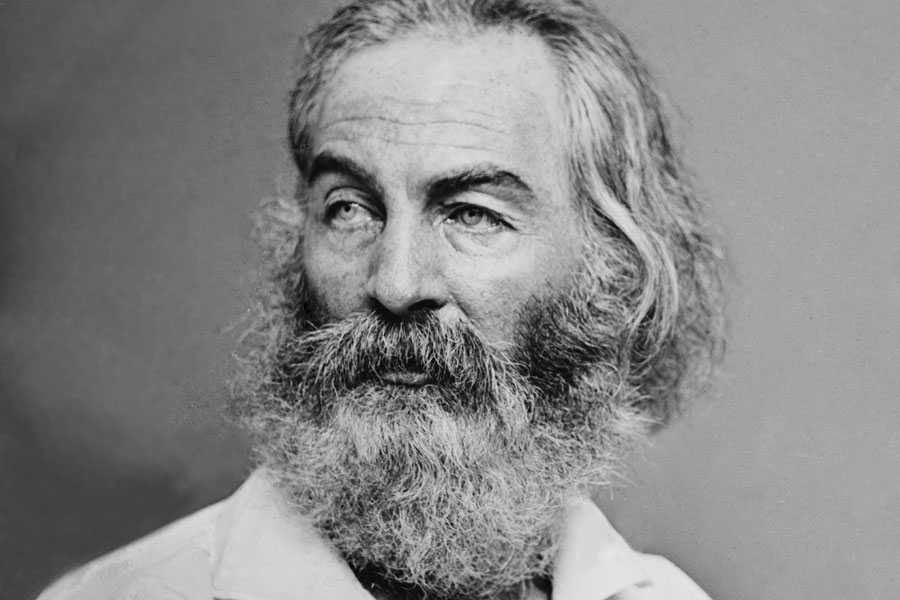
Walt Whitman, one of America’s most influential poets, is deeply connected to the story and spirit of Long Island. Celebrated as the “Bard of Democracy,” Whitman drew lasting inspiration from the island’s landscapes, working communities, shorelines, and everyday voices. His legacy still echoes across Long Island, from his birthplace in Huntington to museums, landmarks, and literary programs that continue to introduce new readers to his work.
Birthplace, Early Life, and Inspiration
Walt Whitman was born on May 31, 1819, in a modest farmhouse in West Hills, now part of the Town of Huntington:
- Growing up amid Long Island farms, woodlands, roads, and shoreline scenery helped shape Whitman’s lifelong sense of individuality, movement, and connection to nature and community.
- He later referred to Long Island as Paumanok, adapting a historic Indigenous place name associated with the island into a powerful poetic symbol of origins, identity, and America itself.
Leaves of Grass and the Long Island Connection
Whitman’s groundbreaking poetry collection, Leaves of Grass, reflects a worldview shaped in part by his Long Island beginnings:
- Before becoming one of the defining voices of American literature, Whitman worked as a printer, teacher, and journalist. The first edition of Leaves of Grass was self-published in Brooklyn in 1855.
- Poems including Starting from Paumanok draw directly on his Long Island identity, using the island as both a literal homeland and a symbolic starting point for a larger American vision.
Teaching, Journalism, and Public Life
Long Island was more than scenery for Whitman. It was also the setting for formative years in education, local life, and journalism:
- As a young man, Whitman taught in several Long Island communities, including in Suffolk County and Queens, experiences that exposed him to everyday rural life and the challenges of education in the 19th century.
- He later became a journalist and editor, most notably at the Brooklyn Daily Eagle, where he developed his public voice on politics, culture, labor, and the fast-changing democratic life of his era.
Whitman’s Enduring Long Island Legacy
Walt Whitman’s presence on Long Island is preserved and remembered in several lasting ways:
- The Walt Whitman Birthplace State Historic Site and Interpretive Center in West Hills invites visitors to explore the home where he was born and learn more about his life, writings, and influence on American literature.
- Readings, lectures, exhibitions, and school programs held throughout the year help new generations encounter Whitman’s poetry and his broad vision of American life.
- Across the region, Whitman’s name lives on through schools, roads, public institutions, and cultural references that honor his Long Island roots.
Visiting Walt Whitman’s Long Island
Today, visitors can explore Whitman’s Long Island story through historic sites, local heritage stops, and literary programming:
- Whitman Birthplace: Visit the preserved farmhouse in West Hills and the adjoining interpretive center to learn about Whitman’s early life, family, and literary career.
- Literary and Historic Stops: Pair a birthplace visit with time in nearby Huntington and other Long Island communities connected to Whitman’s youth, teaching years, and regional legacy.
- Programs and Events: Special readings, lectures, exhibitions, and commemorative events may be offered seasonally or on selected dates.
- Plan Ahead: Hours, admission, tours, and event schedules may vary by season or special programming. Check the official Walt Whitman Birthplace website before visiting: waltwhitman.org.
Walt Whitman’s presence remains part of Long Island’s cultural landscape. Whether you are a poetry lover, a student, a history enthusiast, or simply curious about one of America’s defining writers, his story offers a meaningful way to experience the island through literature, memory, and place.
Quick Info
| Fact | Details |
|---|---|
| Birth/Death | Born May 31, 1819, West Hills, Town of Huntington, New York; died March 26, 1892, Camden, New Jersey |
| Long Island Legacy | Birthplace, childhood influences, teaching experience, journalism roots, and lasting literary inspiration |
| Key Works | Leaves of Grass, Song of Myself, Starting from Paumanok |
| Famous Site | Walt Whitman Birthplace State Historic Site and Interpretive Center in West Hills |
| Notable Accomplishments | Pioneering voice in American poetry whose free verse style reshaped modern literature |
| Famous Quote | “I celebrate myself, and sing myself…” |
| Fun Fact | Whitman often used “Paumanok” poetically for Long Island, drawing on a historic Indigenous place name associated with the island |
| Community Honors | Birthplace museum, schools, roads, commemorations, readings, and educational programs |
Walt Whitman’s impact on Long Island and American poetry remains vivid today. Through his words and the places that shaped him, visitors can connect with a singular literary legacy rooted in the landscapes and communities of Long Island.
Are you ready for fall on Long Island? Check out these local seasonal guides:
🍎 Apple Picking | 🍂 Fall Festivals & Farm Activities | 👻 Haunted Houses | 🎃 Pumpkin Picking