
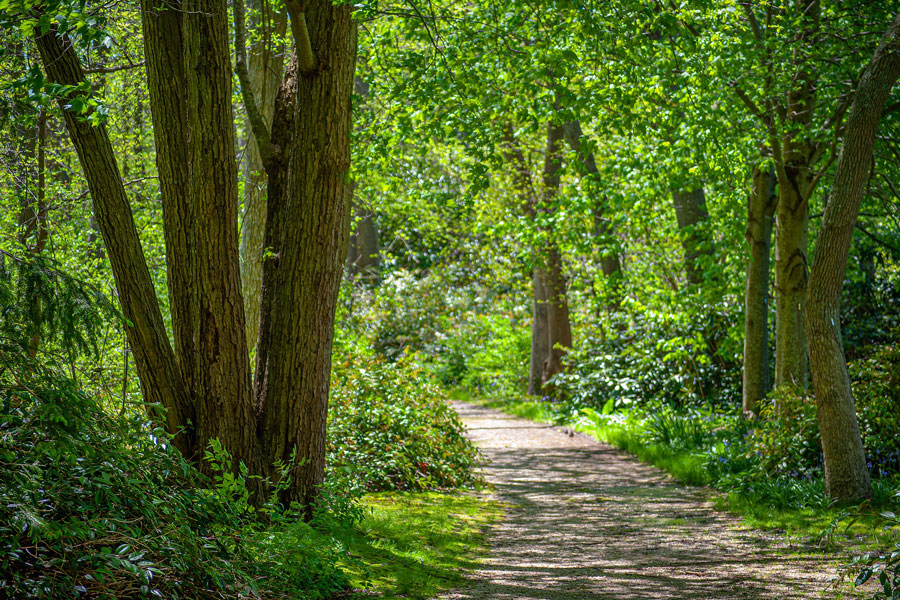
Long Island has several public forests, parks, and preserves covering thousands of acres. Among the largest individual natural properties is Rocky Point Pine Barrens State Forest, which encompasses nearly 6,000 acres. Other substantial destinations include Connetquot River State Park Preserve at 3,473 acres and Jones Beach State Park at more than 2,400 acres. Larger designations, including Fire Island National Seashore and the Long Island Pine Barrens, require a different comparison because their boundaries encompass multiple properties, ownership types, or surrounding waters.
Large Forests and Preserves
Rocky Point Pine Barrens State Forest protects nearly 6,000 acres of Pine Barrens and open land in Suffolk County. Managed by the New York State Department of Environmental Conservation, it offers designated routes for hiking, mountain biking, and horseback riding, along with regulated hunting. It is primarily a forest landscape rather than a developed park with concentrated recreational facilities.
The Otis Pike Preserve complex encompasses approximately 5,400 acres, according to the DEC. That figure describes a cooperative area containing multiple state and county properties, including Otis Pike Preserve and Eastport Pine Barrens State Forest, rather than one uniformly managed park. Its woodland, ponds, and river access provide opportunities for hiking, paddling, fishing, and other permitted recreation.
Connetquot River State Park Preserve maintains 3,473 acres of land and water. Its forests, wetlands, river habitat, and trails make it one of the island’s largest state park preserves. Conservation is central to its purpose, so visitors should expect a different experience from a beach park or a park designed around sports fields and picnic grounds.
Large State Parks and Coastal Recreation Areas
Jones Beach State Park covers more than 2,400 acres on the South Shore. Its ocean beach, boardwalk, and recreational facilities make it a substantial coastal park as well as a familiar visitor destination. Its acreage includes maritime habitat and park infrastructure, not simply the sandy beach used by swimmers.
Heckscher State Park encompasses approximately 1,600 acres in East Islip. The waterfront setting combines open recreation areas, picnic grounds, and routes for walking and cycling. It offers a more developed recreational environment than the extensive Pine Barrens forests farther inland.
Robert Moses State Park covers approximately 875 acres at the western end of Fire Island. Although smaller by acreage than several inland preserves, its oceanfront setting makes it an important beach destination. A park’s shoreline length, facilities, and popularity should not be confused with its total area.
How Fire Island National Seashore Compares
Fire Island National Seashore encompasses approximately 19,580 acres within its designated boundary. However, that total includes surrounding waters, other public lands, and privately owned property, as well as National Park Service holdings. It should not be interpreted as 19,580 acres of federally owned, publicly accessible dry land.
The national seashore protects barrier-island environments and includes visitor destinations reached through different access points. Some require a ferry or private boat, while certain locations can be reached by road. Choose a specific destination before planning transportation, because the seashore does not function like a single park with one entrance.
Why the Pine Barrens Is a Separate Category
The Long Island Central Pine Barrens covers more than 100,000 acres, making it much larger than any of the individual parks discussed here. It is a designated ecological and planning region containing public preserves, private properties, developed areas, and lands subject to different conservation protections. The entire region is neither one public park nor uniformly available for recreation.
Visitors explore the Pine Barrens through individual destinations such as Rocky Point Pine Barrens State Forest, the Otis Pike Preserve complex, and Calverton Pine Barrens State Forest. These properties form part of the broader landscape, so their acreages should not be added to the regional total as though they were separate from it.
Large Parks in Nassau County
Although many of the largest natural properties are in Suffolk County, Nassau County also has substantial public recreation areas. In addition to Jones Beach, Eisenhower Park covers approximately 930 acres in East Meadow. Its sports facilities, golf courses, walking areas, and public spaces illustrate how a large developed park can serve different needs from a forest preserve.
Choosing a Park to Visit
Use acreage as a starting point, then consider the activities and facilities available. Rocky Point and Connetquot River suit visitors seeking extensive natural landscapes. Jones Beach and Robert Moses are oceanfront choices, while Heckscher and Eisenhower Park offer developed recreational settings.
Before entering a large forest or preserve, review the managing agency’s maps, permit requirements, and seasonal restrictions. Hunting seasons, habitat protection, maintenance, and weather can affect access. The DEC’s Rocky Point information and Otis Pike information explain property-specific requirements, while individual state park pages provide current visitor details.
Key Facts & Details
The following comparison includes selected large parks and natural areas, rather than a complete island-wide ranking. Acreages are approximate, and the different property types are identified so that regional boundaries and multi-property complexes are not mistaken for individual parks.
| Park or Natural Area | Approximate Acreage | Property Type and Main Features |
|---|---|---|
| Rocky Point Pine Barrens State Forest | Nearly 6,000 acres | State forest with woodland trails, designated cycling and equestrian routes, and regulated hunting. |
| Otis Pike Preserve complex | About 5,400 acres | Multi-property cooperative area containing state and county lands, woodland, ponds, and river access. |
| Connetquot River State Park Preserve | 3,473 acres | State park preserve containing forests, wetlands, river habitat, and trails. |
| Jones Beach State Park | More than 2,400 acres | Coastal state park with an Atlantic Ocean beach, boardwalk, and recreational facilities. |
| Heckscher State Park | About 1,600 acres | Waterfront state park with picnic grounds, open recreation areas, and walking and cycling routes. |
| Eisenhower Park | About 930 acres | Developed county park in Nassau County, with golf, sports facilities, and public recreation areas. |
| Robert Moses State Park | About 875 acres | Oceanfront state park at the western end of Fire Island. |
| Fire Island National Seashore | About 19,580 acres within its designated boundary | National seashore encompassing water and multiple ownership types; not directly comparable with a single land-based park. |
| Long Island Central Pine Barrens | More than 100,000 acres | Broader ecological and planning region in Suffolk County; not one public park. |
Acreage information comes from the New York State Department of Environmental Conservation, New York State Parks, Nassau County Parks, and the National Park Service. Published totals may differ because agencies measure different boundaries or update their property inventories.
For extensive forestland, start with Rocky Point or the Otis Pike Preserve complex; for a large state park preserve, consider Connetquot River; and for an oceanfront outing, explore Jones Beach. Understanding the distinction between individual parks, cooperative properties, and broader protected regions makes the size comparison more useful. Browse the Long Island Parks guide for additional destinations suited to your plans.