
Hurricane Irene (2011)
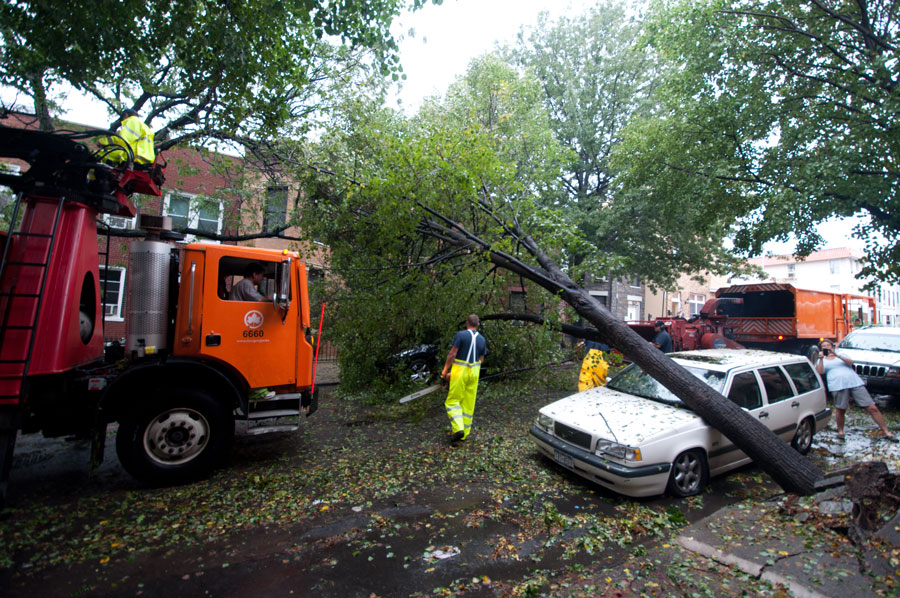
Hurricane Irene affected Long Island on August 28, 2011, bringing widespread flooding, power outages, beach erosion, fallen trees, and transportation disruptions across Nassau County and Suffolk County. Although Irene weakened before reaching New York and was no longer a major hurricane when it arrived, the storm became one of the most significant weather events to affect Long Island in the years between Hurricane Gloria and Hurricane Sandy.
For many residents, Hurricane Irene served as a warning about the region’s vulnerability to tropical storms and coastal flooding. While its damage was considerably less severe than the destruction caused by Sandy the following year, Irene disrupted daily life across Long Island and highlighted weaknesses in transportation systems, electrical infrastructure, and coastal resilience.
Development and Track
Hurricane Irene formed in the Atlantic during August 2011 and strengthened into a major hurricane as it moved through the Caribbean and along the East Coast. At one point, the storm reached Category 3 strength before gradually weakening as it tracked northward toward the Mid-Atlantic and Northeastern United States.
Forecasts initially raised concerns that Long Island could experience a direct strike from a stronger hurricane. Emergency preparations accelerated throughout the region as government agencies, utility companies, transportation providers, and residents prepared for potentially significant impacts.
Preparations Across Long Island
In the days before Irene’s arrival, emergency officials issued warnings regarding flooding, storm surge, high winds, and power outages. Residents stocked supplies, secured outdoor property, fueled vehicles, and monitored weather updates as the storm approached.
The threat prompted unprecedented precautions. Portions of New York City’s transit system were shut down, ferry operations were suspended, beaches closed, and emergency management agencies activated storm-response plans throughout the region.
Effects on Long Island
Hurricane Irene brought heavy rainfall, tropical-storm-force winds, coastal flooding, and widespread utility disruptions to Long Island. Numerous trees and branches fell across roadways and power lines, causing outages that affected hundreds of thousands of customers throughout Nassau and Suffolk Counties.
Unlike Hurricane Gloria, which was remembered primarily for its destructive winds, Irene’s most significant impacts on Long Island involved flooding, saturated ground conditions, and prolonged rainfall. Low-lying areas experienced flooding while coastal communities monitored storm surge conditions along bays, harbors, and oceanfront shorelines.
Coastal Flooding and Beach Erosion
Oceanfront communities along the Atlantic Ocean, portions of Great South Bay, and areas near Fire Island National Seashore experienced coastal flooding, dune damage, and beach erosion.
Although Irene’s coastal impacts were substantial, they were overshadowed one year later when Hurricane Sandy generated much larger storm surges that caused catastrophic flooding throughout many of the same communities.
Transportation Disruptions
Transportation systems across Long Island experienced significant disruptions during the storm. The Long Island Rail Road suspended service before Irene’s arrival, while numerous roads became blocked by fallen trees, flooding, and storm debris.
Air travel, ferry services, and regional transit systems were also affected as emergency officials sought to reduce risk during the height of the storm.
The Year Before Sandy
In hindsight, Hurricane Irene is often viewed as a warning before Hurricane Sandy. Irene exposed vulnerabilities that would become much more evident during Sandy’s historic storm surge in October 2012.
Communities that experienced flooding, erosion, and power outages during Irene found themselves confronting even greater challenges only fourteen months later when Sandy struck the region.
Legacy
While Hurricane Irene is often overshadowed by Hurricane Sandy, it remains one of the most significant storms to affect Long Island during the early twenty-first century. The storm contributed to ongoing discussions involving coastal resilience, emergency preparedness, utility infrastructure, evacuation planning, and flood mitigation.
For many Long Islanders, Irene served as a reminder that tropical systems do not need to be major hurricanes to create widespread disruption. Its effects reinforced the importance of storm preparation throughout the region.
Key Facts & Details
| Storm Name | Hurricane Irene |
|---|---|
| Year | 2011 |
| Long Island Impact Date | August 28, 2011 |
| Peak Intensity | Category 3 Hurricane |
| Status Near Long Island | Category 1 Hurricane / Tropical Storm Conditions |
| Primary Impacts | Flooding, power outages, fallen trees, beach erosion, transportation disruptions |
| Affected Areas | Nassau County, Suffolk County, Fire Island, and coastal communities |
| Power Outages | Hundreds of thousands of customers affected regionally |
| Transportation Impact | LIRR suspension, road closures, transit disruptions, airport delays |
| Notable Comparison | Hurricane Sandy (2012) |
| Historical Significance | Major pre-Sandy storm that highlighted Long Island’s vulnerability to coastal hazards |
Today, Hurricane Irene remains an important chapter in Long Island’s modern weather history. Although later eclipsed by Hurricane Sandy, the storm provided an early warning about the challenges posed by coastal flooding, severe weather, and infrastructure vulnerability across Nassau County, Suffolk County and the broader New York metropolitan region.
Are you ready for fall on Long Island? Check out these local seasonal guides:
🍎 Apple Picking 🍓 Strawberry Picking 🎃 Pumpkin Picking 👻 Haunted Houses 🍂 Farm Festivals