
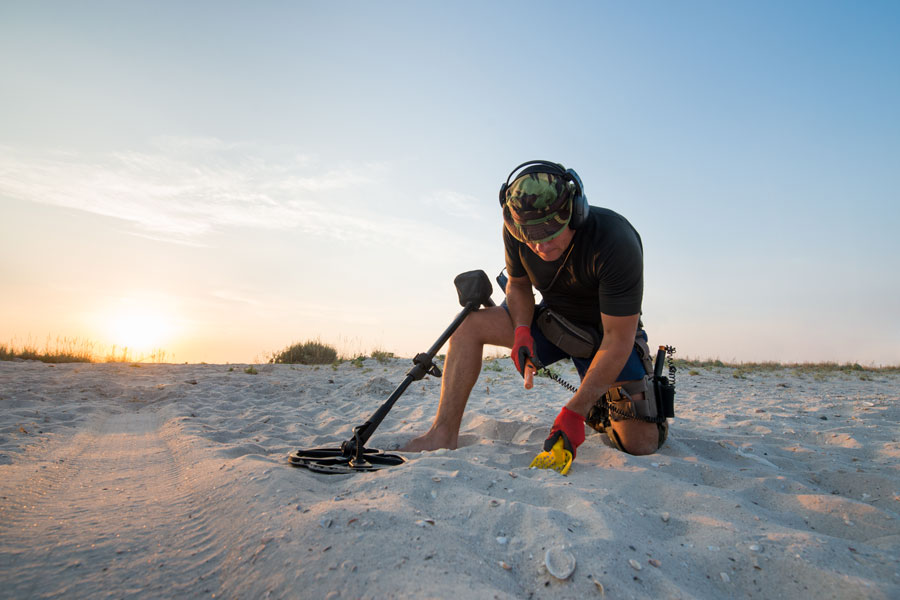
Metal detecting on Long Island can mean anything from searching busy ocean beaches for recently lost rings and coins to researching older properties in hopes of finding coins or objects dating back generations. Long Island has numerous public locations where recreational metal detecting is permitted, but the rules vary considerably between New York State parks, Suffolk County parks, Nassau County properties, municipal beaches and privately owned land.
For most visitors, beaches are the easiest places to begin. Several major Long Island state parks, including Jones Beach State Park, Robert Moses State Park, Hither Hills State Park, Sunken Meadow State Park and Orient Beach State Park, have designated metal-detecting areas available through the New York State Parks permit system. Suffolk County separately allows detecting at several county beaches with a county permit.
Where Can I Metal Detect on Long Island?
The clearest places to legally metal detect on Long Island are parks where the managing agency specifically authorizes the activity. New York State Parks currently offers an annual Long Island Metal Detecting Permit covering designated areas at 13 state parks. Suffolk County Parks operates a separate metal-detecting program covering six county parks.
Town beaches, village beaches, county parks in Nassau and other locally managed properties are more complicated. A beach being open to the public does not automatically mean digging or metal detecting is permitted. Rules can also change by season or by section of a property. Detectorists should verify the current regulations with the government agency responsible for a location before searching anywhere that is not specifically included in an established permit program.
Best Places to Metal Detect on Long Island
The best location depends heavily on what you hope to find. Long Island’s heavily visited beaches are generally the better choice for jewelry, modern coins, keys and other recently lost objects. People interested in older coins and historic finds need a different strategy, because historic public properties and archaeological areas are frequently protected from artifact hunting.
Jones Beach State Park
Jones Beach State Park is one of the most obvious places to consider for beach metal detecting. Opened in 1929 and visited by generations of Long Islanders, Jones Beach combines nearly a century of recreational history with enormous modern-day beach attendance.
That makes it particularly interesting for lost coins, rings, jewelry and other personal items. Metal detecting is permitted only within areas designated by New York State Parks and requires the Long Island State Park Metal Detecting Permit.
Detectorists should not assume the entire park is open. Dunes, landscaped areas and other restricted locations are off limits under state rules.
Robert Moses State Park
Yes, metal detecting is permitted in designated portions of Robert Moses State Park with a valid New York State Parks Long Island metal-detecting permit.
The park’s long Atlantic beachfront and heavy summer attendance make it one of Long Island’s more promising locations for modern beach finds. Storm-driven erosion and changing sand conditions can also expose material that had previously been buried beneath the beach.
Hither Hills State Park
Hither Hills State Park in Montauk is another state-authorized metal-detecting location. Its Atlantic shoreline, long history as a recreation destination and seasonal beach traffic make the permitted portions attractive to detectorists.
Camping areas themselves should not be treated as unrestricted detecting territory. Search only the areas shown as available under the state’s current Metal Detector Guide.
Sunken Meadow State Park
On the North Shore, Sunken Meadow State Park provides another permitted option. Unlike the Atlantic-facing beaches, Sunken Meadow fronts Long Island Sound and has a long history of swimming, picnicking and public recreation.
The beach and heavily used recreation areas make modern coins and jewelry more realistic targets than deliberately searching for archaeological material.
Orient Beach State Park
Orient Beach State Park is one of the easternmost locations covered by the state metal-detecting permit. Its position on the North Fork provides a very different shoreline environment from Jones Beach or Robert Moses.
As elsewhere in the state park system, the authorization applies only to specifically designated detecting areas rather than the entire park.
Smith Point County Park
Yes, metal detecting is permitted at Smith Point County Park with a valid Suffolk County Parks metal-detecting permit. Suffolk County limits detector use to authorized beach areas on the seaward side of the primary dunes and vegetated areas.
Detecting is not permitted in campgrounds, picnic areas, lifeguard-protected portions of the beach, historic sites, environmentally sensitive areas or bird nesting areas. Temporary restrictions can also be imposed because of beach conditions, maintenance or wildlife protection.
Long Island State Parks Where Metal Detecting Is Permitted
The New York State Office of Parks, Recreation and Historic Preservation currently lists the following Long Island locations under its metal-detecting permit program:
The state permit provides access only to designated detecting areas within those parks. It does not authorize unrestricted searching throughout the property.
Do I Need a Metal Detecting Permit on Long Island?
In many of the most popular public locations, yes. There is no single permit covering every beach and park on Long Island because different properties are controlled by different government agencies.
For 2026, New York State Parks charges $40 for its annual Long Island State Park Metal Detecting Permit. The permit expires December 31 regardless of when during the year it is purchased. It can be purchased through New York State Parks’ ReserveAmerica permit system.
Suffolk County maintains its own permit program for county parks. A New York State Parks permit does not substitute for a Suffolk County permit, and the Suffolk permit does not authorize detecting in state parks.
Municipal beaches and parks operated by towns, cities or villages may have still different rules. Before detecting on one of these properties, contact the municipality or check its current parks regulations rather than assuming that beach access also permits metal detecting or digging.
Metal Detecting in Suffolk County
Suffolk County Parks currently authorizes metal detecting with a valid permit at six county parks:
- Cedar Point County Park in East Hampton
- Meschutt Beach County Park in Hampton Bays
- Shinnecock East County Park in Southampton
- Charles F. Altenkirch County Park in Southampton
- Cupsogue Beach County Park in Westhampton
- Smith Point County Park in Shirley
The county restricts detecting to the seaward side of primary dunes and vegetated areas. Campgrounds, picnic areas, lifeguard-protected swimming areas, historic sites, environmentally sensitive areas and bird nesting locations are excluded.
Suffolk County advises detectorists to restore any disturbed sand or ground and prohibits damage to vegetation. Particular areas can also be closed temporarily when beach conditions or natural-resource protection require it.
Metal Detecting in Nassau County
Nassau County requires a little more attention because several of the county’s best-known detecting destinations are not actually Nassau County parks. Jones Beach, Bethpage State Park, Hempstead Lake State Park and Valley Stream State Park are New York State properties and therefore fall under the state permit system.
Other beaches and parks may be controlled by Nassau County, the Town of Hempstead, the Town of Oyster Bay, the City of Long Beach or individual villages. These jurisdictions can establish their own rules concerning digging, beach access and park activities.
Older online guides sometimes make broad claims about metal detecting throughout Nassau County, but detectorists should not rely on an old article as permission to search a particular property. Check with the agency that actually owns or manages the land before detecting.
Where Should You Look for Old Coins and Historic Finds?
This is where metal detecting becomes much more interesting than simply walking a modern beach. Long Island has nearly four centuries of documented European settlement, older transportation routes, farms, ports, hotels, estates, gathering places and recreational grounds. Coins and metal objects have been lost throughout that history.
Someone hoping to find a modern gold ring would generally favor a busy swimming beach. Someone hoping to find an 1800s coin should think about how people used the land 100, 150 or 250 years ago.
Older Private Homes
Private property can be one of the most promising legal options for historic coin hunting when the owner gives permission. Long Island contains thousands of homes and properties dating to the 18th and 19th centuries, along with land that once contained older houses, barns, shops and farms.
Yards near former entrances, pathways, porches, clotheslines and gathering areas can contain coins and everyday metal objects lost by previous generations. Property ownership and permission should always be confirmed before entering or detecting.
Former Farms and Fields
Much of modern suburban Long Island was farmland well into the 19th and 20th centuries. With the landowner’s permission, old farm properties can be interesting because people worked the same ground for generations. Historic maps can sometimes reveal former houses, barns, lanes or crossroads that no longer exist.
Former Hotels, Picnic Grounds and Recreation Areas
Before automobiles reshaped Long Island tourism, railroad stations, ferry landings, beach resorts, picnic groves, hotels, racetracks and amusement grounds attracted large crowds. Where such land is now privately owned and detecting is allowed by the owner, former gathering places can be particularly interesting research targets because large numbers of people once carried coins there.
Old Swimming Beaches
Beaches that have been used recreationally for many decades can contain layers of objects from different periods. Sand movement means an object lost many years ago can occasionally become accessible again following erosion or a major coastal storm.
At regulated state and county beaches, however, the fact that an object is old does not necessarily mean it can legally be kept.
Can You Find Colonial Coins on Long Island?
It is possible. European settlements were established on Long Island during the 1600s, and communities across both present-day Nassau and Suffolk counties developed during the colonial period. Coins circulated alongside barter, paper money and other forms of exchange, so colonial-era and early American coins can exist in Long Island soil.
That does not mean they are common. A detectorist searching specifically for early coins generally has a much better chance by researching an appropriate older property than randomly searching a modern park.
Historic maps, old property atlases, aerial photographs, newspaper archives and local-history collections can help identify places where people once lived or gathered. The next step is determining who owns the property today and whether metal detecting and recovery are legally permitted.
What About Native American or Ancient Artifacts?
Long Island’s human history extends thousands of years before European settlement, but this is very different from hunting for an old American coin. Pre-contact Indigenous communities did not use European-style metal coinage, so a conventional metal detector is not a general-purpose tool for discovering most ancient Native American artifacts.
More importantly, known archaeological sites and culturally significant areas may be protected by state, federal or local law. Recreational detectorists should never excavate a known archaeological site or remove protected artifacts.
New York State Parks specifically requires archaeological artifacts recovered within its metal-detecting program to be turned over to Park Police. Suffolk County likewise prohibits disturbance of historic sites within its metal-detecting areas.
Important New York State Park Metal Detecting Rules
The New York State Parks Long Island Metal Detector Guide establishes several important restrictions. Detectorists should consult the current guide before every trip because designated areas and seasonal access can change.
- Metal detecting is permitted only within designated areas.
- A valid permit is required.
- Landscape areas are off limits.
- Beach dunes are off limits.
- Golf courses and driving ranges are off limits.
- Residential areas within park property are off limits.
- Digging tools may not have a digging surface larger than 1 1/2 inches wide by 6 inches long.
- Disturbed surfaces must immediately be restored.
- Wildlife and protected nesting areas may not be disturbed.
- Archaeological artifacts may not be removed and must be turned over to Park Police.
- The current state guide says recovered items valued at more than $20 must be turned over to Park Police.
Beach Metal Detecting on Long Island
For beginners, beach detecting is usually the most straightforward version of the hobby. Sand is easier to recover from than compacted soil, and Long Island’s beaches receive millions of visits during warm-weather months.
Common beach finds include modern coins, rings, earrings, chains, watches, keys, fishing tackle and large quantities of bottle caps and other metal debris. Gold and silver jewelry are possible because beachgoers frequently remove or lose jewelry while swimming, applying sunscreen, playing sports or handling towels and clothing.
After Large Crowds
A heavily attended beach day creates opportunities for recent losses. Areas where people repeatedly sit, change clothes, play volleyball or enter the water can accumulate dropped items, provided detecting is permitted in that particular section.
After Coastal Storms
Storms can dramatically rearrange an ocean beach. Powerful surf may remove several feet of sand, create cuts along the beach face or expose older layers that were previously buried. These changing conditions are one reason experienced beach detectorists often pay close attention to erosion rather than simply choosing the busiest beach.
Safety comes first. Detectorists should never enter dangerous surf, unstable dune cuts or closed sections of beach simply because erosion looks promising.
Can You Keep What You Find?
Not necessarily. The answer depends on where the object is found, what it is and the rules governing that property. New York State Parks imposes specific requirements concerning valuable recovered property and archaeological artifacts. Lost property may also have an identifiable owner regardless of where it is found. Private-property searches can involve separate agreements between the detectorist and landowner about ownership of recovered objects.
Anyone pursuing the hobby specifically for valuable or historically significant finds should understand the recovery rules before beginning a search rather than after something important comes out of the ground.
Researching Historic Metal Detecting Locations
Finding old coins is as much a research hobby as a detecting hobby. Instead of simply asking where people gather today, look at where people gathered generations ago.
Historic maps can reveal former roads, schools, inns, farms, railroad stops, stores and buildings that have disappeared. Old newspapers can reveal fairgrounds, picnic groves, race meetings, festivals and resorts. Historic aerial photographs can show how a property looked before suburban development changed the landscape.
The research does not itself provide permission to detect. It identifies potentially interesting places. Ownership and applicable laws must then be checked independently.
Where Can I Legally Metal Detect on Long Island?
The safest answer is to use a location whose owner or managing agency affirmatively allows metal detecting. That includes designated areas in participating New York State parks, participating Suffolk County parks and private property where the owner has given permission.
Do not assume that a public beach, preserve, historic property, nature sanctuary, abandoned-looking parcel or undeveloped field is available simply because there is no fence. Public ownership can carry special restrictions, and privately owned vacant land still requires permission.
Official Metal Detecting Resources
Current permits, maps and regulations should always take precedence over older detecting guides or forum posts. The primary official resources are the New York State Parks Long Island Region, the state’s Long Island Metal Detector Guide and the Suffolk County Parks Metal Detecting page.
Key Facts & Details
| Activity | Recreational metal detecting |
| New York State Long Island Permit | $40 annually for 2026 |
| State Permit Expiration | December 31, regardless of purchase date |
| Participating State Parks | 13 Long Island locations |
| Suffolk County Detecting Parks | 6 county parks |
| Jones Beach | Yes, designated areas with NYS permit |
| Robert Moses State Park | Yes, designated areas with NYS permit |
| Smith Point County Park | Yes, authorized areas with Suffolk County permit |
| Best Setting for Modern Jewelry | High-traffic permitted swimming beaches |
| Best Potential for Older Coins | Historically researched private property with owner permission |
| State Park Archaeological Finds | May not be removed; must be turned over to Park Police |
| State Park Digging Tool Limit | Maximum digging surface of 1 1/2 inches wide by 6 inches long |
| State Park Dunes | Off limits |
| Suffolk County Historic Sites | Metal detecting prohibited |
| Private Property | Owner permission required |
Metal detecting on Long Island can be as simple as searching a permitted beach after a crowded summer weekend or as research-intensive as studying old maps in hopes of locating a coin lost generations ago. The most rewarding approach is to match the location to the type of find you are seeking, obtain the appropriate permission or permit before searching, and respect the distinction between recreational treasure hunting and protected archaeological history.