
Little Cow Harbor
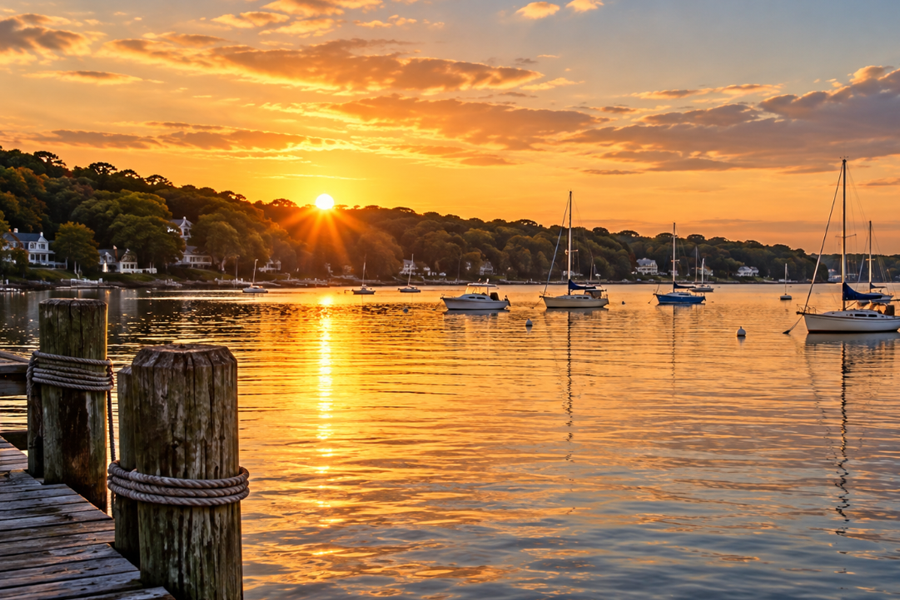
Little Cow Harbor is the historic name associated with the present-day community of Centerport on the North Shore of Long Island. Located in the Town of Huntington in Suffolk County, the small harbor community developed around agriculture, milling, maritime trade and the protected waters that eventually became known as Centerport Harbor.
The name was historically paired with Great Cow Harbor, the former name of neighboring Northport. The two names preserve an earlier period in Huntington’s history when farming, livestock and access to sheltered harbors were central to the development of communities along this part of Long Island’s northern shoreline.
Little Cow Harbor eventually became known as Centreport and later Centerport, but the old name did not disappear entirely. It survives in historical records and local institutions, most notably in the name Harborfields, which combines Little Cow Harbor with Old Fields, the historic name associated with neighboring Greenlawn.
Where Was Little Cow Harbor?
Little Cow Harbor occupied the area now identified with Centerport and its harbor in the Town of Huntington. The community developed around a small protected harbor opening toward the larger waters of the North Shore, with wooded hills, freshwater streams and agricultural land surrounding the shoreline.
Historical descriptions place Centreport, formerly Little Cow Harbor, between East Neck and Northport at the head of the small bay associated with the settlement. Its geography provided both access to the water and a natural connection with farms farther inland, making the harbor useful for milling, transportation and commerce.
The historic place name should not be confused with a separate modern municipality. There is no incorporated village, hamlet or census-designated place officially named Little Cow Harbor today. The historical community is now identified as Centerport.
Why Was It Called Little Cow Harbor?
The Cow Harbor names are associated with the agricultural character of Huntington’s early North Shore settlements. Early European settlers used suitable land surrounding the protected harbors for farming and grazing cattle. The larger harbor community to the east became known as Great Cow Harbor, while the smaller neighboring harbor associated with present-day Centerport became Little Cow Harbor.
The distinction was practical as well as descriptive. Great Cow Harbor and Little Cow Harbor were separate neighboring harbor communities, and the names provided an easy way to distinguish between them. Over time, both communities adopted names that better reflected their growing identities: Great Cow Harbor became Northport, while Little Cow Harbor became Centreport and ultimately Centerport.
Early Settlement and the Harbor
The history of Little Cow Harbor is tied to the early settlement of the Town of Huntington during the 17th century. The region had been home to Indigenous people long before European settlement, including the Matinecock people associated with the northern portion of western Long Island. As English settlement expanded around Huntington, farms and small communities developed along the town’s harbors and waterways.
Little Cow Harbor’s protected waterfront made it useful to early residents. Historical documentation describes Centerport as having first been settled by seafaring people and later developing into an important local harbor. During the 18th and 19th centuries, schooners traveled in and out carrying agricultural and other goods.
The harbor was smaller and shallower than neighboring Great Cow Harbor, but it nevertheless provided an important transportation link at a time when moving heavy goods overland was considerably more difficult than it is today. Coastal shipping connected North Shore settlements with other Long Island communities and markets across the region.
Mills and the Agricultural Economy
Milling became an important part of Little Cow Harbor’s early economy. Historical accounts record mills in the Centerport area at an early date, including a significant mill associated with Sylvanus Townsend in 1774. The harbor’s tidal environment and connection with surrounding farms made it a logical location for processing grain.
The relationship extended beyond Little Cow Harbor itself. Grain raised on the inland plains of Old Fields, the community now known as Greenlawn, was transported to the gristmill at Little Cow Harbor. Grain could be milled into flour and other products, while the harbor provided a means of moving agricultural goods to outside markets.
Historical records describe schooners bringing grain to the tidal mill and carrying flour, farm produce and timber away from the harbor. In later years, sand and gravel also became part of the area’s commercial activity. These industries reveal a very different Centerport from the predominantly residential waterfront community that exists today.
Little Cow Harbor and Great Cow Harbor
Little Cow Harbor’s history is easier to understand when considered alongside neighboring Great Cow Harbor. The latter developed around the harbor and settlement now known as Northport. Early settlers used the fertile surrounding land for agriculture and cattle grazing, giving rise to the Cow Harbor name.
Great Cow Harbor eventually developed a considerably larger commercial maritime economy. Shipbuilding became particularly important there during the 19th century, helping transform the former farming settlement into a growing waterfront village. By the 1830s, the Great Cow Harbor name was giving way to Northport.
Little Cow Harbor followed a different development pattern. Although it possessed mills, maritime commerce and a working waterfront, it remained smaller and eventually developed into a residential and summer community rather than a major shipbuilding center. The contrasting histories helped establish the distinct identities of modern Centerport and Northport despite their shared Cow Harbor heritage.
From Little Cow Harbor to Centreport
By the 19th century, the Little Cow Harbor name was being replaced. Historical documentation identifies 1836 as the year the community became known as Centreport. The new name reflected its location near the center of the Town of Huntington’s east-west extent.
Historical works from the 19th century already described the settlement as Centre Port while noting its former Little Cow Harbor name. One period description characterized Centre Port as a small settlement situated between East Neck and North Port at the head of its bay, demonstrating that the transition in place names had become established while the community was still relatively small.
The spelling eventually evolved from the British-style Centreport to the modern Centerport. By the end of the 19th century, Centerport had become the established form. Little Cow Harbor consequently shifted from an active community name into a historical one.
Centerport Becomes a Summer Destination
As the old Little Cow Harbor identity faded, Centerport entered another period of change. During the late 19th century, its harbor, wooded hills and North Shore scenery increasingly attracted summer visitors. Improved transportation, particularly railroad service to nearby Greenlawn, made the waterfront community more accessible from New York City and elsewhere.
Vacationers arriving by railroad could continue from Greenlawn to Centerport by stage. Guesthouses, summer accommodations, restaurants and recreational facilities developed around the waterfront. Wealthier families also began establishing larger estates in the surrounding hills and on the peninsulas overlooking the harbor.
The transformation eventually produced one of Centerport’s best-known landmarks, the Eagle’s Nest estate of William K. Vanderbilt II. Today the property is the Suffolk County Vanderbilt Museum and Planetarium, preserving another major chapter in the community’s evolution from working harbor to North Shore residential and cultural destination.
The Little Cow Harbor Name Lives On
Although Little Cow Harbor disappeared from everyday geographic use, its name remains embedded in local identity. One of the clearest examples is Harborfields. Centerport was historically Little Cow Harbor, while neighboring Greenlawn was known as Old Fields. When the communities became increasingly connected through schools and other institutions, the two historic names provided a natural combination: Harbor + Fields = Harborfields.
The relationship between the communities was much older than the modern school district. Farmers in Old Fields had brought their grain to the Little Cow Harbor mills, and later summer visitors traveling to Centerport arrived through the railroad station at Greenlawn. When the communities’ school districts were centralized during the 1950s, their historical connections were therefore already centuries old.
Today, the Harborfields Central School District, Harborfields Public Library and Greenlawn-Centerport Historical Association continue to reinforce that shared identity. The Little Cow Harbor name therefore survives not merely as an obsolete label on old maps and documents, but as part of the vocabulary of the modern community.
What Is Little Cow Harbor Today?
The area historically known as Little Cow Harbor is now part of Centerport, a hamlet and census-designated place in the Town of Huntington. The modern community remains closely connected to the waterfront that shaped its earliest development, although its economy and landscape have changed dramatically.
Residential neighborhoods now cover land once associated with farms, mills and large estates. Recreational boating has largely replaced the schooners that carried agricultural products and raw materials, while Centerport’s beaches, harbor views and historic properties have become important parts of the community’s contemporary identity.
For visitors and residents, understanding the Little Cow Harbor name adds another layer to the landscape. Centerport Harbor is not simply a scenic body of water surrounded by modern homes. It was once part of a working harbor system that connected farms, mills, sailors and merchants with the broader economy of Long Island and the waters beyond it.
Cow Harbor Park
Key Facts and Details
| Feature | Details |
|---|---|
| Historic Name | Little Cow Harbor |
| Modern Community | Centerport, New York |
| Town | Town of Huntington |
| County | Suffolk County |
| Region | North Shore of Long Island |
| Modern Harbor | Centerport Harbor |
| Historic Neighbor | Great Cow Harbor, now Northport |
| Early Economy | Agriculture, milling, maritime trade and shipping |
| Historic Mill Activity | Grain from surrounding farms, including Old Fields, was brought to mills at Little Cow Harbor |
| Documented 18th-Century Mill | Important mill associated with Sylvanus Townsend in 1774 |
| Historic Exports | Flour, farm produce, timber and, in later years, sand and gravel |
| Old Fields | Historic name associated with neighboring Greenlawn |
| Harborfields Name | Derived from Little Cow Harbor and Old Fields |
| Name Change | Little Cow Harbor became known as Centreport in 1836 |
| Modern Spelling | Centerport became the established spelling by the late 19th century |
| Later Development | Summer resort, residential community and North Shore estate area |
| Major Later Estate | Eagle’s Nest, the estate of William K. Vanderbilt II |
| Modern Landmark | Suffolk County Vanderbilt Museum and Planetarium |
| Current Status | Historical place name; Little Cow Harbor is not a separate modern municipality or census-designated community |
| Historical Significance | Preserves the agricultural, milling and maritime origins of modern Centerport and its historic relationship with Northport and Greenlawn |
Little Cow Harbor belongs to an earlier geographic vocabulary of Long Island, when communities were often identified by their harbors, fields, necks and other features of the landscape. The name tells the story of a place where farmers brought grain to waterfront mills, schooners moved goods along the North Shore and neighboring settlements were known as Little Cow Harbor, Great Cow Harbor and Old Fields rather than Centerport, Northport and Greenlawn. Although Centerport has long since replaced Little Cow Harbor on modern maps, the old name remains an important link to the community’s origins and continues to survive through the history and institutions of the Harborfields area.
Are you ready for fall on Long Island? Check out these local seasonal guides:
🍎 Apple Picking | 🍂 Fall Festivals & Farm Activities | 👻 Haunted Houses | 🎃 Pumpkin Picking