
Sands Point Lighthouse
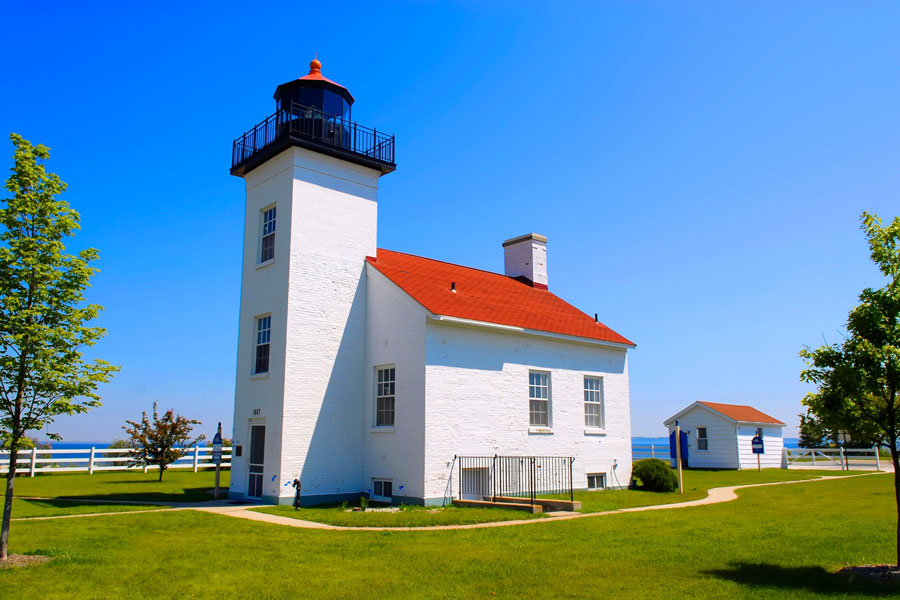
Sands Point Lighthouse is a historic stone lighthouse on the northern shore of the Village of Sands Point, at the tip of the Cow Neck Peninsula in Nassau County. Built in 1809, the lighthouse warned vessels about the dangerous waters surrounding Execution Rocks and helped guide ships traveling between Long Island Sound and the East River.
Sometimes called the Mitchell Lighthouse after Senator Samuel L. Mitchill, who advocated for its construction, Sands Point Lighthouse is one of the oldest surviving lighthouse structures on Long Island. The privately owned lighthouse stands on a restricted residential property and is generally visible to the public only from the water.
Construction of the Lighthouse
The need for a lighthouse at Sands Point became increasingly apparent as commercial and military vessels navigated the western end of Long Island Sound. The waters north of the point contained dangerous rocks and shoals, including the reef known as Execution Rocks, which presented a serious hazard to ships entering the East River and New York Harbor.
In 1806, Congress approved funding for a lighthouse after Senator Samuel L. Mitchill of New York supported the project. New York acquired approximately five acres of land for the station, and construction was completed in 1809. Revolutionary War veteran Noah Mason became the lighthouse’s first keeper and remained associated with the station for many years.
Design and Architecture
The original Sands Point tower was built from coursed brownstone and has an octagonal shape. The structure was approximately 40 feet tall and originally contained eleven lamps and reflectors arranged to display a fixed white light across the surrounding waters.
A keeper’s residence stood beside the tower. The dwelling was expanded during the nineteenth century and was later replaced with a brick residence after federal officials determined that the original house required substantial repairs. The lighthouse tower and keeper’s house remain important examples of early American lighthouse construction on Long Island.
The Lighthouse During the War of 1812
Sands Point Lighthouse also played a role in the history of the War of 1812. From the lighthouse tower, keeper Noah Mason reportedly witnessed a naval confrontation in Long Island Sound between American gunboats and a British warship in 1814.
The event illustrates the strategic importance of the western Long Island Sound during the early years of the United States. The waterway connected New York Harbor with coastal communities throughout Long Island and New England, making its channels important to both commerce and military operations.
Changes to the Light
The lighthouse’s original lighting system consisted of oil lamps and reflectors. In 1856, the station received a fifth-order Fresnel lens, which produced a more effective and recognizable flashing light for vessels navigating the Sound.
The tower was extensively renovated during the 1860s. Improvements included new stairs, replacement windows and other structural work. Over time, the station’s navigational function changed as newer technologies and offshore aids to navigation became available.
Deactivation and Private Ownership
Sands Point Lighthouse was initially deactivated in 1894 after federal officials determined that it was no longer necessary. Local opposition led to the light being restored, but the station was ultimately deactivated again in December 1922. The lantern room and lighting equipment were removed, and a separate automated light structure was established offshore.
After deactivation, the lighthouse property passed into private ownership. Socialite Alva Belmont acquired the property in the 1920s, and it was later purchased by publisher William Randolph Hearst. The surrounding estate was eventually subdivided, while the lighthouse and keeper’s house remained part of private residential property.
Village Landmark and Preservation
The Village of Sands Point designated the lighthouse as a local landmark in 1992. The structure has faced erosion, storms and other challenges associated with its exposed position along the coast, and shoreline protection measures have been built and rebuilt over the years.
Unlike publicly operated lighthouses such as Montauk Point Lighthouse or Horton Point Lighthouse, Sands Point Lighthouse is not a regular museum or visitor attraction. Its preservation depends largely on private stewardship and continued recognition of its historic importance.
Can Visitors Tour Sands Point Lighthouse?
Sands Point Lighthouse is located on private property and is not open for ordinary public tours. Visitors should not enter the property, approach the lighthouse from land or attempt to access the structure without permission from the owners.
The lighthouse may be viewed from the water by boaters traveling through Long Island Sound, although mariners should remain aware of restricted waters, shallow areas, strong currents and nearby navigational hazards. The surrounding coastline, including Sands Point Preserve and other North Shore destinations, provides opportunities to explore the broader historic and scenic landscape of the area.
Sands Point and the North Shore
The lighthouse is part of the historic maritime landscape surrounding Sands Point, Port Washington, Manhasset Bay and western Long Island Sound. The area is known for large historic estates, waterfront communities, yacht clubs, former shipping routes and views toward the New York City region.
Its position near Execution Rocks also connects Sands Point Lighthouse with one of the most dangerous and historically significant navigational areas in Long Island Sound. Together, the lighthouse and the reef reflect the challenges faced by mariners before modern navigation systems made the waters safer to navigate.
Sands Point Lighthouse
Key Facts & Details
| Feature | Details |
|---|---|
| Official name | Sands Point Lighthouse |
| Alternate name | Mitchell Lighthouse |
| Type | Historic lighthouse and former aid to navigation |
| Location | Village of Sands Point, at the northern end of the Cow Neck Peninsula |
| Community | Sands Point |
| Town | Town of North Hempstead |
| County | Nassau County |
| Waterway | Long Island Sound |
| Year built | 1809 |
| Original construction | Coursed brownstone |
| Tower shape | Octagonal |
| Original height | Approximately 40 feet |
| Original lighting | Eleven lamps and reflectors displaying a fixed white light |
| Fresnel lens | Fifth-order Fresnel lens installed in 1856 |
| First keeper | Noah Mason, a Revolutionary War veteran |
| Deactivated | 1922 |
| Current status | Inactive historic lighthouse on private property |
| Landmark designation | Designated a Village of Sands Point landmark in 1992 |
| Public access | Not open for ordinary public tours; generally visible only from the water |
| Nearby hazard | Execution Rocks |
| Related destination | Sands Point Preserve |
| Historical information | Cow Neck Historical Society |
| Long Island Lighthouses | How many lighthouses are on Long Island? |
Sands Point Lighthouse is a rare surviving example of an early nineteenth-century lighthouse on Long Island. Built to protect ships from the dangerous waters near Execution Rocks, the brownstone tower remains an important part of the maritime history of Sands Point, Nassau County and western Long Island Sound.
Because the lighthouse is privately owned and not open to the public, visitors should view it only from authorized locations or from the water while following all boating and navigational regulations. Its connection to Sands Point, Execution Rocks and the surrounding North Shore estates makes it a significant historic landmark even though it is rarely seen up close.
Are you ready for fall on Long Island? Check out these local seasonal guides:
🍎 Apple Picking 🍓 Strawberry Picking 🎃 Pumpkin Picking 👻 Haunted Houses 🍂 Farm Festivals