
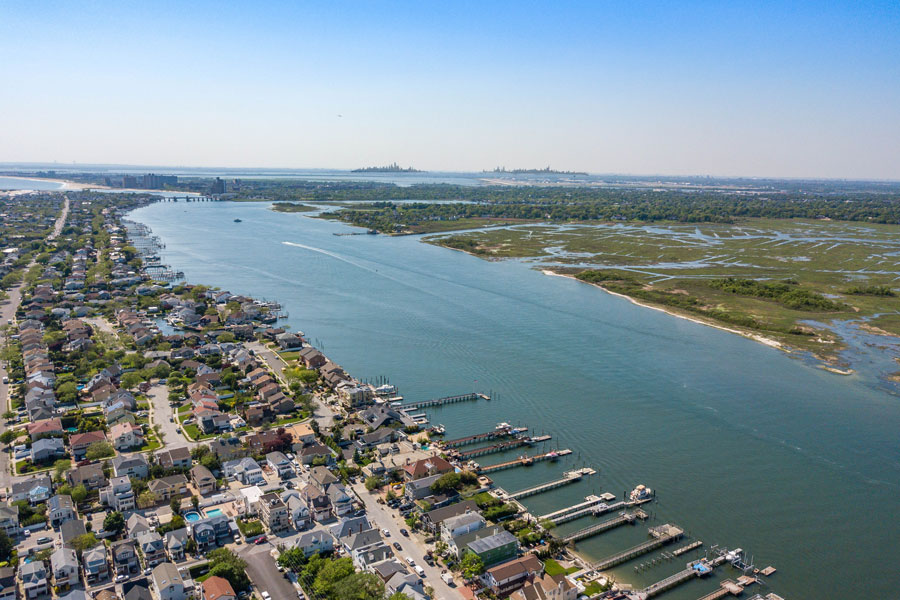
East Atlantic Beach is an unincorporated waterfront hamlet and census-designated place in the Town of Hempstead, Nassau County, on the western portion of Long Island’s South Shore. The community occupies part of the Long Beach Barrier Island between the incorporated Village of Atlantic Beach to the west and the City of Long Beach to the east. With Reynolds Channel along its northern side and the Atlantic Ocean to the south, East Atlantic Beach offers an unusually close connection to both protected bay waters and an open-ocean shoreline. Its narrow streets, waterfront residences, and neighborhood beaches give it a quieter identity than the larger destinations on either side.
Location and Barrier Island Geography
East Atlantic Beach sits on a relatively narrow strip of land where the contrast between the ocean and the bay is especially apparent. To the south, dunes and sandy beaches face the Atlantic’s waves and changing tides. To the north, Reynolds Channel provides a more sheltered setting for docks, boat traffic, and waterfront properties. The waterway is part of the interconnected bays and channels that run behind Long Island’s barrier beaches, connecting coastal neighborhoods with the wider South Shore marine environment.
The hamlet’s location makes it geographically distinct from mainland communities in the Five Towns and from the more developed center of Long Beach. It is not an independent incorporated village and does not have the same municipal government as neighboring Atlantic Beach. Instead, it falls within the Town of Hempstead, with some recreational amenities administered through special park districts. That distinction matters when researching beach permits, local facilities, and eligibility for resident services.
History and Development
The history of East Atlantic Beach is closely connected to the transformation of Long Island’s western barrier islands from sparsely settled coastal land into seasonal resort communities and, eventually, year-round neighborhoods. In the early twentieth century, improved roads, bridges, and expanding interest in seaside recreation made the area increasingly attractive to people traveling from New York City and other parts of Nassau County. Residential construction brought cottages and summer houses to the barrier island, followed over time by permanent homes and a more established local community.
East Atlantic Beach was already identified by name on historical mapping of the area. A Sanborn fire insurance map published in 1922 and republished in 1955 by the Library of Congress includes East Atlantic Beach among the named sections of the Long Beach area. The map offers a useful reminder that the community’s identity predates much of the modern development visible along the shoreline today.
The nearby Atlantic Beach resort developments of the 1920s and 1930s, together with the growth of Long Beach, helped establish this stretch of coast as a destination for summer recreation. The Atlantic Beach Bridge, which opened in 1927, improved access to the western end of the barrier island. Over the decades, seasonal cottages were renovated or replaced, year-round residency became more common, and East Atlantic Beach retained its own residential character between its two larger neighbors.
A Small, Primarily Residential Community
Unlike a traditional downtown, East Atlantic Beach is organized around neighborhood streets and residential blocks. Houses range from older coastal cottages and modest single-family homes to newer and substantially renovated properties. Some northern waterfront lots have private docks or water views, while homes closer to the ocean are valued for their proximity to the beach. The community’s scale makes it feel more like a self-contained neighborhood than a major tourist district.
The 2020 United States Census recorded 2,101 residents in East Atlantic Beach. Because the hamlet is a census-designated place rather than an incorporated municipality, its census boundaries and the boundaries of individual park districts should not be assumed to be identical. Its population is small compared with neighboring Long Beach, and the balance of year-round residents and seasonal visitors can give the neighborhood a noticeably different rhythm during summer.
Beaches, Park Districts, and Access Rules
The oceanfront is one of East Atlantic Beach’s defining features, but visitors should not mistake the presence of a sandy beach for unrestricted public access. Local beachfront facilities are associated with Town of Hempstead special park districts, and eligibility may depend on the particular district in which a resident lives. The Town of Hempstead identifies East Atlantic Beach Park at 20 Troy Avenue as an ocean-beach facility with basketball and play equipment. The town states that special park district facilities are open only to people residing in the applicable district.
The town also lists the East Atlantic Beach facility on Troy Avenue as residents-only. Another special district, Atlantic Beach Estates, serves part of the surrounding unincorporated area under separate rules. Residents should confirm which district serves their address and what credentials or guest arrangements are permitted. Nonresidents planning an ocean-beach outing should not assume that they can buy admission on arrival; nearby municipal beaches with published visitor policies may be more practical.
For a day at a beach with a more conventional visitor infrastructure, the Long Beach oceanfront is a useful nearby alternative, with its well-known boardwalk and seasonal beach operations. Farther east, the Town of Hempstead operates ocean beaches in the Lido Beach and Point Lookout areas, although residency rules, parking charges, and seasonal schedules still apply. The town’s official beach information page is a good place to check current regulations before making plans.
Reynolds Channel and Boating
On the northern side of the hamlet, Reynolds Channel is central to the area’s waterfront appeal. Docks and small boats are visible along portions of the shoreline, and the channel connects with the broader network of South Shore waterways. The calmer setting differs markedly from the exposed Atlantic side, though tides, wakes, navigation rules, and changing conditions still matter for anyone on the water. Private docks and waterfront properties should be viewed as residential spaces, not public launch points.
Residents with access to boats can enjoy the waterways surrounding the western Long Beach Barrier Island, while visitors interested in boating and boat rentals should look for established marinas and authorized rental operators in the surrounding area. fishing is also part of the region’s coastal tradition, but anglers should confirm where shore access is lawful, observe posted restrictions, and follow New York’s current marine fishing requirements.
Outdoor Recreation and Coastal Scenery
Life here is shaped by the coast. Residents enjoy swimming and beach walks when access and conditions permit, while the surrounding South Shore offers opportunities for surfing, birdwatching, and coastal photography. Morning and evening light over the dunes, shoreline, and bay can be especially striking. Because much of East Atlantic Beach is residential, however, scenic exploration should respect private property, posted beach entrances, and neighborhood parking regulations.
Ocean swimming requires attention to surf conditions, rip currents, and lifeguard coverage. A calm-looking beach can still have strong currents, and access to a shoreline does not mean that supervised swimming is available at every hour or season. The bay side presents different hazards, including boat traffic, submerged obstacles, and tidal currents. Visitors should use designated facilities and follow local instructions rather than entering the water from private docks or unmarked locations.
Nearby Long Beach and Atlantic Beach
One of East Atlantic Beach’s advantages is its location between two distinct coastal communities. Immediately to the west, Atlantic Beach is an incorporated village known for residential oceanfront streets and a longstanding beach-club tradition. To the east, Long Beach offers a livelier destination with restaurants, shops, a boardwalk, and an established beachgoing culture. The contrast is part of East Atlantic Beach’s appeal: residents can live on a quieter stretch of the barrier island while remaining close to more active commercial areas.
Across the channel and toward the mainland, places such as Lawrence and Inwood provide additional shopping, services, and connections to the wider Five Towns area. Visitors exploring this part of Nassau County can also use East Atlantic Beach as a geographic reference point for understanding how the South Shore’s channels, bridges, and barrier islands fit together.
Coastal Weather, Storms, and Flooding
East Atlantic Beach’s position between the Atlantic Ocean and Reynolds Channel brings scenic advantages along with the challenges of living on a low-lying barrier island. Coastal storms can produce heavy surf, erosion, flooding, and difficult travel conditions. Hurricane Sandy in 2012 demonstrated the vulnerability of Long Island’s South Shore communities to storm surge and infrastructure disruption. Homeowners and visitors should take evacuation guidance, weather alerts, and flood-related travel advisories seriously.
Barrier islands also change over time. Waves and storms move sand, reshape dunes, and affect the shoreline, while human-built roads, homes, and protective structures influence how the coast responds. Those processes are part of the larger story of the Atlantic shoreline. Anyone planning an extended stay, purchasing property, or arranging a coastal activity should consider weather exposure and check official local advisories when storms are forecast.
Getting to East Atlantic Beach
East Atlantic Beach is reached by road through the connected barrier-island communities. Travelers arriving from the west generally use routes leading through Atlantic Beach and the Atlantic Beach Bridge, while those approaching from the east can travel through Long Beach. The bridge and surrounding roads can experience heavier traffic during summer weekends, holiday periods, and coastal events. Parking within the hamlet may be limited or subject to local rules, particularly near beach access points.
For rail travelers, the Long Island Rail Road Long Beach Branch terminates in Long Beach, east of the hamlet. From there, a taxi, rideshare, or other suitable local connection is generally needed to reach East Atlantic Beach. Travelers should check current train schedules and plan their final connection in advance; a nearby rail station does not mean that all parts of the hamlet are a convenient walk with beach gear or luggage.
Planning a Visit
East Atlantic Beach is best approached as a residential coastal community rather than a major public attraction. There is no large central entertainment district, and many of the most appealing shoreline locations are either residential or governed by restricted-access facilities. Visitors with a specific invitation, an authorized beach arrangement, or a reason to visit someone in the neighborhood can appreciate the area’s quiet setting. Those seeking a spontaneous day of swimming, shopping, or dining will usually find more straightforward options in nearby Long Beach.
Before traveling, confirm the exact destination, whether beach or park entry is permitted, and where parking is allowed. The distinction between East Atlantic Beach, the incorporated Village of Atlantic Beach, and the City of Long Beach is more than a matter of naming: each location can have different rules, facilities, and local services. Checking those details beforehand makes a visit easier and helps protect the character of this small South Shore neighborhood.
East Atlantic Beach, New York
Key Facts & Details
| Category | Details |
|---|---|
| Location | Long Beach Barrier Island, South Shore, Nassau County, New York |
| Municipality | Unincorporated hamlet in the Town of Hempstead; also a census-designated place (CDP) |
| Population | 2,101 (2020 U.S. Census) |
| Waterfront | Atlantic Ocean to the south and Reynolds Channel to the north |
| ZIP Code | 11561 |
| Area Code | 516 |
| Known For | Residential beach neighborhood, waterfront homes, private docks, and access to ocean and bay scenery |
| Beach Access | East Atlantic Beach Park and other special park district facilities have residency-based restrictions; verify eligibility before visiting |
| Recreation | Beach walks, swimming where authorized and supervised, nearby surfing, fishing, and boating and boat rentals |
| Nearby Communities | Atlantic Beach, Long Beach, and mainland communities in the Five Towns |
| Transportation | Barrier-island road network; Long Island Rail Road service available at Long Beach station |
| Official Beach Information | Town of Hempstead East Atlantic Beach Park |
East Atlantic Beach remains one of the quieter communities on Long Island’s western barrier islands, defined by its close relationship with the ocean, Reynolds Channel, and the neighborhoods around it. Its appeal lies less in tourist attractions than in the character of a small residential waterfront setting, with Atlantic Beach and Long Beach providing nearby options for visitors who want a fuller day of coastal recreation.