
Matinecock, New York
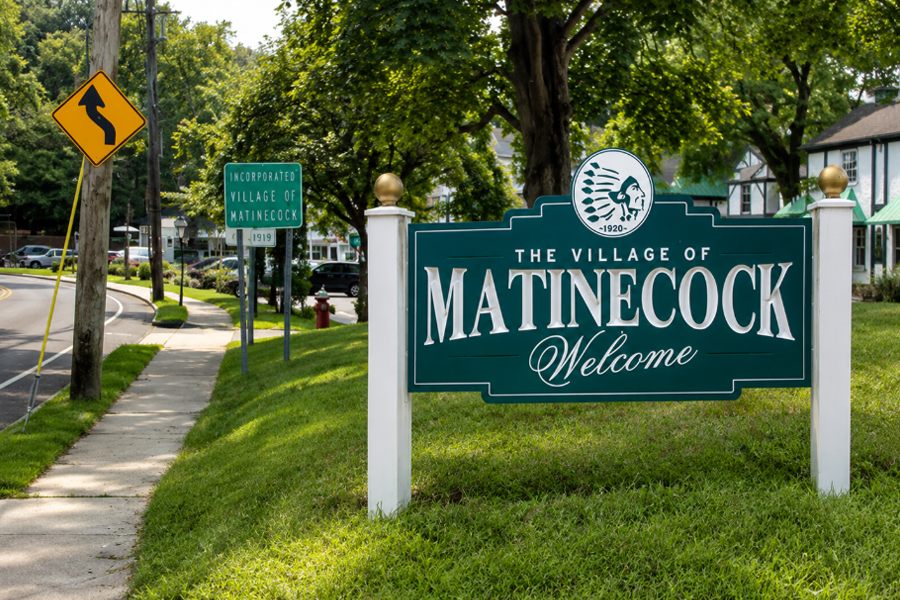
Matinecock is a small incorporated village on the North Shore of Long Island in the Town of Oyster Bay, Nassau County, New York. Primarily residential, the village is known for wooded roads, large properties, historic architecture, and the low-density landscape associated with this portion of Long Island’s North Shore.
Matinecock’s history extends far beyond its incorporation as a village in 1928. Its name preserves that of the Matinecock people, whose historical territory included a broad portion of Long Island’s North Shore before European settlement. The surrounding area later developed as an agricultural and Quaker community before large country estates transformed portions of the landscape during the late 19th and early 20th centuries.
The 2020 United States Census counted 847 residents in Matinecock. With approximately 2.67 square miles of land, the village remains unusually low in population density for suburban Nassau County. Matinecock is closely associated with neighboring Locust Valley and is also near Mill Neck, Glen Cove, and Oyster Bay.
History of Matinecock
The history behind the Matinecock name begins centuries before the modern village was established. The Matinecock people were Indigenous inhabitants associated with a substantial portion of northern Long Island. The Village of Matinecock’s historical account describes their territory as extending along the North Shore from the Newtown area eastward toward the Nissequogue River.
European settlement expanded in the Oyster Bay area during the 17th century through a series of land transactions between Indigenous proprietors and colonists. The village’s historical record describes a 1653 transaction in which English colonists from Cape Cod obtained land from Chief Asiapum in an area that would become part of the Town of Oyster Bay. Additional transactions followed as farms and settlements spread across the North Shore.
Agriculture shaped the area for generations. Early families established farms across the landscape that eventually became Matinecock and neighboring Locust Valley. Until Nassau County was created in 1899, this portion of modern Nassau County was part of Queens County.
Quaker Heritage
Quakers became an important part of the area’s early European community. In 1725, the Matinecock Friends Meetinghouse opened to serve members of the Religious Society of Friends living in the surrounding area. The historic meetinghouse near Piping Rock and Duck Pond roads survives as one of the most important physical links to the community’s colonial past and was listed on the National Register of Historic Places in 1976.
The area’s Quaker tradition also influenced education. Gideon Frost founded Friends Academy in 1876, establishing an institution that continues in the Locust Valley area. Together, the meetinghouse and school provide a connection to the families and religious traditions that helped shape this part of the North Shore long before the modern Village of Matinecock was incorporated.
From Farms to Gold Coast Estates
Improved transportation gradually changed the rural North Shore. Nearby Locust Valley served as a railroad terminus before service was extended to Oyster Bay in 1889, making the surrounding countryside increasingly accessible from New York City.
During the late 19th and early 20th centuries, farms and woodland throughout northern Nassau County increasingly gave way to country residences and large estates. Matinecock became part of the region now associated with Long Island’s Gold Coast, when wealthy families established elaborate properties across the North Shore.
That era left a lasting imprint on the village. Large residential parcels, long driveways, mature trees, stone walls, historic homes, and limited commercial development continue to contribute to Matinecock’s distinctive appearance even as much of the surrounding county has become more densely developed.
Incorporation and Village Government
Matinecock formally became an incorporated village on April 2, 1928. According to the village’s official history, incorporation was approved by a vote of 19 to 8 during a period when several North Shore communities were establishing village governments to exercise greater local control.
As an incorporated village, Matinecock has its own mayor and Board of Trustees while remaining geographically within the Town of Oyster Bay. This distinguishes Matinecock from neighboring Locust Valley, which is an unincorporated hamlet and census-designated place rather than a separate municipal government.
Geography and Community Character
Matinecock covers approximately 2.67 square miles on the North Shore of Nassau County. Its 2020 population of 847 works out to roughly 317 residents per square mile, reflecting a development pattern considerably less dense than many communities elsewhere in Nassau County.
The village is overwhelmingly residential and has no traditional downtown or major commercial district. Wooded roads, mature landscaping, estate properties, and homes set well back from the roadway create a semi-rural appearance despite Matinecock’s location within suburban Long Island. Much of the land visitors see from public roads is privately owned, so Matinecock is better understood as a residential community than as a conventional sightseeing destination.
Shopping, dining, and everyday services are concentrated in surrounding communities. Locust Valley provides a nearby business district and community services, while Glen Cove and Oyster Bay offer larger concentrations of shops, restaurants, parks, and waterfront destinations.
Education
Public school attendance for Matinecock residents depends on the location of an individual property and applicable school district boundaries, so specific assignments should be confirmed directly with the appropriate district. The village is also closely associated geographically with Friends Academy, the independent school founded in 1876 and rooted in the area’s longstanding Quaker tradition.
Transportation
Most travel within Matinecock is by automobile over local North Shore roads connecting the village with Locust Valley, Mill Neck, Glen Cove, and Oyster Bay. Piping Rock Road and Duck Pond Road are among the roads associated with the area.
There is no Long Island Rail Road station within the village. Nearby Locust Valley provides service on the Oyster Bay Branch, while the Oyster Bay station serves as the branch’s eastern terminus. Schedules, parking regulations, and service patterns should be checked before traveling.
Parks and Nearby Destinations
Although Matinecock itself has relatively few conventional visitor attractions, its central North Shore location places it near a number of important recreational, cultural, and historic destinations. Planting Fields Arboretum State Historic Park preserves a major former Gold Coast estate with gardens, woodland paths, greenhouses, and historic architecture.
Nearby Oyster Bay provides harbor scenery, historic sites, and waterfront recreation, while Glen Cove offers parks and a larger downtown. Neighboring Mill Neck shares Matinecock’s wooded, low-density North Shore setting and its connection to the region’s estate history.
Matinecock Today
Modern Matinecock reflects several periods of Long Island history within a remarkably small village. Its name preserves a connection to the Indigenous Matinecock people, the 1725 Friends Meetinghouse recalls the area’s Quaker and agricultural past, and the village’s large properties and estate landscapes reflect the transformation of the North Shore during the Gold Coast era. Incorporation in 1928 added another layer by establishing the local government that continues to serve the community today.
Matinecock, New York
Key Facts and Details
| Fact | Details |
|---|---|
| Community | Matinecock, New York |
| Community Type | Incorporated village |
| Town | Town of Oyster Bay |
| County | Nassau County |
| Region | North Shore of Long Island |
| 2020 Population | 847 |
| Land Area | Approximately 2.67 square miles |
| Population Density | Approximately 317 residents per square mile based on 2020 population and land area |
| Incorporated | April 2, 1928 |
| Incorporation Vote | Approved 19 to 8 |
| Village Government | Mayor and Board of Trustees |
| Name Origin | Named for the Matinecock people historically associated with a broad portion of Long Island’s North Shore |
| Early Development | 17th-century European settlement followed by generations of agricultural development |
| Quaker Heritage | Quakers played an important role in the early history of Matinecock and the surrounding Locust Valley area |
| Historic Landmark | Matinecock Friends Meetinghouse, dating to 1725 |
| National Register | Matinecock Friends Meetinghouse listed on the National Register of Historic Places in 1976 |
| Historic School | Friends Academy, founded by Gideon Frost in 1876 |
| Gold Coast History | Part of the North Shore region transformed by large country estates during the late 19th and early 20th centuries |
| Land Use | Predominantly low-density residential |
| Commercial Character | No traditional downtown or major commercial district within the village |
| Rail Transportation | No station within Matinecock; nearby Locust Valley and Oyster Bay stations serve the Oyster Bay Branch |
| Nearby Communities | Locust Valley, Mill Neck, Glen Cove, and Oyster Bay |
| Nearby Attraction | Planting Fields Arboretum State Historic Park |
| Community Character | Wooded, low-density residential village with large properties, historic architecture, and limited commercial development |
Matinecock’s small population does not reflect the depth of its history. The village name reaches back to the Indigenous Matinecock people, while the surviving Friends Meetinghouse preserves a connection to the Quaker families who helped shape the area during the colonial period. Later farms gave way to country estates as the North Shore entered its Gold Coast era, followed by the creation of the incorporated village in 1928. Today, Matinecock’s wooded roads, large residential properties, historic landmarks, and proximity to Locust Valley and Oyster Bay preserve a distinctive piece of northern Nassau County’s character.
Are you ready for fall on Long Island? Check out these local seasonal guides:
🍎 Apple Picking | 🍂 Fall Festivals | 👻 Haunted Houses | 🦃 Thanksgiving Dinner & Activities