
Mount Sinai Harbor
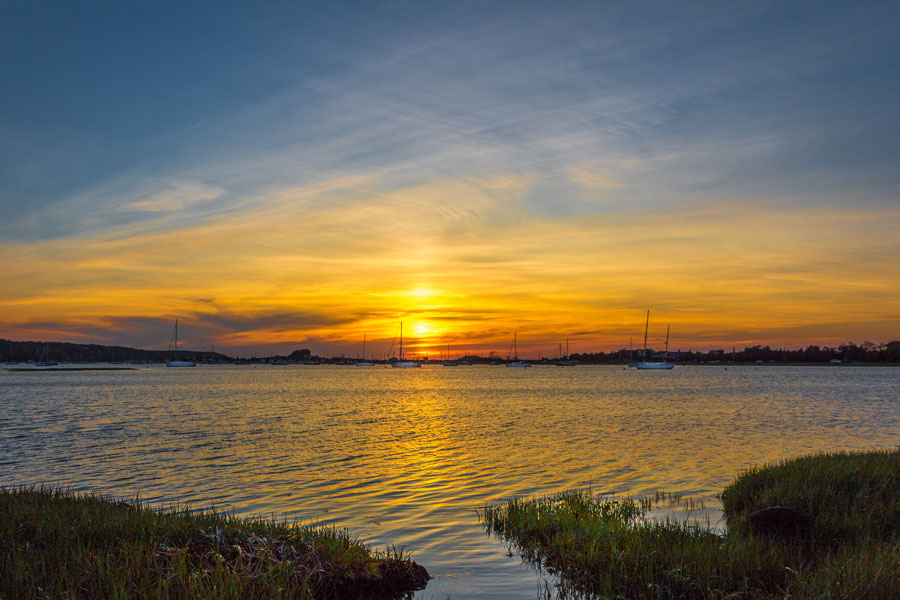
Mount Sinai Harbor is a protected North Shore embayment in Mount Sinai, within the Town of Brookhaven. The approximately 455-acre harbor opens into the Long Island Sound through a narrow, jettied inlet near Cedar Beach.
Salt marshes, tidal flats, shallow coves and open water make the harbor an important coastal habitat as well as a destination for boating, fishing, shellfishing, kayaking and nature observation. Much of the shoreline remains noticeably quieter and less developed than the neighboring waterfront at Port Jefferson.
In Short
Mount Sinai Harbor is a sheltered tidal harbor connected to Long Island Sound on the northern shoreline of Suffolk County. Visitors can experience the harbor from Cedar Beach–Mount Sinai, the marina complex, Satterly Landing and several shoreline viewpoints. Its calm interior waters and extensive coastal wetlands support recreation, marine life and one of the community’s most recognizable landscapes.
Geography of the Harbor
Mount Sinai Harbor lies behind a long, narrow barrier peninsula extending along the Long Island Sound shoreline. Cedar Beach occupies much of this peninsula, separating the harbor’s protected interior waters from the more exposed waters of the Sound.
The harbor covers approximately 455 acres and contains a mixture of open water, salt marsh, tidal creeks, mudflats and shallow areas. Its shape and sheltered position reduce exposure to the larger waves found on Long Island Sound, although tides, wind and boat traffic can still create changing conditions.
A narrow entrance at the northwestern side of the peninsula provides the harbor’s connection to the Sound. Two stone jetties help define the inlet and protect the navigation channel. The channel must be periodically dredged because currents and tides continually carry sand into the entrance.
Cedar Beach and the Harbor Peninsula
Cedar Beach–Mount Sinai is the principal public recreation area surrounding the harbor entrance. Unlike the separate Cedar Beach in the Town of Babylon, the Mount Sinai property is a North Shore beach complex operated by the Town of Brookhaven.
The Cedar Beach peninsula includes swimming areas facing Long Island Sound, a fishing pier, boat-launching ramps, a marina, walking areas and the Mount Sinai Marine Environmental Stewardship Center. From different points along the property, visitors can look north across the Sound or south over the harbor and its extensive mooring fields.
Cedar Beach Main serves as the primary swimming and activity area, while Cedar Beach West extends closer to the harbor entrance, fishing pier and boating facilities. Parking permits or seasonal parking charges may apply, and visitors should review current Town of Brookhaven requirements before traveling.
Satterly Landing
Satterly Landing Park, located at 182 Shore Road, provides another public view of Mount Sinai Harbor. This small Town of Brookhaven waterfront access point is found along the harbor’s southern shoreline and includes a fishing pier and a limited parking area.
The landing offers a different experience from the larger Cedar Beach complex. Its location overlooks the calmer southern portion of the harbor, where salt marshes, mudflats and shallow coves are especially visible as the tide changes. The site is used for fishing, kayaking, photography and quiet observation of the harbor.
Facilities at Satterly Landing are limited, and visitors should not expect the restrooms, concessions or recreational amenities available at Cedar Beach. Kayakers should also remain alert for tidal currents, changing weather and heavier boat traffic closer to the marina and harbor entrance.
Boating and Navigation
Mount Sinai Harbor is primarily a small-craft harbor serving recreational boats, fishing vessels and local marine facilities. The protected interior contains private and municipal marina facilities, seasonal moorings, boat ramps and areas used for marine services and vessel storage.
The entrance channel passes between the two jetties before opening into Long Island Sound. Shoaling can occur where sand accumulates near the inlet, making periodic dredging necessary to preserve safe access. The southern and eastern portions of the harbor also contain extensive shallow areas and exposed mudflats at lower stages of the tide.
Boaters should use a current nautical chart and consult applicable navigation notices rather than relying on older published depths. Water levels, channel conditions and shoaling can change, particularly after storms. A reduced-speed zone is enforced within the harbor to protect other vessels, shorelines and waterfront users.
Dredging and Jetty Reconstruction
Sand naturally moves along the Long Island Sound shoreline and into the mouth of Mount Sinai Harbor. Over time, this sediment can narrow or reduce the depth of the navigation channel. Maintaining the inlet has therefore required repeated public dredging and shoreline projects.
The harbor’s east and west jetties underwent a major reconstruction project completed in 2020. Suffolk County subsequently dredged the inlet channel during the winter of 2020–2021, removing approximately 80,000 cubic yards of sand. Some of the recovered material was used for beach replenishment in Port Jefferson. The work improved access for recreational vessels, commercial operators and emergency responders.
Dredging has also been an important part of the harbor’s longer history. The original natural opening was located farther east, but wind, tides and drifting sand repeatedly restricted it. During the mid-1800s, a new outlet was excavated on the western side, near the location of the present entrance.
Salt Marshes and Wildlife
Mount Sinai Harbor is more than a boating basin. Its tidal wetlands provide feeding, shelter and nursery habitat for fish, shellfish, birds and other coastal wildlife. The mix of salt marsh, mudflat and shallow water creates productive ecological zones that change throughout the tidal cycle.
Herons, egrets, cormorants, gulls, terns and waterfowl can frequently be observed around the harbor. Diamondback terrapins also inhabit the surrounding coastal environment. Brookhaven has installed specialized wildlife crossings near Cedar Beach to help terrapins travel between harbor habitat and upland nesting areas without crossing directly through vehicle traffic.
Hard clams, soft-shell clams, oysters, mussels and other marine organisms are found within the harbor ecosystem. Salt-marsh plants help stabilize the shoreline, trap sediment and provide protection for smaller animals. These wetlands also create a natural buffer between developed land and open water.
Fishing and Shellfishing
Fishing has long been associated with Mount Sinai Harbor. Anglers fish from the Cedar Beach pier, Satterly Landing, boats and other authorized shoreline areas. Species encountered in and around the harbor can vary by season and may include porgy, striped bass, bluefish, summer flounder and snapper bluefish.
Shellfishing is subject to New York State sanitary classifications and temporary closures. Portions of Mount Sinai Harbor are seasonally uncertified, while some southern areas are closed throughout the year. Additional emergency closures may be imposed after heavy rainfall, harmful algal blooms or other conditions affecting water quality.
Anyone planning to harvest shellfish should consult the New York State Department of Environmental Conservation shellfish closure information immediately before harvesting. A location that appears suitable or has been open previously should not be assumed to be legally certified on the day of a visit.
Marine Environmental Stewardship Center
The Mount Sinai Marine Environmental Stewardship Center is located within the Cedar Beach and marina complex. The center was created to help visitors understand the harbor, Long Island Sound and the role people play in protecting coastal environments.
Educational features have included aquariums, marine-life displays, an outdoor touch tank and exhibits about local plants and animals. A boardwalk extends through part of the dune system, where interpretive signs explain the function of beach vegetation and other features of the coastal habitat.
The Town of Brookhaven periodically offers guided walks, family programs and environmental activities at the center. Programs and operating hours vary by season, so visitors should confirm availability before making a special trip.
History and Traditional Uses
Mount Sinai Harbor has supported human activity for centuries. Archaeological evidence indicates that Indigenous people harvested shellfish from the area long before European settlement. The tidal exchange with Long Island Sound helped sustain the harbor’s productive shellfish beds and salt-marsh environment.
Later residents used the harbor for fishing, clamming, waterfowl hunting and the harvesting of salt hay. Sand mining and other commercial activities also affected portions of the waterfront. As Mount Sinai developed into a residential community, boating and shoreline recreation became increasingly prominent uses of the harbor.
The harbor remains closely tied to the identity of Mount Sinai. Its image appears throughout local organizations and community materials, while Cedar Beach and the harbor entrance continue to serve as gathering places throughout the year.
Water Quality and Conservation
Mount Sinai Harbor is included in regional water-quality monitoring conducted as part of efforts to understand and protect Long Island Sound’s North Shore embayments. Runoff, nutrients, failing wastewater systems, shoreline development and the loss of tidal wetlands can all influence the health of a sheltered harbor.
Because exchange with Long Island Sound occurs through a relatively narrow inlet, protecting tidal circulation is particularly important. Dredging can maintain navigational access and water exchange, but each project must also consider wetlands, marine habitat, sediment movement and the effects of placing dredged material.
Local cleanup events, environmental education and habitat projects help bring attention to the harbor’s ecological value. Visitors can assist by removing litter, avoiding dune vegetation, observing shellfishing closures and keeping boats out of shallow marsh areas.
Mount Sinai Harbor
Key Facts & Details
| Name | Mount Sinai Harbor |
| Type | Protected tidal harbor and North Shore embayment |
| Approximate area | 455 acres |
| Community | Mount Sinai |
| Municipality | Town of Brookhaven |
| County | Suffolk County |
| Connected waterway | Long Island Sound |
| Harbor entrance | Jettied inlet adjoining Cedar Beach |
| Primary habitats | Open water, salt marsh, mudflats, tidal creeks and shallow coves |
| Primary activities | Boating, fishing, shellfishing, kayaking and wildlife observation |
| Principal public access | Cedar Beach–Mount Sinai and Satterly Landing Park |
| Cedar Beach address | 244 Harbor Beach Road, Mount Sinai, NY 11766 |
| Satterly Landing address | 182 Shore Road, Mount Sinai, NY 11766 |
| Boating facilities | Marinas, moorings, boat ramps and marine services |
| Shellfishing | Subject to seasonal, permanent and temporary closures |
| Environmental facility | Mount Sinai Marine Environmental Stewardship Center |
Mount Sinai Harbor brings together many of the qualities that define Long Island’s North Shore. It is simultaneously a working small-craft harbor, a recreational waterfront and an ecologically significant tidal environment. From the activity surrounding Cedar Beach and the marina to the quieter marshes near Satterly Landing, each section reveals a different side of the harbor.
Its protected waters, narrow connection to Long Island Sound and extensive wetlands have shaped how people have used the harbor for generations. Continued water-quality monitoring, responsible navigation and protection of the surrounding marshes will be essential to preserving Mount Sinai Harbor as a community resource and wildlife habitat.
Are you ready for fall on Long Island? Check out these local seasonal guides:
🍎 Apple Picking 🍓 Strawberry Picking 🎃 Pumpkin Picking 👻 Haunted Houses 🍂 Farm Festivals