
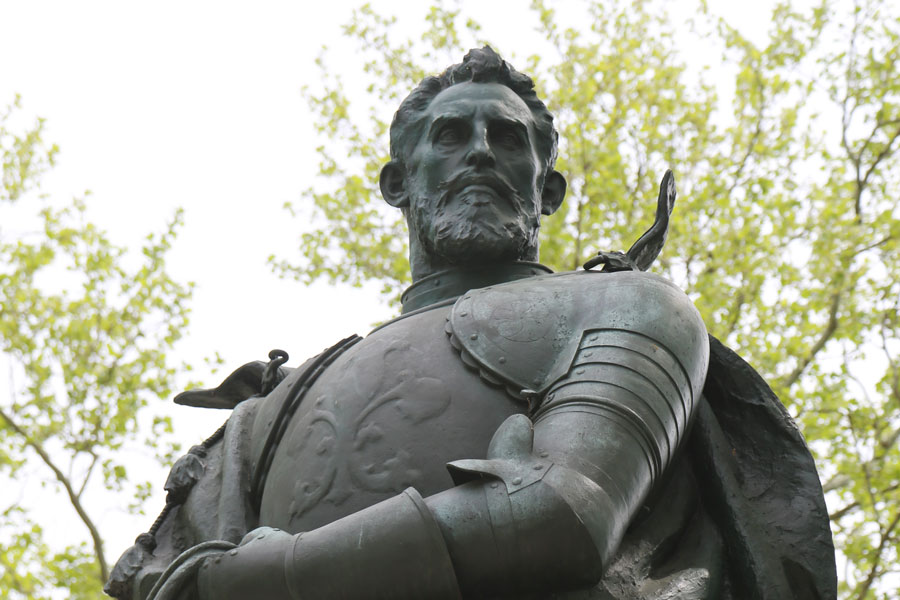
Long Island is commonly associated with the 1524 voyage of Giovanni da Verrazzano when people ask who “discovered” it. The Florentine navigator, sailing for King Francis I of France, was the first European known to see and describe New York Harbor. However, Long Island was already home to Indigenous peoples who had lived there for thousands of years, so “first recorded European exploration” is a more accurate description than discovery.
Who Was Giovanni da Verrazzano?
Giovanni da Verrazzano was a navigator from Florence who explored the Atlantic coast of North America in 1524 while serving the French crown. His voyage brought him to the entrance of New York Harbor, where he described the harbor and encountered Indigenous inhabitants. His account provides an early European description of the region surrounding western Long Island and present-day New York City.
That documented voyage explains why Verrazzano is often named in answers to this question. It does not establish that he explored the entire island or made a confirmed landing on Long Island itself. The clearest historical claim is that he was the first European known to see and describe New York Harbor in 1524.
Who Lived on Long Island Before Europeans Arrived?
Indigenous peoples lived on Long Island for thousands of years before Verrazzano’s voyage. Communities established settlements, maintained trade networks, and relied on the island’s forests, farmland, bays, and coastal waters. Western communities included peoples connected to the Lenape, while eastern Long Island was home to peoples including the Shinnecock and Montaukett.
These communities had their own histories, languages, political relationships, and names for the places where they lived. Describing the island as “discovered” by a European overlooks that earlier history. Indigenous peoples and their descendants remain part of Long Island’s living cultural landscape.
What Role Did Henry Hudson Play?
Henry Hudson reached the region in 1609, approximately 85 years after Verrazzano’s voyage. An English navigator employed by the Dutch East India Company, Hudson explored New York Harbor and sailed up the river that now bears his name. His voyage helped encourage Dutch commercial interest and colonial activity in the surrounding region.
Hudson therefore played an important role in the European colonial history of New York State, but he was not the first recorded European to describe the harbor. Verrazzano’s earlier voyage and Hudson’s later exploration represent separate stages in European contact with the region.
When Did European Settlement Begin?
Dutch and English settlement expanded across Long Island during the 17th century. Dutch settlement was concentrated in the western part of the island, while English settlers established communities farther east. This colonial expansion brought land disputes, displacement, and profound changes to Indigenous life.
The island today includes Brooklyn, Queens, Nassau County, and Suffolk County. Its modern communities reflect layers of Indigenous history, European colonization, and later development rather than a single moment of discovery.
Key Facts & Details
| Category | Information |
|---|---|
| Original Inhabitants | Indigenous peoples inhabited Long Island for thousands of years before European arrival. |
| European Explorer Commonly Associated With the Question | Giovanni da Verrazzano, a Florentine navigator sailing for France in 1524. |
| Documented Achievement | First European known to see and describe New York Harbor. |
| Important Distinction | Verrazzano’s harbor exploration does not establish that he landed on or explored all of Long Island. |
| Later Exploration | Henry Hudson explored New York Harbor and the Hudson River in 1609 while employed by the Dutch East India Company. |
| European Settlement | Dutch and English settlement expanded during the 17th century. |
| Modern Geographic Extent | Brooklyn, Queens, Nassau County, and Suffolk County. |
| State | New York State. |
| Historical Source | The Morgan Library & Museum’s account of Verrazzano’s 1524 letter and voyage. |
The conventional European exploration answer is Giovanni da Verrazzano in 1524, with the important qualification that his documented achievement concerns New York Harbor and the surrounding region. The fuller history of Long Island begins thousands of years earlier with its Indigenous inhabitants, whose presence makes “discovery” an incomplete description of the island’s past.