
Rock Hall Museum
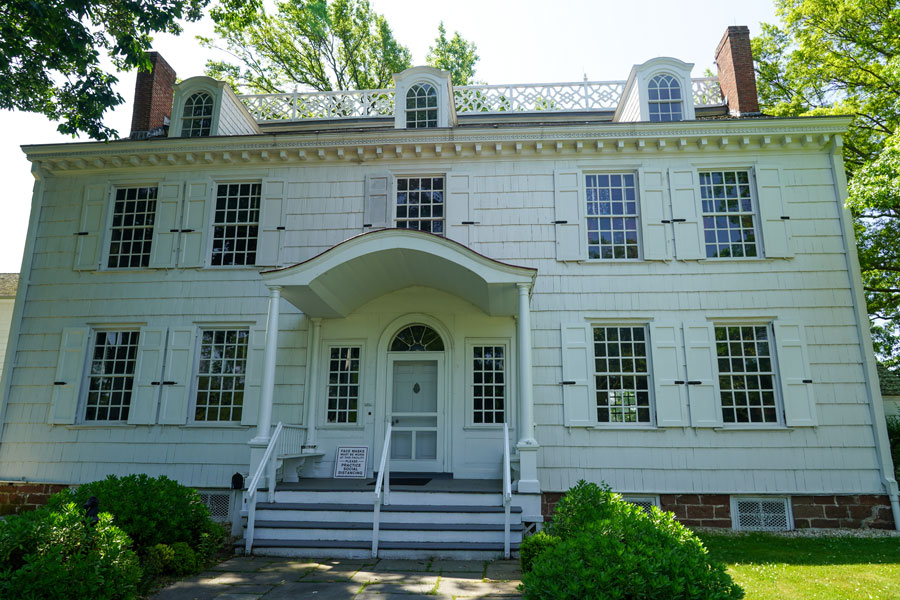
Rock Hall Museum is a preserved Georgian-style mansion built in 1767 in Lawrence, southwestern Nassau County, on Long Island. Owned and operated by the Town of Hempstead, the historic house museum offers a close look at life before and after the American Revolution, including the experiences of the families who owned the property and the enslaved people whose labor supported it. Rock Hall is a significant landmark in the Five Towns region and one of the South Shore’s most notable surviving eighteenth-century residences.
Located at 199 Broadway, the house retains its architectural character and is furnished to interpret its early history. Visitors can explore rooms associated with colonial domestic life, learn about archaeological work on the property, and discover how the surrounding waterfront communities developed. Rock Hall is listed on the National Register of Historic Places and recognized as a New York State Revolutionary War heritage site.
History of Rock Hall and the Martin Family
Rock Hall was built for Josiah Martin, a wealthy landowner born in Antigua whose fortune was tied to sugar plantations in the British West Indies. He purchased a substantial tract of land in what is now Lawrence and built a country residence overlooking the coastal landscape near Hewlett Bay. His connection to Atlantic commerce and plantation slavery makes the property part of a larger story linking colonial New York, the Caribbean, and the New York City trading economy.
The house stood through the Revolutionary War, a turbulent period for Long Island. Historical accounts maintained by the museum describe American patriot forces occupying Rock Hall during the winter of 1776. Josiah Martin died in 1778, but members of the Martin family continued to occupy the estate in the decades that followed. The building and its occupants offer a window into the competing loyalties, military pressures, and economic changes of the colonial and early national periods.
The Hewlett Family and Preservation
Thomas Hewlett acquired Rock Hall and surrounding acreage in 1824. Under the Hewlett family, the estate took on new roles, including agricultural uses and accommodations for summer guests as coastal tourism expanded around the South Shore. Later generations made changes to the house, including a service wing added in 1881. These adaptations reflect how a colonial estate evolved through the nineteenth and early twentieth centuries.
In 1948, the Hewlett family deeded Rock Hall and approximately three acres of land to the Town of Hempstead. The town restored the property and opened it as a museum in 1953. Its survival is especially meaningful in a part of western Nassau County that changed dramatically with suburban growth. The museum’s documented history emphasizes preservation of the historic house and its grounds, rather than a relocation of the building.
Architecture and Period Interiors
Rock Hall is an example of Georgian colonial architecture, characterized by balanced proportions, a carefully organized façade, and formal interior spaces. The wooden residence contains historic architectural details, fireplaces, and rooms furnished to evoke the eighteenth century. Its appearance contrasts with the more familiar nineteenth-century estates associated with Long Island’s Gold Coast, showing an earlier phase of the island’s residential history.
A tour also offers a perspective on the less visible work required to maintain an affluent household. The cellar includes a warming kitchen, cold-storage room, and wine cellar, spaces that help explain food preparation, storage, and service before modern household conveniences. Rather than viewing the house solely as an architectural showpiece, visitors can consider the relationships between the formal rooms and the working areas that supported them.
Slavery, Archaeology, and Untold Histories
Rock Hall’s history includes enslaved African people who lived and worked on the property. Research discussed by the museum and the Long Island Museum identifies 17 enslaved people in the Martin household in the 1790 federal census. Their experiences are essential to understanding how the estate functioned, and they connect this local landmark to the broader history of slavery in colonial and early American New York.
Archaeological investigations at Rock Hall have uncovered objects and structural remains that offer evidence of daily life beyond the mansion’s formal interiors. Excavations have examined former outbuildings and a possible kitchen structure, while artifacts from the eighteenth and nineteenth centuries are presented in the museum’s archaeology exhibit. Researchers have also studied evidence of Caribbean building techniques and possible African cultural traditions. Some interpretations remain subjects of ongoing historical research, illustrating how archaeology can deepen and sometimes revise the understanding of a familiar historic site.
Museum Exhibits and Educational Programs
Rock Hall is a furnished historic house museum with exhibits focused on domestic life, decorative arts, archaeology, and local history. Visitors may see period furniture, household objects, and materials recovered from the grounds. Exhibits and interpretation connect the house to the larger story of Long Island, from colonial settlement and the Revolutionary War to the changes that shaped the Five Towns area.
The Town of Hempstead and Friends of Rock Hall support guided tours, student programs, lectures, historical presentations, and seasonal community events. The annual Rock Hall Country Fair is among the museum’s longstanding public traditions. Program dates and availability vary, so visitors interested in a particular lecture, school visit, or event should consult the museum’s current calendar before making plans.
Grounds and Historic Setting
The museum occupies landscaped grounds in Lawrence, offering room to appreciate the building’s exterior and its relationship to the surrounding neighborhood. The original estate was much larger and had strong ties to the coastal environment around Hewlett Bay. Today, the grounds preserve a quieter historic setting within a developed community, and they are sometimes used for outdoor events and educational activities.
Visitors interested in architecture and photography can appreciate the symmetry and scale of the house from outside. The museum states that professional photography is not permitted on the premises, so anyone planning a specialized photo session should contact staff in advance. Public access to the house and grounds is governed by museum rules and event schedules.
Visiting Rock Hall Museum
Rock Hall Museum is located at 199 Broadway, Lawrence, NY 11559, within the Five Towns area of Nassau County. According to the museum’s published visitor information, its usual hours are Wednesday through Saturday from 10 a.m. to 4 p.m. and Sunday from noon to 4 p.m., with Monday and Tuesday closures. General admission is free, although donations are encouraged. Because the Town of Hempstead’s website also advises advance appointments, calling 516-239-1157 before visiting is the safest approach, particularly for guided tours or groups.
The museum’s visitor information notes that the historic building is not wheelchair accessible. Visitors who need accessibility accommodations should contact staff to discuss available options. The grounds are generally open daily until 4 p.m., subject to special events and other restrictions. For current details, consult the Town of Hempstead museum page and the Friends of Rock Hall visitor information.
Exploring the Surrounding Area
Rock Hall can be combined with an exploration of Lawrence and the nearby Five Towns communities. Travelers interested in coastal scenery can continue toward Long Beach or the waterfront around Atlantic Beach, while those interested in the wider history of Long Island may enjoy reading about the colonial era and Revolutionary War before their visit. The museum is also within the broader orbit of New York City and western Nassau County, making it a worthwhile historical stop rather than a full-day attraction on its own.
Rock Hall Museum
Key Facts and Details
| Category | Details |
|---|---|
| Name | Rock Hall Museum |
| Address | 199 Broadway, Lawrence, NY 11559 |
| Location | Lawrence, Nassau County, Long Island |
| Built | 1767 |
| Original Owner | Josiah Martin, an Antigua plantation owner |
| Later Owners | Hewlett family, beginning in 1824 |
| Transferred to Town | 1948 |
| Opened as Museum | 1953 |
| Architectural Style | Georgian colonial |
| Ownership and Operation | Town of Hempstead |
| Historic Recognition | National Register of Historic Places; New York State Revolutionary War heritage site |
| Exhibits | Furnished period rooms, cellar working spaces, and archaeological displays |
| Typical Hours | Wednesday–Saturday, 10 a.m.–4 p.m.; Sunday, noon–4 p.m.; verify before visiting |
| Admission | Free general admission; donations encouraged |
| Tours | Call ahead to confirm appointments and group arrangements |
| Phone | 516-239-1157 |
| Accessibility | Historic house is not wheelchair accessible; contact museum for details |
| Official Information | Town of Hempstead and Friends of Rock Hall |
Rock Hall Museum offers a valuable encounter with the layered history of Long Island, from Georgian architecture and Revolutionary-era events to the lives of the Martin and Hewlett families and the enslaved people whose stories continue to emerge through research. For visitors exploring Lawrence, the Five Towns, or historic places across Nassau County, the preserved house provides a distinctive opportunity to see how the region’s colonial past is interpreted today.
Are you ready for fall on Long Island? Check out these local seasonal guides:
🍎 Apple Picking | 🍂 Fall Festivals & Farm Activities | 👻 Haunted Houses | 🎃 Pumpkin Picking