
Orient Point Lighthouse
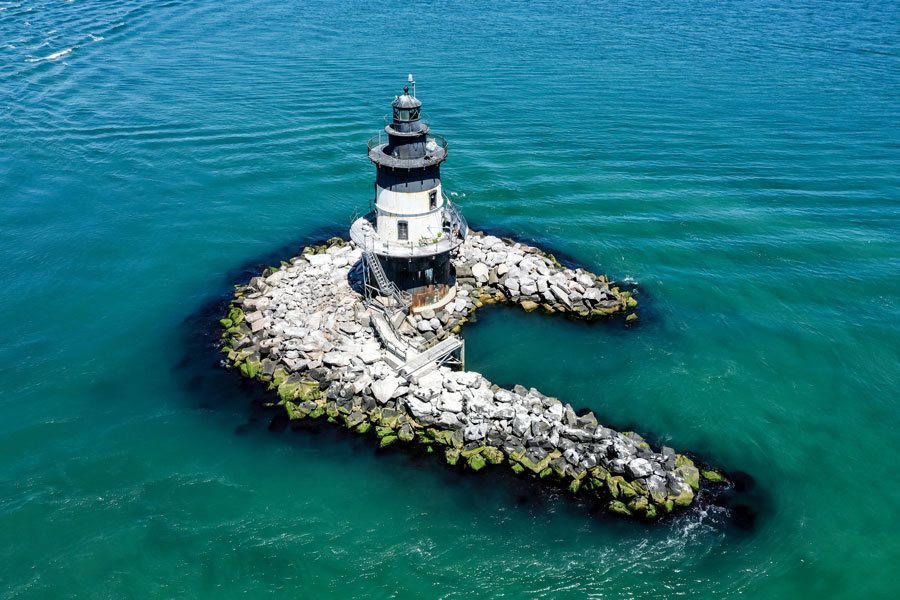
Standing sentinel at the eastern tip of Long Island’s North Fork, the Orient Point Lighthouse is an iconic offshore beacon just beyond Orient Point. Also known as Orient Point Light and often nicknamed the “Coffee Pot Lighthouse” for its distinctive shape, it has helped mariners navigate the challenging Plum Gut passage between Long Island Sound and the waters around Gardiners Bay since 1899.
History & Significance
The lighthouse was built to warn vessels of the swift currents, rocky shoreline, and difficult navigation conditions in Plum Gut. Constructed of cast iron on a caisson-style foundation, the compact cylindrical tower became one of the most recognizable lights on the East End. It was automated in the mid-20th century and continues to serve as an active aid to navigation.
Architecture & Location
The black-and-white tower rises from a sturdy offshore base just off the point, creating a dramatic landmark against the open water. Because the lighthouse stands in the channel rather than on land, it is not generally a walk-up attraction. Most visitors experience it from public shoreline areas near Orient Point, from passing boats, or while traveling aboard the Cross Sound Ferry.
Preservation & Recognition
Orient Point Lighthouse was added to the National Register of Historic Places in 2000 in recognition of its architectural and maritime importance. As with many offshore structures, long-term preservation depends on ongoing stewardship and protection from corrosion, storms, and the harsh marine environment. Access and management details may change over time, but the lighthouse remains one of the defining historic sights of the North Fork.
Viewing & Photography Tips
The best public views of the lighthouse are typically from:
- Shoreline areas around Orient Point
- Orient Beach State Park
- The deck or passenger areas of ferries departing from the Orient Point Ferry Terminal
- Private boats or local charter trips, weather permitting
Clear mornings and golden-hour light often provide the best conditions for photos. A zoom lens or binoculars can help bring out details of the tower from shore. Stay on marked public areas, use caution near rocks and strong currents, and check park or ferry information ahead of time if your visit depends on seasonal access or sailing schedules.
Orient Point Lighthouse
Quick Facts
| Category | Details |
|---|---|
| Established | 1899 |
| Structure | Cast-iron lighthouse on an offshore caisson foundation |
| Location | Plum Gut, just off Orient Point |
| Nickname | “Coffee Pot Lighthouse” |
| Recognition | Listed on the National Register of Historic Places |
| Public Access | Viewed from shore or by boat; not generally open for casual interior visits |
| Best Viewing Spots | Orient Point shoreline, Orient Beach State Park, Cross Sound Ferry |
| Status | Active aid to navigation |
| Long Island Lighthouses | How many lighthouses are on Long Island? |
For many travelers, a lighthouse view is part of a broader stop in Orient Point, a day at the state park, or a ferry trip across the Sound. Service details, park hours, and seasonal conditions may change, so it is always wise to check ahead before visiting.
Are you ready for fall on Long Island? Check out these local seasonal guides:
🍎 Apple Picking 🍓 Strawberry Picking 🎃 Pumpkin Picking 👻 Haunted Houses 🍂 Farm Festivals