
Flanders, New York
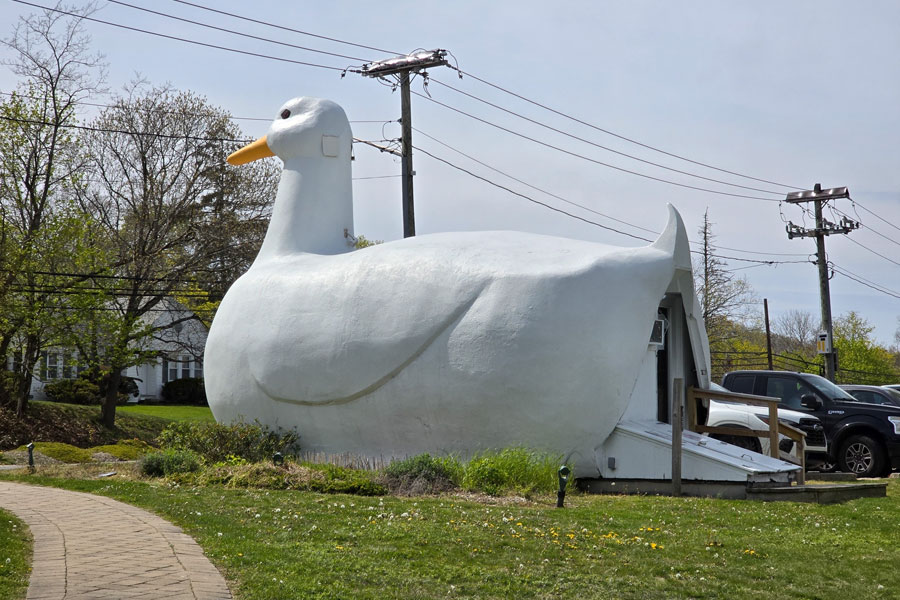
Flanders is a hamlet in the Town of Southampton on Long Island’s East End in Suffolk County. Just west of Hampton Bays and near the point where travelers continue toward the South Fork, Flanders offers a quieter, more grounded setting than many of the resort communities farther east. Open land, marsh and estuary scenery, and one of the region’s best-known roadside landmarks – the Big Duck – give the hamlet a distinct East End identity.
History & Heritage
- Early settlement: Flanders developed as part of Southampton’s westward expansion, with roots reaching back to the colonial era.
- Agricultural past: Farming, duck raising, and small local industry helped shape the hamlet for generations, and traces of that landscape remain visible today.
- The Big Duck: Built in 1931 by duck farmer Martin Maurer as a farm stand, the oversized duck-shaped building became a lasting symbol of Long Island roadside culture.
- Steadier pace of change: While neighboring East End communities grew into major visitor destinations, Flanders largely retained a lower-density, year-round residential character.
- Waterfront setting: Its identity is also tied to nearby Peconic River and bay environments, which contribute to both local scenery and ecology.
Population & Community
Flanders is a smaller, primarily residential hamlet with a year-round population in the several-thousand range. Compared with nearby Hamptons destinations, it generally feels more local, practical, and less centered on seasonal tourism.
- Community makeup: A mix of longtime residents, working families, and people drawn to the East End without the resort emphasis of communities farther east.
- Residential character: Mostly single-family neighborhoods, along with apartment communities and other housing types.
- Year-round activity: Unlike heavily seasonal destinations, Flanders remains active throughout the year.
- Cultural diversity: The hamlet reflects a range of backgrounds and experiences that continue to shape its local identity.
Transportation & Accessibility
- Road access: Flanders is located along important east-west routes including NY Route 24 (Flanders Road) and NY Route 25.
- Gateway location: Its position between Riverhead and Hampton Bays makes it a common transition point for travelers heading deeper into the South Fork and the broader East End.
- Nearby highway access: Sunrise Highway (NY 27) is close by for travel across Long Island, though seasonal traffic can be significant.
- Rail connections: Flanders does not have its own LIRR station; nearby stations in Riverhead and Hampton Bays are typically the most practical rail options.
- Public transit: Suffolk County Transit serves the area, but routes and service frequency may vary, so it is best to check current schedules before traveling.
Landmarks & Points of Interest
- The Big Duck: One of Long Island’s most iconic structures and a notable example of novelty architecture, listed on the National Register of Historic Places. It is a popular photo stop, and visitor access or hours may vary by season.
- Peconic waters: The hamlet’s nearby river, marsh, and bay environments help define its landscape and support birdlife, paddling, and scenic views.
- Nearby attractions: Flanders is close to the Long Island Aquarium in Riverhead, regional shopping areas, and a wide range of East End destinations.
- Local roadside character: Small businesses, casual eateries, and everyday services give the area a more understated and lived-in feel than nearby resort corridors.
Parks & Nature
- David A. Sarnoff Preserve: A large protected landscape nearby with pine barrens habitat, trails, and opportunities for quiet exploration. Conditions and access details may change, so checking ahead is wise.
- Peconic River wetlands and estuary: The surrounding wetland systems are ecologically important and can be rewarding for kayaking, birdwatching, and nature photography.
- Open space: Flanders retains more visible undeveloped land than many neighboring communities, helping preserve its rural feel.
- Outdoor recreation: Fishing, boating, and nature walks are common local pursuits, with access points, permits, and seasonal conditions varying by location.
Local Economy & Lifestyle
- Residential focus: Flanders is primarily a place to live rather than a major standalone commercial destination.
- Convenient regional access: Residents and visitors are close to Riverhead’s larger retail centers, services, and entertainment, while still within reach of Hamptons beaches and villages.
- Understated East End base: The hamlet appeals to people looking for a quieter setting with practical access to the wider East End.
- Everyday essentials: Basic shopping, dining, and service needs can be met locally or within a short drive in neighboring communities.
Hamlet Vicinity
Key Facts and Details
| Feature | Details |
|---|---|
| Community type | Hamlet in the Town of Southampton |
| Location | East End of Long Island, west of Hampton Bays in Suffolk County |
| Known for | The Big Duck, open land, and a quieter gateway setting near the South Fork |
| Population | Several thousand residents |
| Setting | Mix of residential areas, wetlands, estuary scenery, and remaining open space |
| Nearby hubs | Riverhead, Hampton Bays |
| Outdoors | Peconic wetlands and waters, nearby preserve lands, nature access |
| Transportation | Route 24, Route 25, nearby Sunrise Highway, and regional bus access |
| Character | Quiet, practical, and less resort-oriented than many nearby East End communities |
| Best for | Roadside history, nature access, and a lower-key East End base |
Flanders may not have the name recognition of its Hamptons neighbors, but that is part of its appeal. It offers a more grounded and accessible side of the East End – one where open space, local routines, and historic quirks like the Big Duck still help define the landscape. For travelers looking to explore this part of Long Island without relying on a resort itinerary, Flanders can be a worthwhile stop and a useful base for discovering the communities and natural areas around it.
Are you ready for fall on Long Island? Check out these local seasonal guides:
🍎 Apple Picking | 🍂 Fall Festivals & Farm Activities | 👻 Haunted Houses | 🎃 Pumpkin Picking