
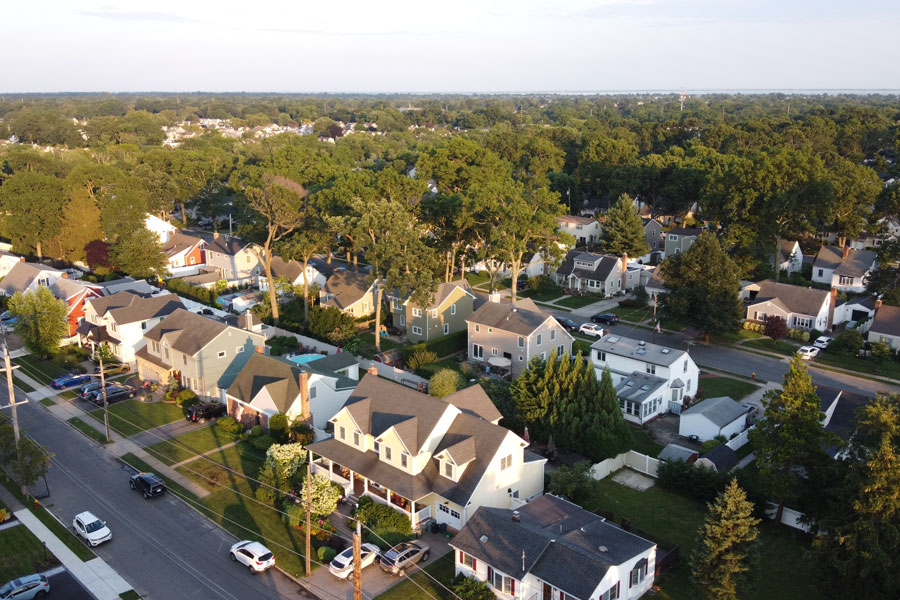
Long Island has many communities to consider when researching a place to live or visit, but identifying the “safest” requires more than a community’s reputation or appearance. Start with our Long Island Crime Statistics page, which compares reported crime in Nassau County and Suffolk County, including violent crime, property crime, and changes over time. Those county figures provide a useful starting point, while evaluating an individual town, village, or neighborhood requires more localized information.
What Are the Safest Towns on Long Island?
There is no single answer that applies to every definition of safety. A community may have relatively few reported violent crimes but a higher number of thefts, while another may present concerns involving traffic, pedestrian access, or flooding. Any list claiming to identify Long Island’s safest communities should explain its reporting year, geographic coverage, crime categories, and comparison method.
Without that information, a list of attractive or desirable communities is not a supported safety ranking. For readers comparing places to live, the more useful approach is to review official crime information, identify the police jurisdiction serving the specific address, and assess conditions in the surrounding neighborhood.
Start With the County Crime Statistics
Our Long Island Crime Statistics page brings together official information from the New York State Division of Criminal Justice Services and related government sources. It includes county-level reported crime totals, population-based rates, offense categories, and historical trends for Nassau and Suffolk. The page identifies the reporting periods and separates annual county figures from more recent information covering specific police departments.
Read the violent-crime and property-crime figures separately rather than relying only on the overall total. A county with a lower overall crime rate does not necessarily have the lower rate in every offense category. Countywide averages also combine communities with different populations, land uses, and local conditions, so they should not be treated as the crime rate of every place within the county.
Understand Town, Village, and Police Boundaries
Long Island’s towns, incorporated villages, and hamlets are different geographic units. A town can contain several villages and hamlets, and police service boundaries do not always match the community name used in a mailing address or real estate listing. Some municipalities have their own police departments, while other communities are served by county police or another agency.
For example, research involving Southampton or East Hampton should distinguish the town from the incorporated village sharing its name. Similarly, information for a broad police jurisdiction cannot automatically be assigned to a particular hamlet within it. Confirming the area covered by a statistic is essential before using it to compare communities.
How to Evaluate Local Crime Figures
The New York State Division of Criminal Justice Services publishes official reported crime information, including police-agency data. When reviewing a local department’s figures, check the reporting year, the number of months reported, the jurisdiction covered, and whether a suitable population figure is available. Comparing raw totals alone can be misleading because a larger jurisdiction may record more offenses simply because it serves more people.
Population-based rates help account for differences in size, but small communities can experience large percentage changes from a few additional incidents. Seasonal visitors and busy commercial areas can also complicate comparisons based on resident population. Looking at several years, separating offense categories, and reading the source notes provides a clearer picture than a single headline or annual ranking.
Look Beyond Crime When Choosing a Community
For a particular home or neighborhood, consider road crossings, traffic speeds, sidewalks, lighting, and access to emergency services. Flood exposure and evacuation routes may also be relevant, especially in waterfront areas. These factors address different aspects of safety and should be considered alongside reported crime rather than substituted for it.
Visit the area at different times and examine the routes you expect to use, including the walk to public transportation, shops, schools, or parks. Well-maintained homes and a community’s popularity do not establish its crime rate, just as an isolated incident should not define an entire town. Use official information and firsthand observations together when deciding whether a location meets your needs.
Key Facts & Details
| Topic | What to Know |
|---|---|
| County Crime Comparison | Visit our Long Island Crime Statistics page for reported crime totals, rates, offense categories, and trends in Nassau County and Suffolk County. |
| Community Boundaries | Towns, villages, and hamlets are different geographic units and may not match police reporting areas. |
| Official Local Data | The New York State Division of Criminal Justice Services provides reported crime resources, including police-agency information. |
| Fair Comparisons | Use matching reporting periods, complete submissions, and appropriate population figures rather than raw offense totals alone. |
| Crime Categories | Compare violent crime and property crime separately; an overall total can conceal differences between offense types. |
| Small Communities | A few incidents can cause substantial changes in annual rates, making several years of information useful. |
| Shared Place Names | Specify town or village when researching Southampton and East Hampton. |
| Other Safety Considerations | Review traffic conditions, pedestrian access, lighting, emergency services, and property-specific flood exposure. |
| Meaning of “Safest” | A supported ranking needs a defined method and comparable data; reputation alone does not establish which community is safest. |
Begin your research with the Long Island Crime Statistics page to understand the county-level picture, then investigate the specific community and police jurisdiction serving the location you are considering. Combining those figures with local information and visits offers a more useful basis for evaluating safety than an unsupported list of “safest towns.” Whether you are comparing communities in Nassau County or Suffolk County, the goal is to understand the conditions relevant to your particular home, trip, and daily routine.