
Robert Moses and Long Island: Parks, Parkways, and Legacy
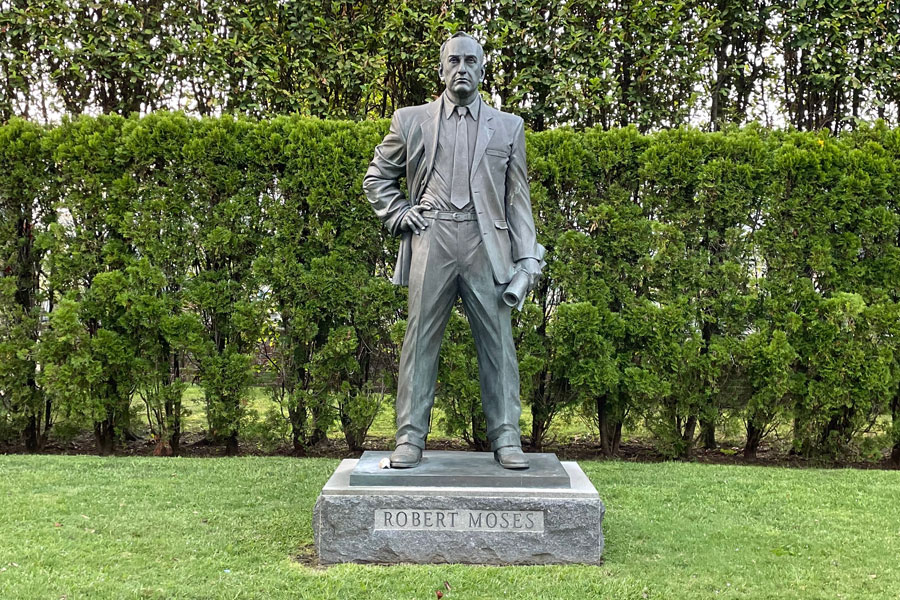
Robert Moses (1888–1981) was one of the most influential and controversial public officials in New York history. Although he never held elected office, he amassed extraordinary power through a series of appointed roles and helped shape the physical landscape of New York City, Long Island, and the wider region. His projects permanently altered how New Yorkers live, travel, and reach the waterfront.
On Long Island, his legacy is especially visible in the parkways, beaches, bridges, and state parks that continue to shape travel and recreation today. Visitors are most likely to encounter his name at Jones Beach State Park, Robert Moses State Park, and the Robert Moses Causeway.
Early Life and Career
Born in New Haven, Connecticut, Moses was educated at Yale, Oxford, and Columbia. By the 1920s, he had risen to prominence in New York government, where his skill at drafting legislation and navigating political systems allowed him to consolidate unusual power. Through multiple appointed positions rather than elected office, he gained broad influence over planning, funding, and construction across the state and city.
Vision and Achievements
Moses believed in remaking cities and suburbs through roads, bridges, beaches, parks, and large public works. Over his decades-long career, he directed or strongly influenced the construction of:
- Parks and Beaches – Moses played a leading role in expanding Long Island’s public park system, most famously at Jones Beach State Park, which opened in 1929 and remains one of New York’s best-known oceanfront destinations. His work broadened public access to recreation and shoreline parkland for generations of residents and visitors.
- Parkways and Highways – He played a major role in Long Island’s parkway system, including the Northern State Parkway, Southern State Parkway, Wantagh State Parkway, and Meadowbrook State Parkway, and later influenced broader regional highway planning, including the Long Island Expressway. These routes linked city residents with suburban communities, beaches, and growing commercial centers.
- Bridges and Tunnels – Projects such as the Triborough Bridge (now the Robert F. Kennedy Bridge), Bronx-Whitestone Bridge, Throgs Neck Bridge, and Verrazzano-Narrows Bridge reflected his drive to connect the wider metropolitan region.
- Urban Renewal Projects – Moses directed or shaped large-scale construction tied to public housing, Lincoln Center for the Performing Arts, the original Shea Stadium, and other projects that redefined New York’s cultural and civic landscape.
Controversy and Criticism
While Moses was widely praised for his accomplishments, he was equally criticized for his methods and priorities. His preference for automobile-oriented development over public transit helped reshape New York into a more car-dependent region, contributing to congestion, sprawl, and environmental strain. Some historians and advocates have also argued that design choices on certain Long Island parkways, especially low clearances, limited bus access to destinations such as Jones Beach; aspects of that history remain debated, but the broader equity concerns are a lasting part of his record.
His urban renewal programs also came at the expense of established neighborhoods, displacing large numbers of residents and prioritizing large-scale clearance over community preservation. His autocratic style, use of unelected authority, and resistance to public input made him one of the most divisive figures in American planning history.
Legacy
By the late 1960s, Moses’s influence had begun to wane, but his imprint on New York remained enormous. Sources vary, but he is commonly associated with an immense portfolio that included parkways and highways, major bridges and tunnels, parks, beaches, playgrounds, public pools, and other large public works across the region.
Moses’s story was famously chronicled in Robert Caro’s Pulitzer Prize-winning book The Power Broker, which cemented his reputation as both a planning genius and a symbol of unchecked authority. Today, his legacy remains a subject of debate: visionary modernizer to some, and ruthless power broker to others.
Where Visitors Encounter Robert Moses on Long Island
Travelers do not need to visit a museum to see Moses’s imprint on Long Island. His influence is woven into trips to Jones Beach, drives along the state parkway system, crossings over the Robert Moses Causeway, and visits to Robert Moses State Park at the western end of Fire Island. In Babylon Village, a public statue offers a more direct reminder of the man behind many of those projects.
Area Snapshot: Robert Moses and Long Island
| Contribution | Impact |
|---|---|
| Jones Beach State Park | Opened in 1929 and still one of the South Shore’s signature public beach destinations. |
| Long Island Parkway System | Parkways including Southern State, Northern State, Wantagh, and Meadowbrook helped connect communities, beaches, and suburban growth corridors across Long Island. |
| Robert Moses State Park & Causeway | Remain closely tied to his Long Island legacy and continue to provide access toward the western end of Fire Island. |
| Parks & Recreation | Expanded public access to beaches, parkland, and outdoor recreation for generations of New Yorkers. |
Planning a visit? Park hours, parking fees, beach access, and seasonal facilities can change. Check the official Jones Beach State Park page or the official Robert Moses State Park page before heading out.
Robert Moses redefined New York’s infrastructure and public spaces in ways that still affect everyday life. His vision helped turn Long Island into a major hub of suburban living and seaside recreation, while his projects in New York City reshaped neighborhoods, transportation, and public space. Admired by some and criticized by others, Moses remains a towering figure in urban history—a reminder of how one person’s decisions can expand access, transform landscapes, and leave lasting debate behind.
Are you ready for fall on Long Island? Check out these local seasonal guides:
🍎 Apple Picking | 🍂 Fall Festivals & Farm Activities | 👻 Haunted Houses | 🎃 Pumpkin Picking