
Bronx–Whitestone Bridge
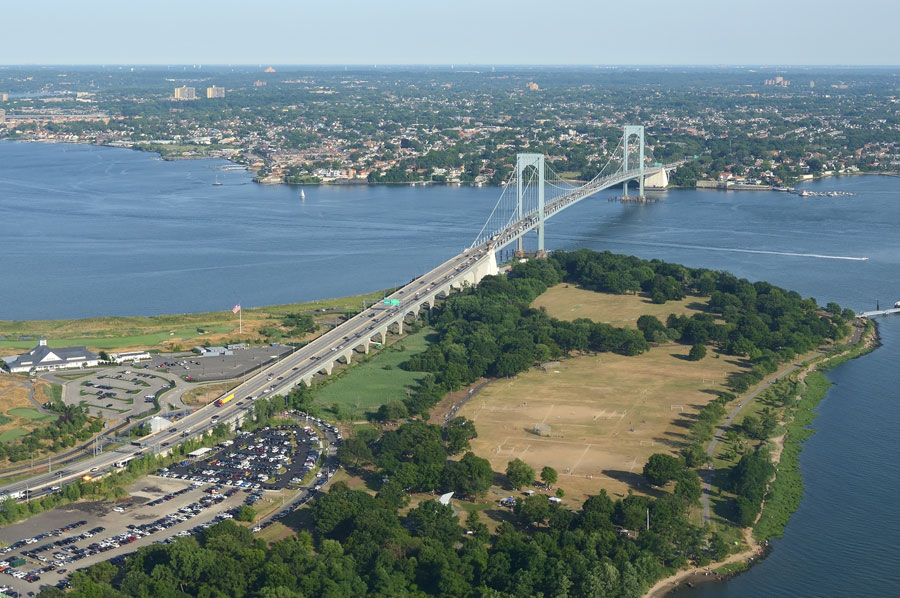
The Bronx–Whitestone Bridge, often simply called the Whitestone Bridge, is a suspension bridge carrying Interstate 678 between the Whitestone section of Queens and the Ferry Point area of the Bronx across the East River tidal strait. Opened in 1939 on the eve of the 1939–1940 New York World’s Fair, it remains one of the key vehicular links between Long Island, New York City, and points north.
History
- World’s Fair Era: The bridge opened on April 29, 1939, one day before the New York World’s Fair. It was part of the larger fair-era highway program championed by Robert Moses and was engineered by noted bridge designer Othmar H. Ammann.
- Design Changes: Originally built with a very slender profile and minimal stiffening, the bridge experienced noticeable movement in strong winds. Additional trusses and bracing were added in the 1940s and 1950s to improve stability.
- Modernization: Over the decades, the bridge has undergone continued maintenance and upgrades, including resurfacing, structural work, lighting improvements, and the transition to cashless toll collection.
Design & Features
- Bridge Type: Suspension bridge with a notably streamlined appearance.
- Total Length: Approximately 3,770 feet (about 0.71 miles).
- Main Span: 2,300 feet, making it one of the world’s longest suspension spans at the time it opened.
- Roadway: Six vehicular lanes; lane use, traffic patterns, and occasional restrictions may vary during maintenance, incidents, or peak travel periods.
- Tolling: Fully cashless, typically via E-ZPass or Tolls by Mail. Rates and policies may change, so it is wise to check ahead before traveling.
Importance for Long Island Travelers
The Whitestone Bridge is one of the most direct routes for Long Islanders heading to the Bronx, Westchester, Connecticut, and New England. Located west of the Throgs Neck Bridge, it provides:
- Connection to I-678 (Whitestone Expressway) – linking the crossing with Queens and major roadways serving the rest of New York City, area airports, and Long Island roadways.
- Bronx access to regional routes – with connections to I-95, the Hutchinson River Parkway, and other highways leading toward the Bronx, Westchester, Connecticut, and points north.
- Alternative to Throgs Neck – the two bridges work together to move regional traffic, though both can be heavily congested during rush hours, holiday periods, and construction work.
Because travel times can change quickly, drivers should check current traffic conditions, tolls, and advisories before departing. The official MTA Bronx–Whitestone Bridge page is a good source for up-to-date bridge information.
Nearby Landmarks
- Queens Side: The Whitestone and College Point areas, with waterfront parkland nearby and Flushing Meadows-Corona Park farther south as one of the best-known landmarks tied to the 1939 and 1964 World’s Fairs.
- Bronx Side: Ferry Point Park, a major waterfront green space with broad views of the bridge, shoreline, and surrounding waterways.
Q&A – Bronx–Whitestone Bridge
Q: Why was the Whitestone Bridge built?
A: It was built to create a more direct vehicular route between Queens and the Bronx, while also improving access for the 1939 World’s Fair and regional travel.
Q: How does the Whitestone compare to the Throgs Neck Bridge?
A: The Whitestone is older and is known for its streamlined suspension design. The Throgs Neck Bridge, which opened later, was built with a stiffer structural design and serves a similar regional traffic role.
Q: Can pedestrians or cyclists cross the Whitestone Bridge?
A: No. Like the Throgs Neck Bridge, it is restricted to motor vehicles and does not have a public pedestrian or bicycle path.
Q: What highways connect to the bridge?
A: I-678 feeds directly into the bridge. On the Bronx side, the route connects with I-95 and nearby Hutchinson River corridors, making it an important gateway for travel north of New York City.
Bronx–Whitestone Bridge
Area Snapshot
| Feature | Details |
|---|---|
| Opened | April 29, 1939 |
| Bridge Type | Suspension |
| Main Span | 2,300 feet |
| Total Length | 3,770 feet |
| Lanes | 6 |
| Operator | MTA Bridges & Tunnels |
| Primary Connection | Queens (Whitestone Expressway / I-678) ↔ Bronx (I-678 with connections to I-95, the Hutchinson River Parkway, and other regional routes) |
The Bronx–Whitestone Bridge remains one of the most important links between Long Island, New York City, and the Northeast. Its location near LaGuardia Airport, northern Queens, and the Bronx makes it a practical route for many drivers heading north. Together with the Throgs Neck Bridge, it forms a major transportation corridor; however, tolls, traffic patterns, and travel times can change, so checking ahead before traveling is always recommended.
Are you ready for fall on Long Island? Check out these local seasonal guides:
🍎 Apple Picking | 🍂 Fall Festivals & Farm Activities | 👻 Haunted Houses | 🎃 Pumpkin Picking