

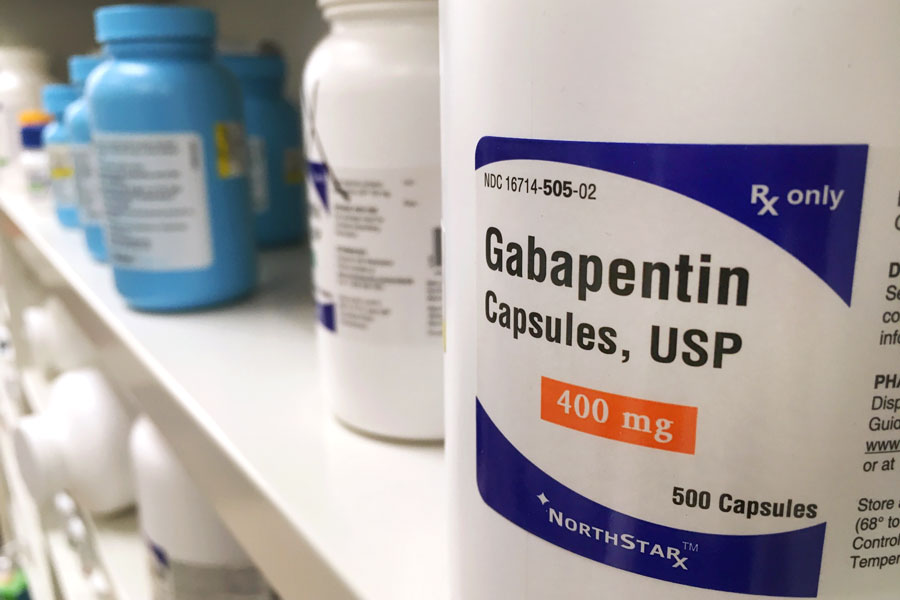
NEW YORK, NY – Gabapentin began as a medication for epilepsy and later gained approval for a specific form of nerve pain. More than three decades later, it has become one of the most commonly prescribed drugs in the United States, routinely given for conditions ranging from back pain and neuropathy to insomnia, hot flashes and other problems for which the medication was never specifically approved.
That remarkable transformation is drawing renewed attention as researchers examine whether gabapentin’s enormous expansion has outrun the medical evidence supporting some of its uses.
A recent Epoch Times investigation described gabapentin as a medication that has increasingly become a “pill for everything,” reporting that it now ranks among the most prescribed medications in the country and that the vast majority of prescriptions are for off-label uses. Independent medical research, federal safety warnings and prescribing data broadly support the central point: gabapentin use has increased dramatically, much of that use occurs outside its original FDA-approved indications, and evidence of effectiveness varies considerably depending upon what doctors are trying to treat.
From Epilepsy Drug to Widely Used Pain Medication
The U.S. Food and Drug Administration currently approves Neurontin, a brand of gabapentin, for management of postherpetic neuralgia in adults and as an additional therapy for partial-onset seizures in adults and children age 3 and older with epilepsy. Postherpetic neuralgia is persistent nerve pain that can remain after a case of shingles.
Those approved indications, however, explain only part of gabapentin’s modern use.
Doctors are legally permitted to prescribe an FDA-approved medication for conditions other than those listed on its approved labeling when they believe doing so is medically appropriate. This practice is known as off-label prescribing and is common throughout medicine.
Gabapentin has become an unusually prominent example.
A national analysis published in JAMA Internal Medicine examining prescription data from 2006 through 2018 noted that approximately 95 percent of gabapentin prescriptions were being used for off-label pain management. The researchers also documented a major increase in gabapentin prescribing during that period.
Earlier research has similarly found exceptionally high rates of off-label gabapentin use, although the exact percentage differs substantially depending on the population, time period and method used to identify prescriptions. One JAMA Internal Medicine study examining primary-care prescribing found more than 99 percent of gabapentin prescriptions within that particular dataset were off-label.
Those numbers should not be interpreted to mean that an off-label prescription is automatically inappropriate. Some off-label treatments are supported by significant clinical experience and scientific evidence.
The more important question is whether the evidence is equally convincing for all of the conditions for which gabapentin is now being prescribed. It isn’t.
Why Gabapentin Became So Popular
Part of gabapentin’s growth can be understood through the evolution of pain treatment in the United States.
As the medical community became increasingly concerned about opioid addiction, dependence and fatal overdoses, physicians faced enormous pressure to find nonopioid ways to treat chronic pain.
Gabapentin offered several advantages. It was already familiar to physicians, became inexpensive after generic versions reached the market, was not an opioid, and had demonstrated usefulness for certain forms of neuropathic pain.
Prescribing expanded.
Research involving commercially insured Americans between ages 18 and 64 found that gabapentin prescribing increased significantly between 2009 and 2016. Researchers noted that the medication was being prescribed for a variety of conditions and frequently used off-label.
But nerve pain and ordinary back pain are not necessarily the same thing, and that distinction becomes important when evaluating how well the medication works.
Evidence for Ordinary Chronic Back Pain Is Surprisingly Weak
Gabapentin can have legitimate value in treating certain types of nerve-related pain. The evidence becomes much less impressive when researchers look at nonspecific chronic low-back pain.
A systematic review and meta-analysis of randomized controlled trials found only limited evidence supporting gabapentinoids for chronic low-back pain.
In trials comparing gabapentin with placebo, researchers found minimal improvement in pain while patients taking gabapentin experienced higher rates of dizziness, fatigue, difficulty thinking and visual disturbances. The researchers concluded that the available evidence showed significant risk of adverse effects without demonstrated meaningful benefit for nonspecific chronic low-back pain.
A randomized, placebo-controlled trial involving 108 people with chronic back pain reached a similar conclusion.
Pain declined by roughly 30 percent among participants receiving gabapentin, but it also declined by approximately the same amount among participants receiving a placebo. There was no statistically significant difference between the groups in either pain or disability.
A more recent systematic review published in 2023 found that the available research remained too limited to make strong conclusions about gabapentin or pregabalin for chronic low-back pain without radiculopathy or neuropathy. Some individual findings suggested possible benefit, but researchers concluded that high-quality information supporting their use remained lacking.
That distinction matters. A medication prescribed for a patient with a clearly defined neuropathic condition may have a very different evidence base than the same medication being given for generalized or nonspecific back pain.
Gabapentin Also Has a Controversial History
The extraordinary amount of off-label gabapentin prescribing has historical roots that predate the opioid crisis.
Gabapentin was originally sold under the brand name Neurontin by Parke-Davis, a division of Warner-Lambert.
In 2004, Warner-Lambert agreed to plead guilty and pay more than $430 million to settle criminal charges and civil liabilities related to the illegal promotion of Neurontin for uses that had not been approved by the FDA.
According to the U.S. Department of Justice, the company promoted the medication for conditions including pain disorders, migraine, bipolar disorder and other uses. Federal prosecutors said promotional efforts included payments to physicians attending consultant meetings, dinners and conferences where off-label uses were discussed.
The case did not establish that physicians were prohibited from prescribing Neurontin off-label. Doctors retain that authority.
The legal case instead concerned the manufacturer’s promotion of the medication for unapproved uses, including allegations that misleading information was provided to medical professionals.
Today’s extraordinary level of gabapentin prescribing cannot simply be attributed to pharmaceutical marketing from the 1990s. The medication has now been generic for years, and its use has become deeply established in pain medicine.
But the history helps explain why questions about gabapentin’s off-label expansion have followed the drug for decades.
FDA Warns About Potentially Serious Breathing Problems
Gabapentin is generally tolerated by many patients, but it is not free of significant risks.
Common adverse effects include dizziness, sleepiness and problems with coordination.
Of particular concern is what happens when gabapentin is combined with other medications that suppress the central nervous system.
In 2019, the FDA issued a warning that serious breathing difficulties can occur in people taking gabapentin or the related medication pregabalin when certain respiratory risk factors are present.
Those factors include taking opioid pain medications or other central nervous system depressants, having underlying illnesses that impair lung function, and being elderly.
The FDA required new respiratory-depression warnings to be added to prescribing information and also ordered manufacturers to conduct additional studies into the abuse potential of gabapentinoids, particularly when combined with opioids.
The concern is particularly relevant because gabapentin and opioids are sometimes prescribed to the same patients.
A JAMA report examining overdose data found gabapentin detected in 5,687 of 58,362 overdose deaths with available toxicology information across 23 states and Washington, D.C., during 2019 and 2020. In nearly 3,000 of those cases, officials determined that gabapentin contributed to the death.
Most such deaths involved other substances, particularly opioids, making the findings very different from saying gabapentin alone caused thousands of fatal overdoses.
New Study Raises Another Question: Cognitive Decline
The newest controversy surrounding gabapentin involves something entirely different: possible long-term cognitive effects.
A 2025 study published in the BMJ journal Regional Anesthesia & Pain Medicine examined whether gabapentin prescriptions were associated with subsequent dementia or mild cognitive impairment among adults with chronic low-back pain.
Researchers analyzed medical records covering the period from 2004 through 2024 and ultimately compared 26,416 adults after statistical matching intended to make the gabapentin and non-gabapentin groups more comparable.
The results attracted attention.
Patients receiving six or more gabapentin prescriptions had a 29 percent higher incidence of dementia and an 85 percent higher incidence of mild cognitive impairment than matched patients who had not been prescribed the medication.
Among adults ages 18 through 64, the association was even stronger. Researchers reported more than twice the incidence of dementia and approximately two-and-a-half times the incidence of mild cognitive impairment among patients prescribed gabapentin.
Greater prescription frequency was also associated with higher incidence of cognitive problems.
Those findings deserve attention.
They do not prove that gabapentin causes dementia.
Association Is Not the Same as Cause
The dementia study was retrospective and observational. Researchers examined existing medical records rather than randomly assigning people to take gabapentin or a placebo and following them prospectively.
That limitation is extremely important.
People who receive repeated gabapentin prescriptions may differ from people who do not receive the medication in ways that themselves influence cognitive health.
They may have more severe chronic pain, different underlying diseases, sleep problems, psychiatric conditions, greater exposure to other medications or other characteristics that cannot be perfectly controlled through statistical analysis.
The researchers attempted to reduce those differences using propensity-score matching and excluded patients with several conditions that could complicate the analysis.
Even so, observational research can establish an association. It cannot by itself establish causation.
The study’s authors consequently did not conclude that gabapentin causes dementia. They reported an association between gabapentin prescribing and increased incidence of dementia and mild cognitive impairment and suggested that clinicians monitor patients for possible cognitive effects.
The difference may sound technical, but for someone currently taking gabapentin it is probably the most important distinction in the entire story.
The findings do not mean that taking gabapentin will cause dementia.
They mean researchers have observed a signal significant enough to warrant additional study.
So Is Gabapentin Being Overprescribed?
There is no simple answer.
Gabapentin is not an ineffective medication masquerading as a useful one. It has established medical uses and can provide substantial relief to some patients, particularly those suffering from certain forms of neuropathic pain.
Nor is off-label prescribing itself evidence of poor medicine.
The concern is that gabapentin has expanded far beyond its relatively narrow FDA-approved indications into numerous conditions for which the quality of evidence ranges from reasonably supportive to surprisingly weak.
That makes the rapid growth of prescribing noteworthy.
The most sensible evaluation may therefore be less about whether gabapentin is a “good” or “bad” drug and more about whether an individual prescription has a clearly defined purpose.
- What condition is being treated?
- Is the pain actually neuropathic?
- Is the medication providing noticeable relief?
- What dose is necessary?
- Are other medications being taken that could increase sedation or respiratory risk?
- And if gabapentin is being used for months or years, does the benefit continue to outweigh the potential risks?
Those are particularly reasonable questions for patients taking the medication for back pain because the term “back pain” can describe very different medical problems, ranging from nonspecific muscular pain to nerve compression and radiculopathy.
Patients Should Not Abruptly Stop Taking Gabapentin
The growing research surrounding gabapentin should not prompt patients to suddenly discontinue medication that has been prescribed to them.
FDA-approved prescribing information specifically recommends gradually tapering gabapentin when the medication is discontinued, reduced or substituted rather than abruptly stopping it.
Patients concerned about side effects, long-term use or whether gabapentin is appropriate for their particular condition should discuss those questions with the physician who prescribed it.
That conversation is becoming increasingly relevant.
Gabapentin has traveled an unusual path from a specialized epilepsy treatment to a medication prescribed to millions of Americans for an extraordinary variety of complaints.
Some of that expansion reflects legitimate medical need and evidence that the drug can help certain patients.
Some of it remains far less certain.
The emerging cognitive research adds another unanswered question, but perhaps the larger story is one that has been developing for years: a medication originally approved for a small number of specific conditions has quietly become a standard answer to an enormous range of medical problems.
After decades of rapidly expanding use, researchers are now trying to determine where gabapentin genuinely helps, where it does not, and where the risks may have been underestimated.
Are you ready for fall on Long Island? Check out these local seasonal guides:
🍎 Apple Picking 🍓 Strawberry Picking 🎃 Pumpkin Picking 👻 Haunted Houses 🍂 Farm Festivals