
Barcelona Neck
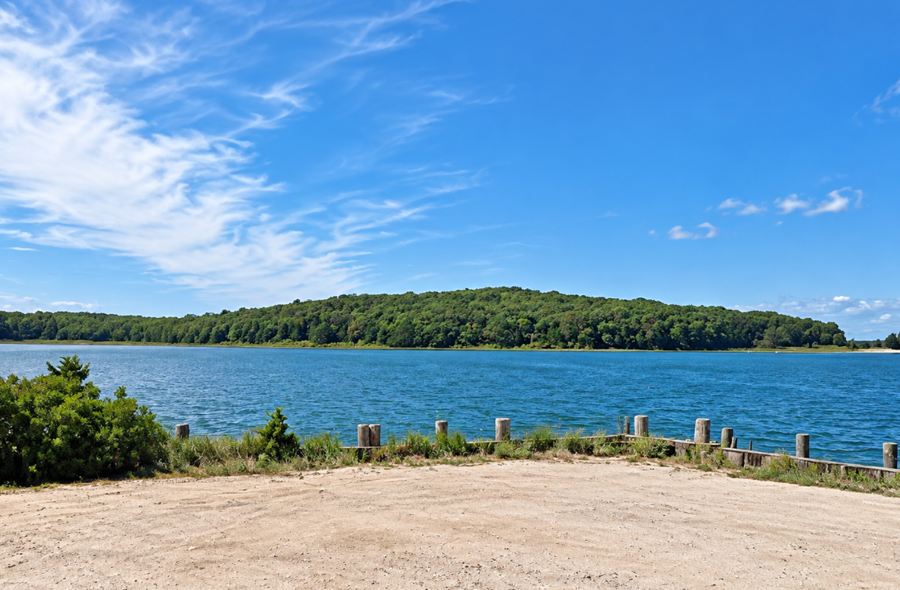
Barcelona Neck, officially known as the Linda A. Gronlund Memorial State Forest at Barcelona Neck, is a protected wooded peninsula in the Town of East Hampton in eastern Suffolk County. Extending into the waters around Northwest Harbor and the Peconic Bay system near Sag Harbor, the state forest protects more than 500 acres of coastal woodland, Pine Barrens habitat, tidal wetlands, sandy shoreline, wooded swamps and elevated terrain overlooking the surrounding waterways.
The preserve is one of the more varied natural areas on the eastern end of Long Island. Visitors can hike through pine and hardwood forest, follow old woodland roads, walk near tidal marshes and climb hills and bluffs that provide views across Northwest Harbor. Despite its proximity to Sag Harbor and the Hamptons, much of Barcelona Neck remains undeveloped and retains the character of a large coastal forest.
Linda A. Gronlund Memorial State Forest
New York State officially identifies the property as the Linda A. Gronlund Memorial State Forest at Barcelona Neck. The forest was named in memory of Sag Harbor resident Linda Gronlund, who was aboard United Airlines Flight 93 when it crashed in Pennsylvania during the September 11, 2001 terrorist attacks. The New York State Department of Environmental Conservation dedicated the preserve in her honor on September 11, 2004.
The historic geographic name Barcelona Neck remains widely used for the peninsula and its trail system. The combination of the familiar local name and the memorial designation means visitors may encounter several variations of the property’s name on maps, trail information and references to the surrounding natural area.
A Coastal Forest and Tidal Wetland
Barcelona Neck protects an unusual combination of upland and coastal environments. The wooded peninsula extends into the Northwest Harbor area and is bordered in places by sandy shoreline. Within the property is Little Northwest Creek, which the New York State Department of Environmental Conservation identifies as a high-quality tidal wetland.
The landscape changes considerably over relatively short distances. Pine and hardwood woodland give way to low-lying wetlands, wooded swamps, salt-marsh environments and open shoreline. Higher portions of the peninsula rise well above the surrounding wetlands, producing scenic views that are uncommon in many of Long Island’s flatter coastal preserves.
Local trail organizations describe bluffs reaching approximately 80 feet in elevation. The forest also supports vegetation associated with both upland and wetland environments, including tupelo, sweet pepperbush, chokeberry, swamp azalea and extensive areas of fern. This variety of habitat makes Barcelona Neck valuable not only as recreational open space but also as part of the larger network of protected coastal habitat surrounding Northwest Harbor.
Hiking at Barcelona Neck
Hiking is one of the principal recreational activities at Barcelona Neck. The New York State Department of Environmental Conservation describes a blue-blazed foot trail that forms an easy loop of approximately 4 to 5 miles. Several hills along the route provide elevated views of the surrounding landscape and waterways.
The complete trail network is larger than the primary state-described loop. The East Hampton Trails Preservation Society identifies approximately seven miles of trails across Barcelona Neck, including old roads and paths that pass through forest, wetlands and coastal terrain. Some of these routes follow historic Trustee roads with origins dating to the 1700s.
Trail conditions can vary considerably within the preserve. Some sections follow relatively broad woods roads, while others pass through wetter ground, pine woods and more enclosed vegetation. Visitors should be prepared for natural trail surfaces, seasonal mud, roots, wet areas and changing conditions rather than expecting the groomed paths and developed facilities found in conventional parks.
Bluffs and Views of Northwest Harbor
One of Barcelona Neck’s distinguishing characteristics is its combination of forest hiking and open water views. Trails reach elevated areas overlooking Northwest Harbor, while other portions approach tidal wetlands and sandy shoreline. Historic hiking routes through the preserve have been noted for views toward Shelter Island, Cedar Point Lighthouse and the surrounding Northwest Woods landscape.
The contrast between dense woodland and open shoreline is particularly pronounced. A visitor can move from enclosed forest to marsh, beach or an elevated harbor overlook within a relatively short distance, giving Barcelona Neck a more varied landscape than its location near developed East End communities might suggest.
Little Northwest Creek
Little Northwest Creek is one of the preserve’s most important natural features. The tidal wetland lies within the protected landscape and contributes to the larger Northwest Harbor estuarine environment. Salt marsh, creek habitat, wooded wetlands and adjacent uplands create a transition between terrestrial and marine ecosystems.
Protecting the creek and its surrounding forest helps preserve wildlife habitat while limiting development immediately around a sensitive coastal wetland. The wetland is also an important part of the scenery encountered along the trail network, particularly where wooded routes approach the lower portions of Barcelona Neck.
Centuries of Local History
Barcelona Neck is also a historic landscape. The peninsula was once known as Russell’s Neck, a name associated with an early settler in the area. A small Russell family cemetery remains within the landscape, providing a physical connection to the area’s early settlement history.
Some of the roads now used as recreational trails have much older origins. Local trail historians identify Trustee roads through Barcelona Neck that date to the 18th century, when woodland roads and paths connected farms, settlements, landing places and other locations around Northwest Harbor.
Ruins of the Connor family house, built during the 1920s, provide another visible reminder that the property was not always an undeveloped preserve. Foundations and other remnants encountered in the woods reflect earlier periods of private use before the land became protected public open space.
The Historic Northwest Landscape
Barcelona Neck forms part of a much larger historic landscape surrounding Northwest Harbor. The Northwest area was once an important center of settlement, farming and maritime activity in the Town of East Hampton. Before Sag Harbor developed into a major port, Northwest Harbor served as an important harbor for the community, with farms, roads, landing places and maritime activity spread across the surrounding countryside.
Today, substantial portions of that landscape remain protected. Barcelona Neck, the nearby Grace Estate and other public lands preserve large areas of woodland and shoreline around Northwest Harbor. Trails in the broader area allow hikers to experience both the natural environment and remnants of the roads and settlement patterns that preceded modern development.
Sag Harbor State Golf Course
Sag Harbor State Golf Course occupies part of the Barcelona Neck landscape and creates an unusual juxtaposition of public recreation and protected woodland. The nine-hole public course is surrounded by forest and shares its principal entrance area with the state forest.
Because the golf course lies within the larger protected landscape, hikers may encounter the course or golf-related access roads while exploring the trail system. Visitors should remain aware of trail markings and respect the boundaries and active areas of the golf course when moving through this portion of Barcelona Neck.
Paddling and Water Access
The New York State Department of Environmental Conservation also identifies paddling as a recreational activity associated with Barcelona Neck. The peninsula’s position around Northwest Harbor, Sag Harbor Bay and the surrounding tidal waterways places it within one of the East End’s extensive protected-water environments.
Water conditions, tides, wind and shoreline access can affect paddling opportunities, and visitors should consult current state information before planning a trip. The area’s marshes and tidal creeks are environmentally sensitive, making low-impact recreation particularly important.
Wildlife and Natural Habitat
The combination of coastal forest, tidal wetland, wooded swamp, sandy shoreline and upland habitat supports a diverse wildlife community. Deer and other woodland mammals use the forested interior, while birds, reptiles, amphibians and wetland species benefit from the property’s marshes, creeks and relatively undeveloped shoreline.
Barcelona Neck is particularly valuable because these habitats remain connected across a comparatively large tract of protected land. Rather than preserving a single beach, wetland or patch of woodland, the state forest protects a broader ecological transition from interior forest to tidal creek and harbor shoreline.
Access and Parking
Barcelona Neck is located along New York State Route 114 between East Hampton and Sag Harbor. According to the New York State Department of Environmental Conservation, the property is approximately five miles north of Main Street, Route 27/Montauk Highway, in East Hampton and approximately two miles south of Main Street in Sag Harbor.
The preserve shares an entrance with Sag Harbor State Golf Course at approximately 40.992051, -72.268383. DEC states that there are no official parking areas specifically provided on the state-forest property, although roadside parking is permitted where appropriate. Visitors should park carefully and respectfully and avoid blocking roads, gates or access points.
Visiting the State Forest
The Linda A. Gronlund Memorial State Forest is open for recreation year-round and there is no admission fee. Because it is managed as state forest and natural-resource land rather than as a developed municipal park, visitors should not expect extensive recreational infrastructure. The principal attractions are the trails, forest, wetlands, shoreline, scenery and historic landscape.
Visitors should follow New York State Department of Environmental Conservation regulations for state-managed lands in Suffolk County and practice Leave No Trace principles. Trail conditions, access restrictions and permitted activities can change, so current DEC information should be checked before traveling, particularly when planning seasonal activities.
Nearby Protected Lands
Barcelona Neck is part of an unusually large concentration of preserved land around Northwest Harbor and the eastern end of Long Island. Nearby protected areas include Cedar Point County Park, the Grace Estate and other state, county and town conservation lands. Together, these properties preserve extensive stretches of forest, wetland and shoreline in the Town of East Hampton.
The proximity of these preserves also makes the area significant for hiking. Local trail systems extend beyond individual property boundaries and connect portions of the Northwest Woods landscape, allowing experienced hikers to explore considerably more territory than the primary Barcelona Neck loop alone.
Barcelona Neck
Key Facts & Details
| Common Name | Barcelona Neck |
| Official Name | Linda A. Gronlund Memorial State Forest at Barcelona Neck |
| Location | Town of East Hampton, near Sag Harbor |
| County | Suffolk County |
| Region | East End of Long Island |
| Size | More than 500 acres |
| Managing Agency | New York State Department of Environmental Conservation |
| Primary Habitats | Coastal forest, Pine Barrens habitat, tidal wetlands, wooded swamps, sandy shoreline and uplands |
| Major Wetland | Little Northwest Creek |
| Primary Hiking Route | Blue-blazed loop of approximately 4 to 5 miles |
| Broader Trail Network | Approximately seven miles of trails identified by local trail organizations |
| Historic Features | 18th-century Trustee roads, Russell family cemetery and Connor family house ruins |
| Nearby Golf Course | Sag Harbor State Golf Course |
| Recreation | Hiking, nature observation and paddling, subject to current state regulations |
| Open | Year-round |
| Admission | Free |
| Main Access | Route 114 / Sag Harbor State Golf Course entrance |
| Coordinates | 40.992051, -72.268383 |
| Parking | No official state-forest parking area; DEC permits careful roadside parking |
| Dedicated | September 11, 2004, in memory of Linda A. Gronlund |
Barcelona Neck preserves an uncommon combination of natural scenery, recreational trails and centuries of local history within a single protected landscape. From the forests and tidal wetlands surrounding Little Northwest Creek to historic Trustee roads, old homestead remains and elevated views across Northwest Harbor, the Linda A. Gronlund Memorial State Forest offers a largely undeveloped glimpse of the East End landscape while protecting more than 500 acres of public open space in Suffolk County.
Are you ready for fall on Long Island? Check out these local seasonal guides:
🍎 Apple Picking 🍓 Strawberry Picking 🎃 Pumpkin Picking 👻 Haunted Houses 🍂 Farm Festivals