
SUFFOLK COUNTY, NY — A federal jury has convicted two people in a nationwide fraud scheme involving more than $13 million in fraudulent reimbursement requests submitted by a transportation organization that claimed to serve elderly and disabled Americans. The organization held a New York State transportation contract covering Suffolk County and three other counties, but investigators found that it employed no legitimate drivers to perform the claimed services and submitted fabricated records to obtain taxpayer funding.
The convictions followed a multiweek trial in Utica, New York, where prosecutors presented evidence that Jael Watts, 45, of Alloway, New Jersey, and Luis Pino-Copete, 42, of Bogotá, Colombia, operated Pearl Transit Corporation as a fraudulent enterprise. The pair sought more than $13 million in federal reimbursements and successfully obtained more than $1.6 million, according to an October 2, 2026, announcement from the U.S. Department of Justice.
Although the fraudulent operation stretched across multiple states, the New York investigation began after the Office of State Comptroller Thomas P. DiNapoli discovered suspicious transportation invoices. State investigators eventually uncovered evidence that helped federal authorities expose the broader scheme.
Suffolk County Was Among Four New York Counties Named in Transportation Contract
The connection to Long Island dates to 2024, when Pearl Transit entered into a contract with the New York State Department of Transportation to provide transportation assistance to seniors and people with disabilities in Suffolk County, Putnam County, Rockland County, and Westchester County.
The transportation services were supposed to improve mobility for people who might otherwise struggle to reach medical appointments, essential services, and other destinations. Funding came through the Federal Transit Administration’s Section 5310 program, which supports transportation options for older adults and individuals with disabilities.
According to an October 17, 2025, announcement from the New York State Comptroller’s Office, Watts submitted three fraudulent invoices beginning in October 2024, totaling $1,275,550 for transportation services that never occurred.
As part of its routine oversight responsibilities, the comptroller’s office reviewed the invoices and identified inconsistencies. The resulting investigation found that Watts had fabricated supporting documents, including time records for drivers who had never worked for the company.
New York authorities stopped the attempted payments before the state released any money. The comptroller’s office subsequently worked with the U.S. Department of Transportation’s Office of Inspector General and federal prosecutors.
Fake Drivers, Stolen Identities and Passengers Who Were Already Dead
Federal investigators discovered that the fraud extended far beyond New York’s transportation program. Pearl Transit represented itself as an organization operating transportation and homeless outreach services across the country, but its records were largely fictional.
Evidence presented at trial established that the organization used stolen identities to create fraudulent employment records, payroll information, and passenger lists. Some individuals supposedly receiving transportation had already died before the dates of their claimed rides.
Other people identified as company drivers did not even possess driver’s licenses. Prosecutors reported that one purported driver held only a learner’s permit during the period when the company claimed she was transporting passengers.
The defendants also created false documentation in response to the New York audit, attempting to convince investigators that the nonexistent transportation services had actually been performed.
According to the Justice Department, messages recovered from the defendants’ phones showed them discussing how to manufacture records to satisfy investigators. In one exchange described by prosecutors, Watts boasted that investigators were less intelligent than the defendants.
More Than $1.6 Million Obtained Through Fraudulent Claims
While the defendants attempted to obtain more than $13 million through fraudulent reimbursement requests, the government identified over $1.6 million that was actually paid out through programs administered by state and local authorities.
The funds originated from federal programs administered by the U.S. Department of Transportation and the U.S. Department of Housing and Urban Development, including Community Development Block Grants and Emergency Solutions Grants. Some of the affected programs also received funding under the federal CARES Act during the COVID-19 pandemic.
According to the Justice Department, the defendants received $529,500 from Gwinnett County, Georgia; $429,885 from the Los Angeles County Metropolitan Transportation Authority; $379,149 from Raleigh, North Carolina; and $283,000 from Kern County, California.
These payments totaled approximately $1.62 million. The larger $13 million figure represents the amount of fraudulent reimbursements sought nationwide, not the amount actually collected.
Luxury Purchases and International Travel Financed by Fraudulently Obtained Funds
Prosecutors said the defendants used the fraudulently obtained money to finance an extravagant lifestyle that included luxury vehicles, expensive clothing, and international travel.
A review of their financial accounts found that more than $100,000 was spent renting Porsche vehicles, while another $100,000 went toward purchases at Loro Piana, a luxury Italian clothing retailer with a location in Manhattan.
The defendants also traveled extensively during 2024, visiting Colombia, Aruba, and several European destinations. Their travels included approximately four months in Europe, according to evidence introduced at trial.
Federal prosecutors presented photographs showing the defendants enjoying a Tuscan spa and visiting a BMW manufacturing facility. Those images were included in the Justice Department’s public announcement of the convictions.
The Scheme Also Involved Homemade Dentures for Homeless Individuals
Investigators uncovered another unusual component of the operation involving dental prostheses supposedly provided free of charge to homeless Americans.
According to the Justice Department, the defendants sought federal reimbursements for the dental services while manufacturing dentures at home using an unsanitary 3D printer. Rather than providing the services without charge as represented, they collected fees from homeless individuals for mouth scanning and denture fitting.
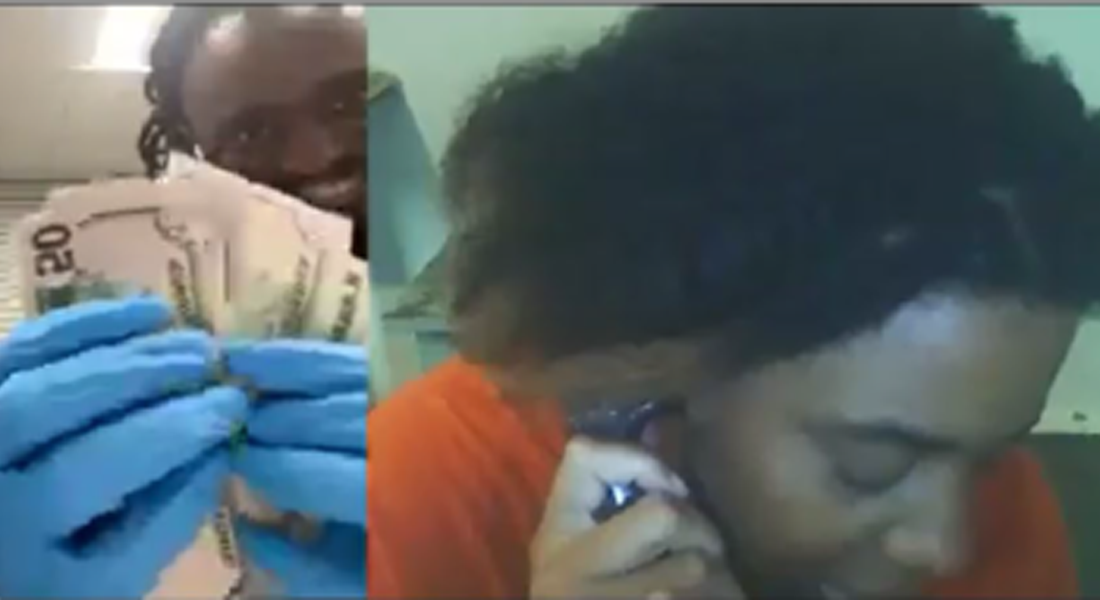
Prosecutors also described evidence showing Pino-Copete displaying cash received from a homeless dental customer at a Maryland flea market during a video call with Watts, who was incarcerated at the time.
Federal Jury Convicts Both Defendants
Watts was initially arrested in July 2025 after the investigation into Pearl Transit’s activities intensified. Searches of her electronic devices helped investigators identify Pino-Copete’s involvement, and he was subsequently arrested in December 2025.
Following a multiweek trial in federal court in Utica, a jury convicted both defendants on September 29, 2026. Watts was convicted of five wire fraud counts, a false-statement count, aggravated identity theft, conspiracy to commit wire fraud, and a false-document offense. Pino-Copete was convicted of conspiracy to commit wire fraud, a false-document offense, and aggravated identity theft.
Both defendants are scheduled to be sentenced January 21, 2027, before U.S. District Judge Anthony J. Brindisi. According to federal prosecutors, their convictions carry a mandatory minimum of two years in prison and potential penalties of up to 20 years in prison, fines of up to $250,000, and up to three years of supervised release. Both defendants also face a restitution order of at least $1.9 million.
According to the U.S. Department of Justice, Pino-Copete, a Colombian national who is not a U.S. citizen, also faces possible deportation following completion of any prison sentence.
Key Facts & Details
| Case | Pearl Transit Corporation federal program fraud scheme |
|---|---|
| Defendants | Jael Watts, 45, and Luis Pino-Copete, 42 |
| Long Island connection | Suffolk County, New York, was included in the transportation services contract |
| Other New York counties | Putnam, Rockland, and Westchester |
| New York fraudulent invoices | $1,275,550; no state payments made |
| Nationwide fraudulent claims | More than $13 million sought |
| Federal funds fraudulently obtained | More than $1.6 million |
| Investigating agencies | New York State Comptroller’s Office, U.S. DOT Office of Inspector General, and HUD Office of Inspector General |
| Federal court | U.S. District Court, Northern District of New York |
| Verdict date | September 29, 2026 |
| Scheduled sentencing | January 21, 2027 |
| Official sources | U.S. Department of Justice | New York State Comptroller | U.S. DOT Inspector General |
The case demonstrates how suspicious transportation invoices submitted to New York State, involving a contract that included Suffolk County, helped investigators uncover a much larger nationwide fraud operation. Although New York’s oversight process prevented the defendants from obtaining the disputed state payments, more than $1.6 million in federal funding intended to benefit elderly, disabled, and homeless Americans had already been fraudulently obtained elsewhere in the country.