
Long Island State Park Commission
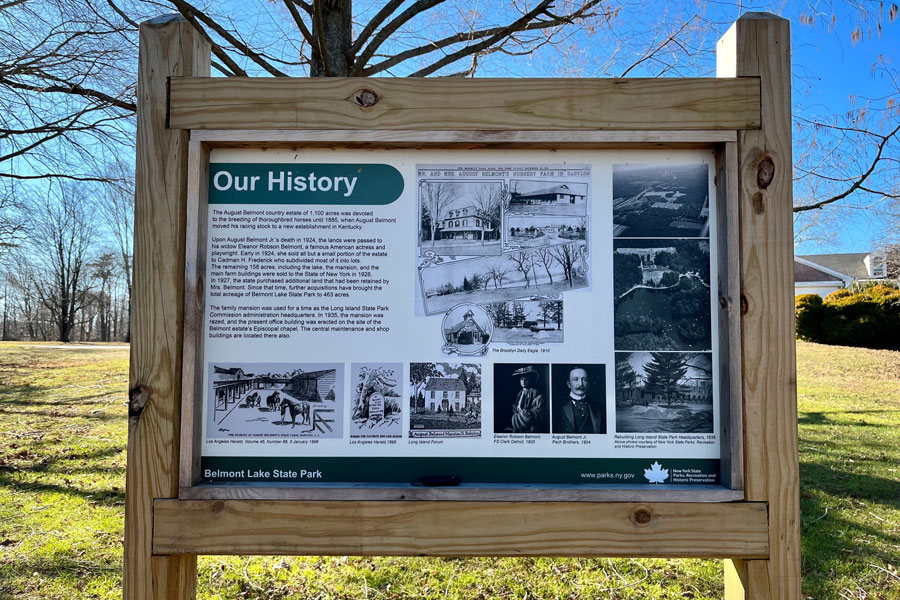
The Long Island State Park Commission was a New York State agency created in 1924 to plan, build, and oversee parks and parkways across Long Island. Its headquarters were based at Belmont Lake State Park in North Babylon, and its work helped shape many of the public landscapes and scenic roadways that still define the region today.
The commission no longer operates as a separate public agency. Over time, its park functions were absorbed into the New York State Office of Parks, Recreation and Historic Preservation, while parkway-related responsibilities shifted into other state transportation and public-safety structures. Even so, the commission’s legacy remains highly visible in Long Island’s state parks, parkways, and shoreline-access network.
Founding & Mission
- The commission was established during a period of rapid population growth and land development on Long Island, with the goal of creating a coordinated system of public open space and the parkways needed to reach it.
- The enabling legislation was closely associated with Robert Moses, who became the commission’s first president and its dominant public figure for decades.
- At the time of its creation, the state park presence on Long Island was still limited. Under the commission’s early expansion program, the system quickly grew in acreage, public visibility, and regional importance.
- Many of the lands assembled for park use had previously been held by private owners, estates, or water-supply interests, then repurposed into public recreational landscapes.
Key Figures: Robert Moses & Governance
- Robert Moses was central to the commission’s identity and direction, serving as its president from 1924 to 1963.
- The commission operated within a broader statewide park structure that included the State Council of Parks and other regional commissions, linking Long Island planning to wider New York park policy.
- Because Moses helped shape the commission’s framework, it exercised unusually strong influence over land acquisition, parkway planning, design standards, and large-scale public works.
Major Contributions & Projects
Parks Created / Managed
The Long Island State Park Commission played a major role in the creation, development, or administration of many of the island’s best-known state parks, including:
- Jones Beach State Park — the commission’s best-known achievement and one of the most influential public beach projects in New York, opened in 1929.
- Sunken Meadow State Park — advanced as part of the commission’s North Shore park vision, with access and infrastructure planned under Moses-era development.
- Belmont Lake State Park, Robert Moses State Park, Montauk Point State Park, Valley Stream State Park, and other prominent Long Island park properties.
- Bayard Cutting Arboretum — preserved for public use through state stewardship and later developed as one of Long Island’s signature horticultural and estate landscapes.
Parkway / Roadway System
One of the commission’s most distinctive features was its combined approach to parks and transportation. It did not simply create recreational destinations; it also advanced the parkways that connected them.
- The commission oversaw the planning and development of several major Long Island parkways, including the Northern State Parkway, Bethpage State Parkway, Sagtikos State Parkway, Sunken Meadow State Parkway, and related connections.
- The Sagtikos State Parkway, for example, helped close a gap in the island’s parkway network and reflected the commission’s broader strategy of linking inland communities with state park destinations.
- The parkway system emphasized scenic design, controlled access, landscaping, and a recreational travel experience that differed from ordinary commercial highway planning.
Records & Archival Material
- The Robert Moses Collection preserves extensive material from the commission era, including meeting minutes, correspondence, engineering drawings, architectural plans, photographs, and promotional publications.
- The New York State Archives and regional research collections on Long Island hold related material, sometimes alongside records from agencies such as the Jones Beach State Parkway Authority and Bethpage Park Authority.
- The commission also issued annual reports and planning studies tied to projects such as Jones Inlet improvements and parkway development, many of which survive as valuable historical references.
Decline, Transitions & Dissolution
- As New York reorganized its park and transportation agencies in the later 20th century, the commission’s once-independent role steadily diminished.
- Its park-related responsibilities became part of the statewide park system administered by the New York State Office of Parks, Recreation and Historic Preservation.
- Parkway administration, maintenance, and policing functions were also restructured over time, with responsibilities moving into other state agencies.
- The Long Island State Parkway Police, long associated with the commission’s parkway network, was disbanded around 1980 during that broader transition period.
Impact & Legacy
- The commission helped transform Long Island’s public-access landscape by pairing major parks with transportation corridors that made them reachable to a growing suburban population.
- Its model of linking park creation with roadway design became highly influential in regional planning, public works, and recreation policy.
- Many of Long Island’s most visited beaches, parklands, and scenic drives trace their origins to decisions made under the Long Island State Park Commission.
- Its records remain an important source for historians studying planning, conservation, infrastructure, and suburban growth on Long Island.
Experiencing the Commission’s Legacy Today
Travelers interested in the Long Island State Park Commission can still experience its legacy firsthand at places such as Jones Beach, Belmont Lake, Sunken Meadow, Montauk Point, and Robert Moses State Park. While the commission itself is historic, these destinations remain active parts of Long Island’s public recreation system. Hours, parking fees, beach access rules, and seasonal services can vary, so it is wise to check the official New York State Parks website before visiting.
Are you ready for fall on Long Island? Check out these local seasonal guides:
🍎 Apple Picking | 🍂 Fall Festivals & Farm Activities | 👻 Haunted Houses | 🎃 Pumpkin Picking