
Long Island Colonial Era & Revolutionary War
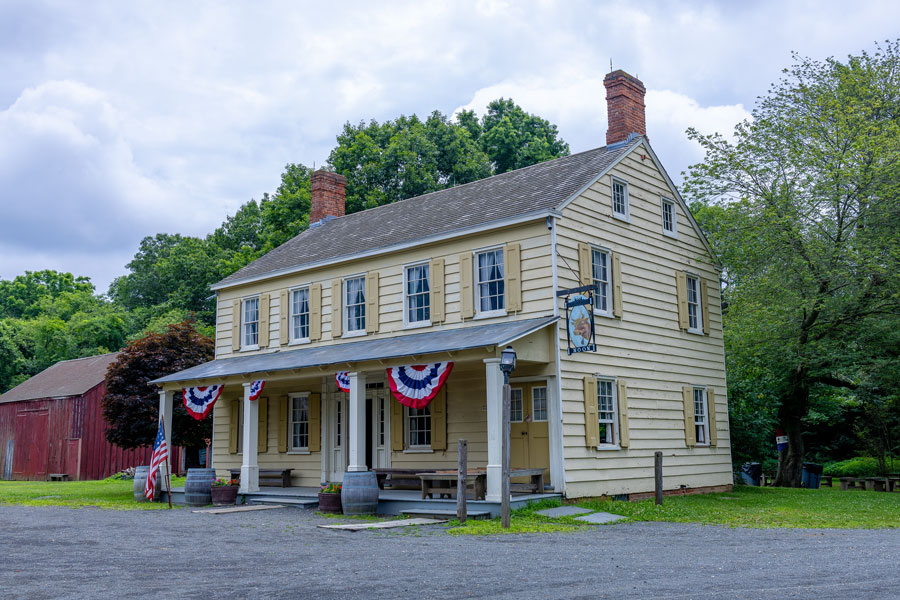
During the colonial period and the Revolutionary War, Long Island stood at the center of events that shaped both New York and the emerging United States. Long before European settlement, the island was home to Indigenous communities, and the colonial era unfolded on a landscape already defined by Native history, trade, and settlement. From early English towns in the 1600s to military occupation, divided loyalties, and wartime espionage in the 1700s, Long Island’s harbors, farms, villages, and strategic location made it a key part of the story. Today, preserved historic districts, local museums, and Revolutionary-era landmarks still help connect visitors to that past.
Early Colonial Settlements
Colonial Long Island did not develop in a single pattern. Eastern towns were shaped largely by English settlers from New England, while western parts of the island were influenced by the Dutch sphere around New Amsterdam before English control of New Netherland in 1664.
- Southold (1640): One of the earliest English settlements on Long Island, founded by Puritans from New England.
- Southampton (1640): Established the same year, it remains one of the oldest English towns in New York.
- Huntington, Brookhaven, and East Hampton: These growing communities developed around farming, maritime trade, town commons, and access to coastal waters, including the Long Island Sound.
- Oyster Bay & Hempstead: Important colonial settlements that later figured in regional trade, local politics, and Revolutionary-era activity.
Together, these settlements helped establish Long Island as a region of farms, fisheries, maritime trade, and small villages that would later be drawn into the struggle between Britain and the colonies.
The Revolutionary War on Long Island
Because of its proximity to New York City, its coastline, and its transportation routes by land and water, Long Island became strategically important almost immediately once the war reached the New York region.
The Battle of Long Island (1776)
- Also known as the Battle of Brooklyn, it was the first major battle of the war after independence was declared in 1776.
- Although the fighting took place mainly in what is now Brooklyn, at the western end of Long Island, the outcome affected the entire island.
- George Washington’s army was forced to retreat, and the British went on to hold New York City and much of Long Island for most of the war.
British Occupation
- From 1776 until the war’s end, much of Long Island remained under British control.
- Residents could face requisitions of food, livestock, and shelter, and daily life was often shaped by military needs.
- Communities were divided among Loyalist, Patriot, and neutral sympathies, creating lasting local tensions, dislocation, and hardship.
The Culper Spy Ring
- Long Island’s best-known Revolutionary War story is the Culper Spy Ring, one of the most famous intelligence networks of the war.
- Organized under George Washington, it included Abraham Woodhull of Setauket, known as “Samuel Culper Sr.”, and Robert Townsend of Oyster Bay, known as “Samuel Culper Jr.”
- The network operated through Setauket and other points on Long Island, gathering intelligence on British activity in New York City.
- Couriers and boatmen helped move messages between Long Island and the mainland, making the island an important link in Washington’s intelligence system.
- Anna Strong is traditionally associated with signaling methods linked to the ring, though some details have become part of local legend over time.
- The Culper network supplied Washington with valuable information and remains one of the island’s most enduring Revolutionary-era stories.
Legacy of the Colonial & Revolutionary Era
- Historic Places to Explore: Visitors can explore communities such as Setauket, Huntington, Oyster Bay, Southold, and Southampton, where colonial-era homes, churches, cemeteries, and historic districts help preserve the island’s early story.
- Museums, Markers & Local History Sites: Historical societies, house museums, memorials, and interpretive markers across Long Island provide context on settlement, wartime occupation, and espionage.
- Living History & Special Events: Reenactments, lectures, walking tours, and heritage programming are offered in some communities during the year, especially around major anniversaries and seasonal events.
- Place Names: Many towns, roads, and landmarks still carry names from the colonial period, linking present-day Long Island to its earliest European settlements and Revolutionary-era families.
If you plan to visit historic sites, keep in mind that many are operated by towns, nonprofits, or local historical societies. Hours, guided tours, and special programming can vary by season, and some properties open only on select days or for scheduled events, so it is wise to check ahead before making a dedicated trip.
Quick Snapshot
| Event/Aspect | Details |
|---|---|
| First English Settlements | Southold & Southampton (1640) |
| Colonial Influences | English settlement in the east; Dutch and English influence in the west before and after 1664 |
| Major Revolutionary War Battle | Battle of Long Island / Battle of Brooklyn (1776) |
| Wartime Condition | British control of much of Long Island for most of the war |
| Famous Spy Network | Culper Spy Ring, centered in Setauket with links across Long Island and New York City |
| Historic Communities Today | Setauket, Oyster Bay, Huntington, Southold, Southampton, Brookhaven area |
The colonial era and the Revolutionary War left a lasting imprint on Long Island. From early settlement and maritime trade to battlefield consequences, military occupation, and espionage, the island played an important role in the nation’s founding era. For today’s visitors, Long Island’s historic towns, preserved landmarks, and Revolutionary War stories offer a meaningful way to experience that history firsthand.
Are you ready for fall on Long Island? Check out these local seasonal guides:
🍎 Apple Picking | 🍂 Fall Festivals & Farm Activities | 👻 Haunted Houses | 🎃 Pumpkin Picking