
Van Wyck Expressway (I-678 in Queens)
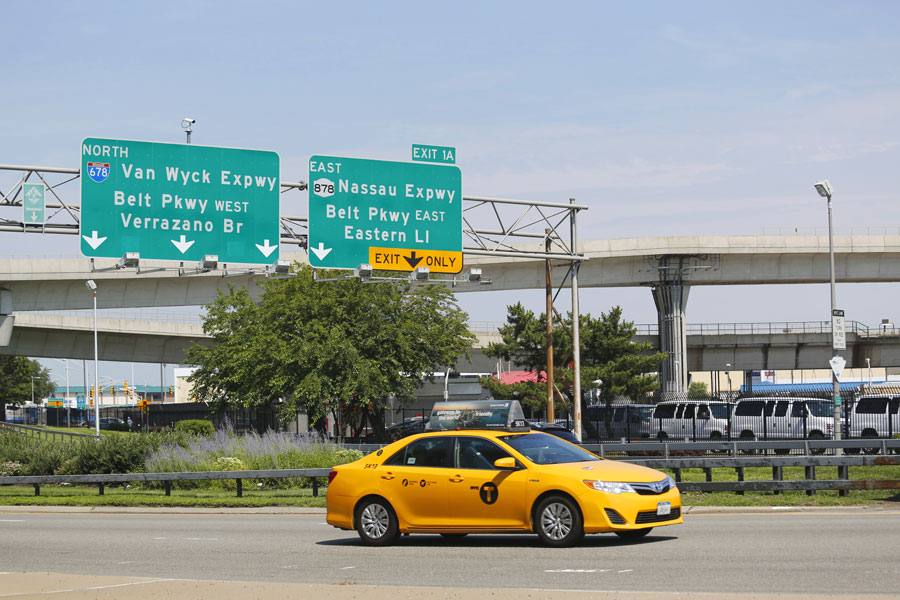
The Van Wyck Expressway is the Queens portion of Interstate 678 (I-678) best known to most travelers as the main highway approach to John F. Kennedy International Airport. Running generally north–south through central Queens, it links the Belt Parkway, the Nassau Expressway, airport roadways, and the Kew Gardens Interchange. North of Kew Gardens, I-678 continues as the Whitestone Expressway toward Flushing, College Point, and the Bronx-Whitestone Bridge. For many travelers from Long Island, the Van Wyck is one of the region’s most familiar airport and city access routes.
History
- Origins: The expressway was developed in the late 1930s and early 1940s as part of a broader Queens highway network tied to the Bronx-Whitestone Bridge approaches and the 1939–40 World’s Fair era.
- Name: It is named for Robert A. Van Wyck, the first mayor of consolidated New York City after 1898.
- Airport Role: As Idlewild Airport grew and later became JFK, the Van Wyck developed into the airport’s primary highway approach for passengers, workers, and cargo traffic.
- Continuing Upgrades: The corridor has seen repeated reconstruction, interchange work, and lane or ramp improvements over the years, especially near JFK and the Kew Gardens Interchange. Construction staging and traffic patterns may continue to change.
Route and Significance
- Southern End: Connections with the Belt Parkway, Nassau Expressway (NY 878), and JFK Airport approach roads near South Ozone Park and the airport perimeter.
- Northern End of the Van Wyck Section: The roadway meets the Grand Central Parkway at the Kew Gardens Interchange. From there, I-678 continues north as the Whitestone Expressway.
- Length: Roughly 10 miles for the Van Wyck section itself, though many travelers use “I-678” more broadly for the route continuing north toward the Bronx.
- Primary Role: Main interstate-style highway carrying general traffic to and from JFK while connecting Queens neighborhoods, regional expressways, and onward routes to the Bronx and New England.
The Van Wyck Expressway provides critical connections for:
- JFK Airport – The principal signed roadway approach for terminals, cargo areas, and airport-related traffic.
- Long Island – Convenient links to the Belt Parkway and nearby expressway network used by travelers heading east or west.
- Queens & Manhattan – Access to central Queens and connections through the Grand Central Parkway toward Midtown-bound routes and LaGuardia Airport.
- Bronx & New England – Via the continuation of I-678 north of Kew Gardens as the Whitestone Expressway and onward across the Bronx-Whitestone Bridge.
Van Wyck Expressway Exits
Major Interchanges (South to North)
Ramp configurations, airport access roads, and lane patterns can change during major construction projects. The list below highlights the main visitor-facing interchanges rather than every local ramp.
| Interchange | Destinations / Notes |
|---|---|
| Belt Parkway / Nassau Expressway | Primary southern gateway for JFK Airport traffic and connections toward Brooklyn, southern Queens, and Nassau County. |
| Rockaway Boulevard | Access for South Ozone Park and nearby airport-support areas. |
| Linden Boulevard / Liberty Avenue corridor | Serves Ozone Park, South Jamaica, and adjacent neighborhood streets. |
| Atlantic Avenue / Jamaica Avenue corridor | Key local access points for Richmond Hill, Jamaica, and east-west travel across central Queens. |
| Jackie Robinson Parkway | Connection toward Brooklyn and western Queens parkway routes. |
| Kew Gardens Interchange / Grand Central Parkway | Major northern junction of the Van Wyck section. North of this point, I-678 continues as the Whitestone Expressway. |
Traveler Notes
- Expect delays – Congestion is common, especially near JFK, during peak commuting periods, and around major interchanges.
- Allow extra airport time – Terminal access roads, pickup areas, and roadway approaches may shift during ongoing airport and highway work.
- Not a parkway – Unlike some nearby parkways, the Van Wyck is an interstate-style expressway that carries general highway traffic.
- Consider alternatives when timing matters – Some travelers choose rail service to Jamaica followed by AirTrain JFK to avoid unpredictable road traffic.
Notable Facts
- The Van Wyck is the route most travelers associate with driving to JFK Airport.
- Its name honors Robert A. Van Wyck, a key figure in early consolidated New York City history.
- The Kew Gardens Interchange is one of the most important transfer points between the Van Wyck, the Grand Central Parkway, and the rest of the Queens expressway network.
- Because of airport traffic, regional commuting, and recurring reconstruction work, the Van Wyck is widely known for variable travel times and frequent backups.
The Van Wyck Expressway remains one of the most important roadways in Queens and a critical gateway for travelers moving between Long Island, New York City, and JFK International Airport. Even with its reputation for congestion, it remains an essential part of the region’s transportation network. If you are driving to the airport or connecting between boroughs, it is wise to check traffic conditions ahead of time and allow extra time for changing roadway patterns.
Are you ready for fall on Long Island? Check out these local seasonal guides:
🍎 Apple Picking | 🍂 Fall Festivals & Farm Activities | 👻 Haunted Houses | 🎃 Pumpkin Picking