
Shinnecock Canal
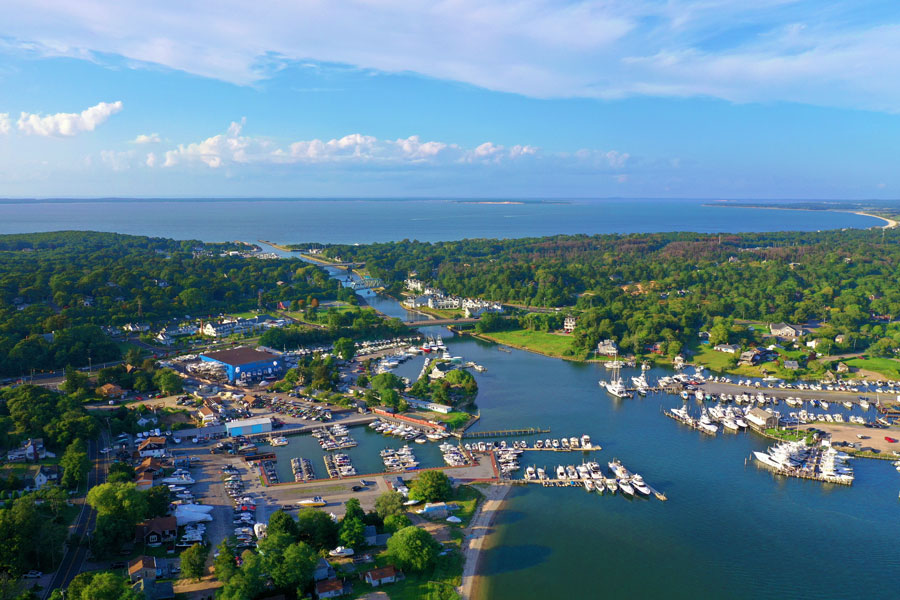
The Shinnecock Canal is a man-made waterway located between Hampton Bays and Shinnecock Hills in the Town of Southampton. It connects Shinnecock Bay on the south side of Long Island with Great Peconic Bay to the north, allowing boats to travel between the Atlantic Ocean and the Peconic Bay system without rounding the eastern tip of the South Fork. Today, the canal serves recreational boaters, commercial fishing vessels, charter boats, and marine traffic throughout eastern Long Island.
History
For generations, people recognized the value of creating a navigable connection between Shinnecock Bay and Great Peconic Bay. Construction of the present canal was completed in the late 19th century, greatly improving navigation through the East End. The addition of locks helped compensate for differences in water levels and tidal flow between the two bays. Today, the canal remains one of the most significant pieces of marine infrastructure on Long Island.
Navigation & Boating
- Gateway between bays: The canal provides a direct connection between Shinnecock Bay and Great Peconic Bay, reducing travel time for many vessels operating on the East End.
- Shinnecock Lock: A navigation lock operated by the U.S. Army Corps of Engineers regulates boat traffic while helping manage water-level differences between the bays.
- Marine traffic: Recreational boats, sport-fishing vessels, charter boats, commercial fishing boats, sailboats, and government vessels regularly use the canal.
- Access to the Atlantic: Boats traveling through the canal can reach the Atlantic Ocean through Shinnecock Inlet, providing access to offshore fishing grounds and coastal destinations.
Fishing & Recreation
The canal is one of Long Island’s most popular fishing locations. Anglers target striped bass, bluefish, weakfish, fluke, blackfish, and other saltwater species that move through the tidal currents. Nearby boat launches, marinas, and waterfront parks also make the canal popular for boating, kayaking, sightseeing, photography, and birdwatching.
Wildlife & Environment
The waters surrounding the canal support a wide variety of marine life, shellfish, migratory fish, shorebirds, and coastal wildlife. Because the canal links two major estuarine systems, it also influences tidal movement, water circulation, and ecological conditions throughout the surrounding bays. Protecting water quality and marine habitat remains important for both recreation and commercial fishing.
Shinnecock Canal
Key Facts & Details
| Feature | Details |
|---|---|
| Location | Between Hampton Bays and Shinnecock Hills in the Town of Southampton |
| Connects | Shinnecock Bay and Great Peconic Bay |
| Purpose | Navigation, boating, commercial fishing, recreation, and marine transportation |
| Managed By | U.S. Army Corps of Engineers |
| Major Feature | Shinnecock Lock |
| Popular Activities | Boating, fishing, kayaking, sightseeing, photography, and birdwatching |
| Nearby Destinations | Hampton Bays, Shinnecock Bay, Great Peconic Bay, Shinnecock Inlet, and Ponquogue Beach |
The Shinnecock Canal is one of the most strategically important waterways on Long Island, linking two major bay systems while supporting boating, commercial fishing, recreation, and coastal transportation. Whether viewed from the shoreline, crossed by road, or navigated by boat, the canal remains an essential part of the East End’s maritime heritage and continues to play a vital role in the region’s economy, environment, and recreational boating culture.
Are you ready for fall on Long Island? Check out these local seasonal guides:
🍎 Apple Picking | 🍂 Fall Festivals & Farm Activities | 👻 Haunted Houses | 🎃 Pumpkin Picking