
Jones Inlet
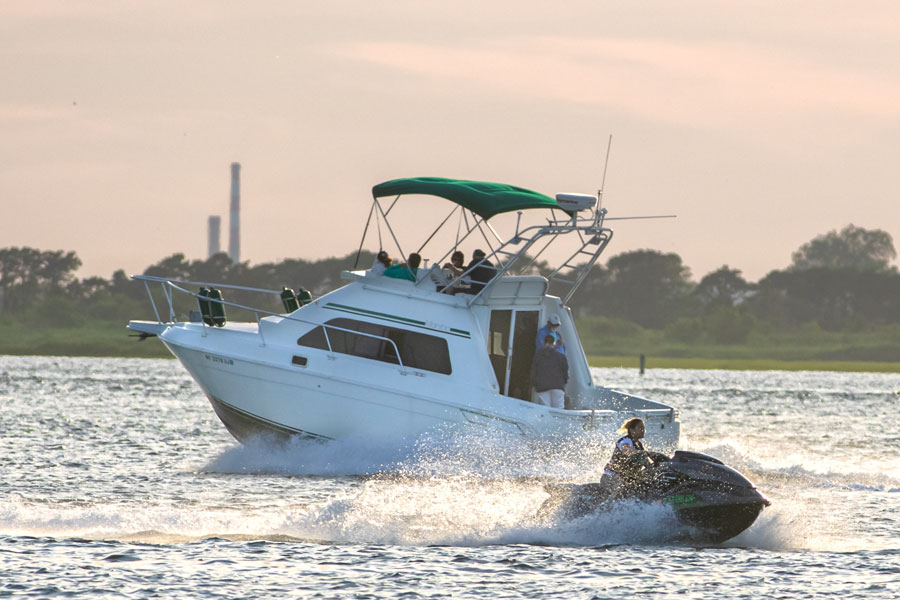
Jones Inlet is one of the principal tidal inlets along the south shore of Long Island, connecting the Atlantic Ocean with the western portion of Great South Bay. Located between Jones Beach State Park and Point Lookout, the inlet serves as an important navigation route for recreational boaters, commercial vessels, emergency responders, and anglers. It also plays a vital role in the natural movement of tides, sediment, marine life, and coastal ecosystems.
Although many visitors cross over Jones Inlet while traveling along Ocean Parkway or visiting nearby beaches, the waterway itself is one of Long Island’s most significant coastal features. It provides direct ocean access to western Great South Bay and supports boating, fishing, wildlife habitat, and coastal recreation throughout the year.
Geography
Jones Inlet lies near the western end of Jones Beach Island, a barrier island that separates Great South Bay from the Atlantic Ocean. The inlet forms the boundary between Jones Beach State Park to the east and Point Lookout on the Long Beach Barrier Island to the west. Strong tidal currents flow through the inlet as ocean water enters and exits Great South Bay several times each day.
The inlet has naturally shifted over time due to storms, tides, and coastal processes. Periodic dredging and navigation improvements help maintain safe boating access while balancing environmental considerations and shoreline stability.
Boating and Navigation
Jones Inlet is one of the busiest ocean access points for recreational boating on Long Island. Thousands of vessels use the inlet during the warmer months to travel between Great South Bay and the Atlantic Ocean. From the inlet, boaters can reach offshore fishing grounds, nearby barrier beaches, and destinations throughout Long Island’s South Shore.
Because of swift tidal currents, shifting sandbars, changing weather conditions, and heavy vessel traffic, navigation through Jones Inlet requires caution. Local mariners often monitor tides, weather forecasts, and navigational charts before entering or leaving the inlet.
Fishing
Jones Inlet is widely recognized as one of Long Island’s popular saltwater fishing locations. The combination of moving tidal water and nearby ocean habitat attracts numerous fish species throughout the year. Depending on the season, anglers commonly target striped bass, bluefish, fluke, blackfish, weakfish, and other migratory species.
Fishing takes place from private boats, charter vessels, and nearby shore-access locations where permitted. Conditions can change quickly with tides and weather, making local knowledge especially valuable.
Wildlife and Coastal Environment
The waters surrounding Jones Inlet support a diverse coastal ecosystem that includes fish, shellfish, horseshoe crabs, marine mammals, and numerous shorebird species. The inlet also serves as an important pathway for migrating fish moving between the Atlantic Ocean and Great South Bay.
Nearby salt marshes, tidal flats, dunes, and barrier beaches contribute to the ecological health of the surrounding shoreline while helping protect inland communities from coastal storms.
Importance to Long Island
Beyond its recreational value, Jones Inlet is an essential part of Long Island’s coastal infrastructure. It supports marine transportation, emergency response operations, commercial and recreational fishing, scientific research, and the natural circulation of water between Great South Bay and the Atlantic Ocean. The inlet also influences local water quality, marine habitats, and shoreline conditions throughout the surrounding region.
Vicinity of Jones Inlet
Key Facts & Details
| Category | Details |
|---|---|
| Feature Type | Tidal ocean inlet |
| Location | South Shore of Long Island, between Jones Beach State Park and Point Lookout |
| Connects | Great South Bay with the Atlantic Ocean |
| County | Nassau County, New York |
| Known For | Boating, saltwater fishing, tidal currents, marine navigation, coastal ecology |
| Nearby Destinations | Jones Beach State Park, Point Lookout, Long Beach |
| Popular Activities | Boating, fishing, wildlife viewing, marine photography |
| Managed By | Navigation and maintenance involve multiple federal, state, and local agencies |
Jones Inlet remains one of Long Island’s most important coastal waterways, serving as both a gateway between the Atlantic Ocean and Great South Bay and a centerpiece of South Shore recreation. Whether viewed from Ocean Parkway, crossed by boat, or explored while visiting nearby beaches and parks, the inlet plays an essential role in the region’s maritime history, natural environment, and outdoor lifestyle.
Are you ready for fall on Long Island? Check out these local seasonal guides:
🍎 Apple Picking | 🍂 Fall Festivals & Farm Activities | 👻 Haunted Houses | 🎃 Pumpkin Picking